
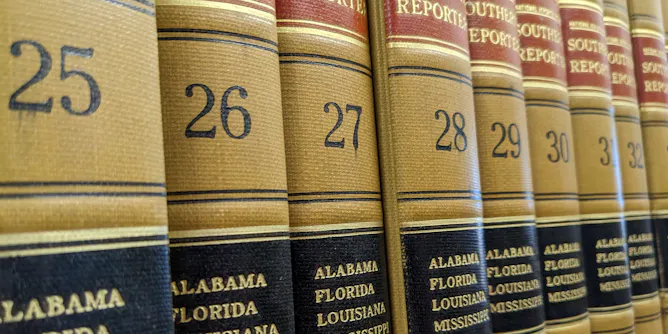
Since 2020, a team of legal researchers has collected more than 12,000 cases involving enslaved people and more than 40,000 cases that cite those cases.
Articles on US Civil War
Displaying 21 - 40 of 116 articles
Donald Trump tried to overturn the 2020 election results. But the work of others, from lawmakers to judges to regular citizens, stopped him. There are cautionary lessons in that for the 2024 election.
For nearly 500 years, priests and imams justified slavery on the basis of a misunderstood passage of the Bible.
The first shoe has dropped in the Supreme Court’s process of considering whether Donald Trump is eligible to be president.

The US Supreme Court faces a case with huge repercussions for the 2024 presidential election – and American democracy. An election law scholar explains why.
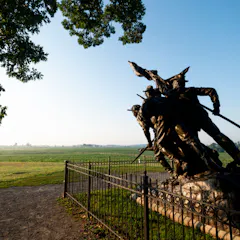
How should opposing armies be commemorated on a battlefield? Gettysburg offers an especially interesting example of today’s debates over Confederate monuments.
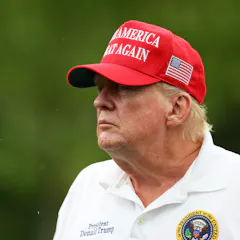
US law actually bars former President Donald Trump from holding office ever again. The recent Georgia indictment of Trump helps make the case.
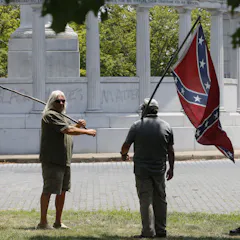
The drive to remove Confederate monuments links those monuments to modern racism. An economic historian shows that the intent and effect of those monuments from inception was to perpetuate racism.
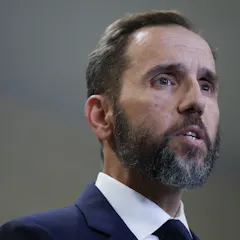
One of the charges against Donald Trump dates back to the 1870s and was designed to give the federal government the power to ensure states held free and fair elections.
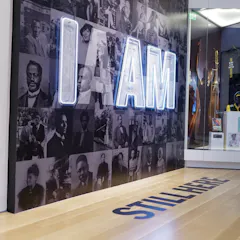
The new museum opened at a time when the teaching of Black history is under attack by conservative politicians.
Studies show, though, that voters don’t like all that nastiness.
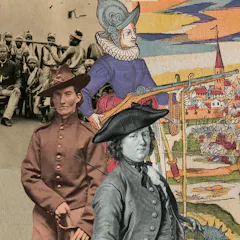
Fighting in sieges, an army of crack female troops, cross-dressing as male soldiers: women have survived and thrived as part of the war machine. But they’re rarely included in military histories.
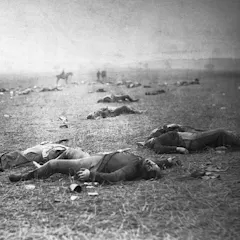
On the 160th anniversary of the Civil War’s Battle of Gettysburg, a political scientist finds that residents of formerly Confederate states express greater support for political violence than others.
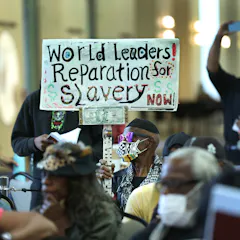
Former enslaved persons have never received a dime for their labor. Nor have their descendants received reparations for the legacy of slavery.
Should the descendants be paid? By whom and how much?
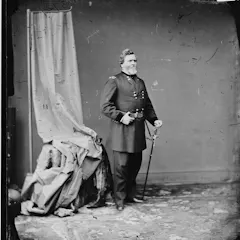
A Southerner, Maj. Gen. George H. Thomas was a racist enslaver before the Civil War. But he fought for the Union because he prioritized his oath to defend the Constitution over state interests.
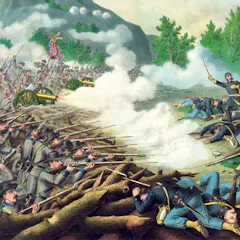
There was one central reason the Civil War happened.
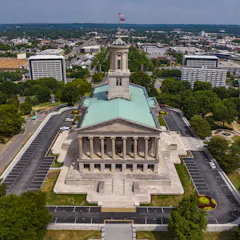
An official proclamation issued by two Tennessee lawmakers commemorates Confederate History Month, fails to mention slavery and instead honors what it calls a “heroic struggle for states’ rights.”
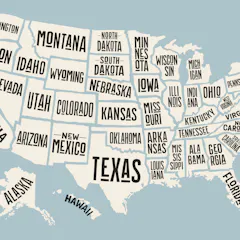
Secession talk evokes fears of a second Civil War. But one scholar says secession is already happening in the US under a variety of guises.
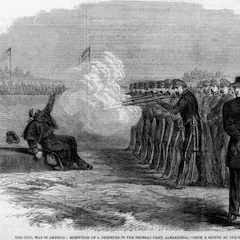
South Carolina has had trouble securing enough lethal injection drugs for executions. So it has turned to an old form of killing: the firing squad, last used in the Civil War.
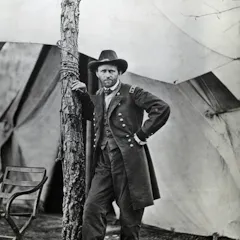
Known as the military leader who saved America, Ulysses S. Grant left a legacy of fighting for the rights of enslaved people during and after the Civil War.
Top contributors
-

Professor and Chair of History Department, Colorado State University
-
Associate professor emeritus, Journalism, Virginia Commonwealth University
-
Senior Lecturer in History, Heritage and Classics, Swansea University
-
Professor of History, Arizona State University
-
Assistant Professor of US History, Durham University
-
Professor of Literature and Director of Irish and Irish American Studies, College of Charleston
-
Williams Memorial Professor of Law, Northwestern University
-
Professor of History and Michael Douglas Dean of Humanities and Fine Arts, University of California, Santa Barbara
-
Anthropologist, Sterling Prof Political Science; Acting Dir Agrarian Studies, Yale University
-
Associate Professor of Business, Boston University
-
PhD Student, Department of History, University of Liverpool
-
Professor of Communication Arts and Sciences, Penn State
-
Maître de conférences, Université Paris-Est Créteil Val de Marne (UPEC)
-
Professeure en sciences de l’information et de la communication, Université Paris-Est Créteil Val de Marne (UPEC)
-
Associate Professor of English, Virginia Tech