
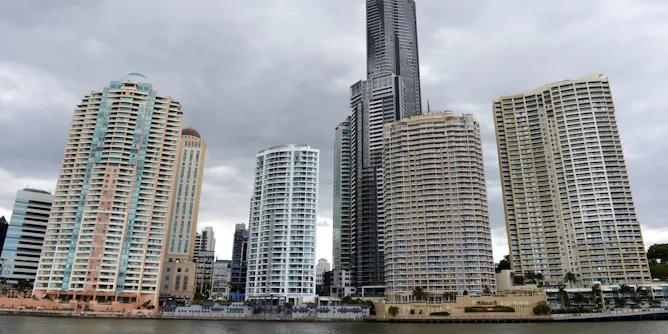
Research suggests stakeholders’ understandings of urban consolidation vary. And they often subvert policies to suit their own ends.
Articles on Urban density
Displaying 41 - 54 of 54 articles
As increasing diversity and density come to characterise our cities, how can we build harmonious communities within apartment complexes?
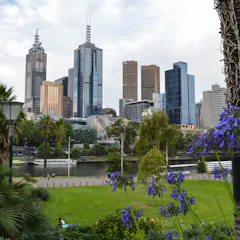
The increasing global focus on essential services and public space as a key combination for successful city-making is relevant to fast-growing Australian cities too.
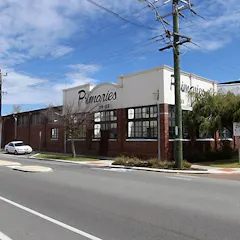
Exceptional projects can emerge when regulations are sensibly relaxed due to context. A Fremantle project is a model of progressive higher-density possibilities resulting from flexible planning rules.
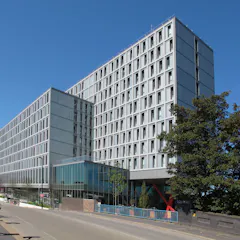
While some forms of co-living seek to match modern lifestyles and a desire to downsize, other profit-driven models simply exploit a lack of affordable housing alternatives.

The front yards, footpaths and verges of Australian suburbs are spaces overdue for reinvention.
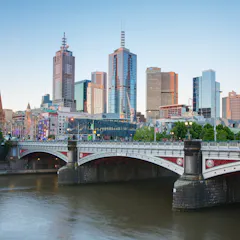
We’re still in the early days of understanding how cities work. But we do know that creative, healthy and productive cities have certain things in common – and it’s all to do with their ‘urban DMA’.
Government and industry need to demonstrate the benefits of well-designed higher-density housing. Rich residential display projects may be the ideal catalyst for creating smarter cities.
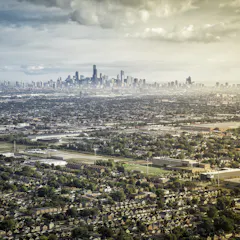
Instead of looking up or out, we need a combined approach.
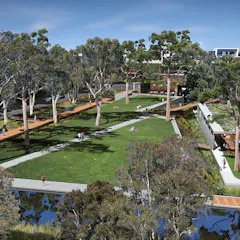
The Green Square urban renewal area – expected to be Sydney’s most densely populated area by 2030 – represents a new paradigm of urban living.

With a majority of households having pets and growing numbers living in apartments, a review of regulations on keeping animals in such communities is timely.
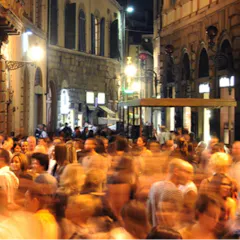
One person’s high density may be another’s sprawl; the same tall building may be experienced as oppressive or exhilarating; a “good crowd” for one can be “overcrowded” for another.
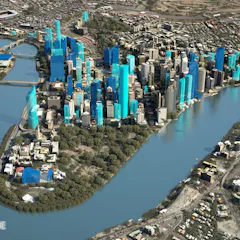
In the media, urban consolidation is often depicted as a threat to Australian suburban life. In reality, it’s a result of managed planning processes to ensure growing cities remain liveable.
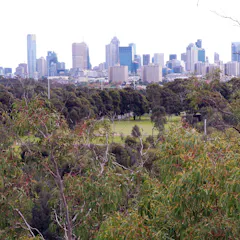
Achieving green cities will require more than just canopy cover targets and central city strategies. It will need new approaches to urban planning and development.
Top contributors
-

Senior Lecturer in Urban Planning and Urban Design, The University of Melbourne
-
Professor of Architecture and Urban Design, The University of Melbourne
-
Professor, City Futures Research Centre, UNSW
-
Adjunct Senior Teaching Fellow in Urban Planning and Design, The University of Western Australia
-
Adjunct Professor, Institute of Transport and Logistics Studies, University of Sydney Business School, University of Sydney
-
Lecturer, Real Estate and Property Development, Griffith University
-
Research associate, The University of Melbourne
-
Senior Lecturer in Urban and Environmental Planning, Griffith University
-
Senior Research Fellow, Healthy Liveable Cities Group, Centre for Urban Research, RMIT University
-
Research assistant, Western Sydney University, UNSW
-
Emeritus Redmond Barry Distinguished Professor, The University of Melbourne
-
Architectural Technologist and Urban Designer, Nottingham Trent University
-
Head of the Department of Architecture, Monash University
-
Professor, Sustainability and Urban Planning, RMIT University
-
Professiorial Fellow, The University of Melbourne