

While a majority of householders over 55 have thought about downsizing, only one in four have done it. What’s stopping them? Most simply can’t find a home in the right place that meets their needs.
Articles on Urban density
Displaying 21 - 40 of 54 articles

Residents of the ‘leafy suburbs’ will continue to fear what they might lose to increasing urban density without an explicit planning approach that enhances green space in affected neighbourhoods.
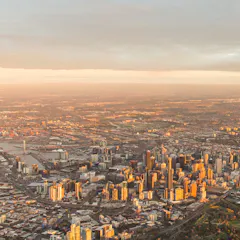
The demands on land and resources from our fast-growing cities are unsustainable, as are the wastes they produce. Yet still our leaders act as if unlimited growth is possible.
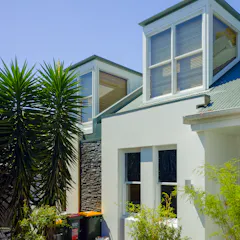
Australians’ need for smaller and more diverse dwellings is growing. The planning system is not providing enough of this housing, and self-serving opposition to it should be resisted.
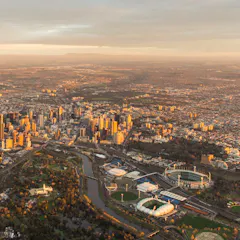
State and local governments can’t do much about the rapid population growth in Melbourne, but they can take steps to reduce the costs of growing disparities between the outer suburbs and inner city.
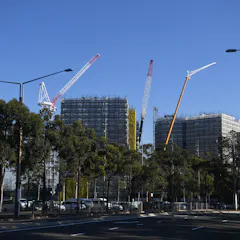
Governments should stop offering false hopes and pandering to NIMBY pressures. As well as increased public and private housing supply, growing cities need well-designed higher-density development.
It’s easy to over-estimate crowding and traffic in highly visible downtown cores and underestimate the vast growth happening in the suburban edges of our metropolitan regions.
The vitality that defines central Melbourne today did not emerge overnight. Rather than being born of one grand vision, it’s the result of many astute, incremental changes that revitalised the city.

Self-driving, shared, electric vehicles and increasing urban density represent four disruptions that will transform city life. But a transport utopia isn’t a guaranteed outcome of their interactions.
A massive residential development in a flood-prone inner-city suburb sounds like a recipe for disaster. But good urban design can deliver higher density and reduce the flood risk.
Residents of established middle suburbs are slowly coming round to the idea, but governments and the property sector lack the capacity to deliver compact cities that are acceptable to the community.

Drains take up precious but inaccessible open space in our cities. Converting these to living streams running through the suburbs could make for healthier places in multiple ways.

Planners wish to correct past errors by increasing densities, discouraging car dependency and mixing land uses. But imposing imported strategies on Australian cities is producing unhappy results.
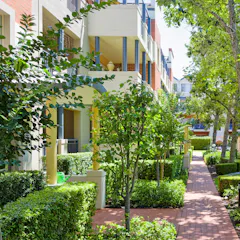
Being crowded into poor-quality high-density units harms residents’ health, but design features that are known to promote wellbeing can make a big difference to the lives of low-income households.
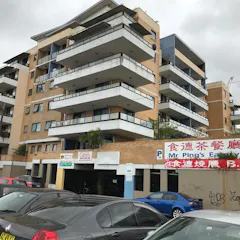
The inexorable logic of the market will create suburban concentrations of lower-income households on a scale hitherto only experienced in the legacy inner-city high-rise public housing estates.

In the push for more compact cities, don’t forget the ways apartment living is different. And often the downsides of these differences weigh heavily on low-income and disadvantaged households.
Even where communities are mixed, many inner-city families go to extraordinary financial and geographic lengths to ensure their children do not go to school with children from ‘the flats’.

Australians are losing the backyards that once served as retreats from the stresses of city living. Our health is likely to suffer as cities become less green and much hotter.

Achieving the goal of sustainable cities depends on rolling back the market after decades of privatisation and deregulation.

Greening cities that are becoming denser is a major challenge. City-dwellers’ health benefits from both well-designed green spaces and urban density, so we must manage the tensions between them.
Top contributors
-

Senior Lecturer in Urban Planning and Urban Design, The University of Melbourne
-
Professor of Architecture and Urban Design, The University of Melbourne
-
Professor, City Futures Research Centre, UNSW
-
Adjunct Senior Teaching Fellow in Urban Planning and Design, The University of Western Australia
-
Adjunct Professor, Institute of Transport and Logistics Studies, University of Sydney Business School, University of Sydney
-
Lecturer, Real Estate and Property Development, Griffith University
-
Research associate, The University of Melbourne
-
Senior Lecturer in Urban and Environmental Planning, Griffith University
-
Senior Research Fellow, Healthy Liveable Cities Group, Centre for Urban Research, RMIT University
-
Research assistant, Western Sydney University, UNSW
-
Emeritus Redmond Barry Distinguished Professor, The University of Melbourne
-
Architectural Technologist and Urban Designer, Nottingham Trent University
-
Head of the Department of Architecture, Monash University
-
Professor, Sustainability and Urban Planning, RMIT University
-
Professiorial Fellow, The University of Melbourne