

Residential schools denialism is harmful on many levels, and jeopardizes Canada’s ability to work with Indigenous Peoples to create a stronger future.
Articles on Unmarked graves
Displaying all articles

The report focuses on unaccounted missing children, unmarked grave sites, and the roles of government and churches in the Indian Residential School genocide.
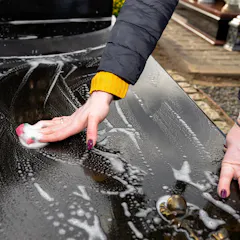
The trend is proof that not everything should be turned into content.

This playlist of podcast episodes invites listeners to engage in learning and unlearning; to acknowledge the tragic legacies of residential schools and to move beyond a single day of remembrance.
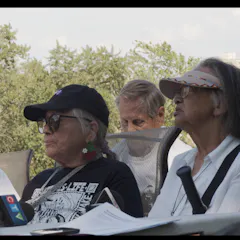
Debates over what “mapping” means show how Indigenous communities still have to advocate for and defend their cartographic methods in order to uphold their connections to the land.

The author led a search for unmarked graves at the site of Blue Quills, a former residential school. She found more areas of interest (potential graves) than the official record shows.

As the number of unmarked graves found will likely only increase over the months and years to come, we can’t forget that every child matters.
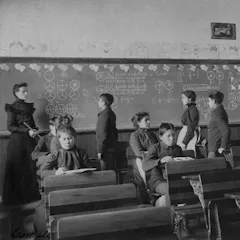
Ernest Knocks Off was 18 when he arrived at the Carlisle boarding school in 1879. He was one of many young Native people who fought – in his case, to the death – to retain their language and culture.
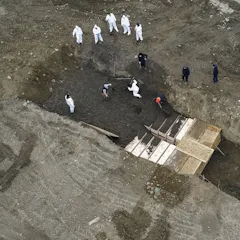
From burial sites targeted by grave robbers to disposing of ashes at sea, the job of disposing of the unclaimed dead has a rich history. Sadly, it still goes on today and is on the rise.

How can we find buried bodies? Ground penetrating radar is one solution - but it’s not always effective. Electrical resistivity tomography (ERT) offers a very sensitive alternative.
Top contributors
-

Professor of Archaeological Science, Flinders University
-
PhD Candidate Geography, Planning, Environment, Concordia University
-
Assistant Professor of English, College of the Holy Cross
-
Director of the Institute of Prairie and Indigenous Archaeology, University of Alberta
-
University of Alberta
-
Teaching Fellow and Instructor of History, Case Western Reserve University
-
Director, Indigenous Initiatives, MacEwan University
-
Casual Academic, Creative Writing and English Literature, Flinders University
-
Lecturer, Learning & Teaching Innovation, Flinders University
-
Professor, Faculty of Education, University of Manitoba
-
Department of Anthropology, University of Alberta
-
Associate Professor, Departments of History and Indigenous Studies, University of Manitoba