

Beginning Jan. 1, 2027, Philadelphia will require employers to provide reasonable accommodations to workers suffering from symptoms of hormonal cycles and changes.
Articles on Americans with Disabilities Act (ADA)
Displaying 1 - 20 of 41 articles

Libraries and archives at universities across the nation catalog and steward the donated papers of members of Congress. But that historically significant work is now in jeopardy.
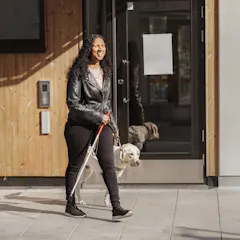
For one thing, the presence of employees with disabilities improves the culture of the entire organization, making it more collaborative and responsive.

Diversity, equity and inclusion programs are designed to help first-generation students, people with disabilities and veterans – including white people.
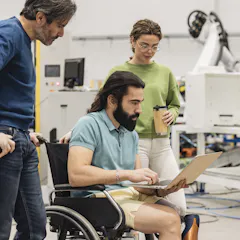
The imperative for employers to accommodate people with disabilities is partly driven by the need to keep older workers on the job as the population ages.

Whether ‘adaptive’ equipment is expensive or affordable, expert guidance is essential for many people with disabilities.
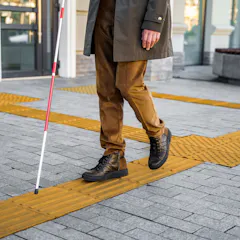
Decades of activism have resulted in legislation and infrastructure to make cities more accessible, but the lived experiences of disabled residents shows there’s still a long way to go.

Assistive technology like screen readers for the blind help people with disabilities use computers and smartphones, but they can be tripped up if webpages or documents are improperly formatted.
Three scholars who are writing a book about menopause and the law suggest ways to protect women experiencing it.

As COVID-19 survivors join the ranks of people with disabilities, they could have a long wait to get the support they need.

Two years of pandemic have put a severe strain on the mental health of America’s workers. Employers with a plan in place will be best equipped to help them cope.
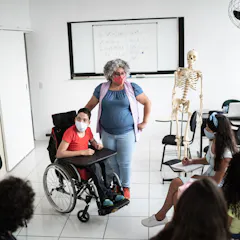
The Department of Education is investigating whether state bans on mask requirements in schools discriminate against students with disabilities.
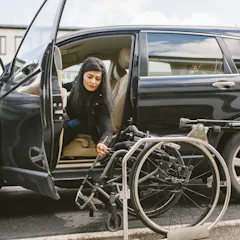
A household earning the US median income needs an additional $17,690 per year – on top of current government disability benefits programs.

The federal agency in charge of enforcing discrimination laws in the workplace said ‘yes,’ but there are some important exceptions and limitations.

The human rights of disabled people around the globe can be accessed as an online map for sports and competition.

Debt-free property ownership is no longer a requirement for voting rights, but the idea remains that a person must have a residence in a particular community to be allowed to vote.

Congress needs to make sure the HEROES Act includes adequate funding for people with disabilities.

The 30th anniversary of the American with Disabilities Act offers a chance to celebrate the greater inclusion of disabled Americans in mainstream society, but much work remains to be done.

Tens of millions of Americans who have been telecommuting during the pandemic are beginning to head back to the office – even though COVID-19 remains a threat.
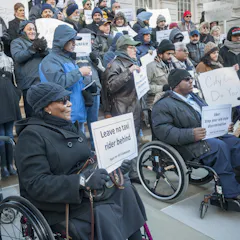
In order to create an efficient future transportation system, autonomous vehicles need to accommodate people with different mobility needs.
Top contributors
-

Distinguished Professor, Rutgers University
-
Professor of Special Education, University of Florida
-
Professor of Law, University of Oregon
-
Professor of Health Law and Bioethics, Case Western Reserve University
-
Associate Professor, Tarleton State University
-
Professor of Economics, Fordham University
-
Professor of English and Comparative Literature, Columbia University
-
Adolph S. Ochs Professor of Government and Head of Political Science and Public Service, University of Tennessee at Chattanooga
-
Director UCL International Disability Research Centre, UCL
-
Andrew Banks Family Preeminence Endowed Chair, Associate Chair of Research Computer & Information Science & Engineering Department, University of Florida
-
Associate Dean for Research and Faculty Development and Professor of Law, College of Law, Georgia State University
-
Assistant Professor of Special Education, Villanova University
-
Principal Research Associate in Epidemiology and Public Health, UCL
-
Senior Lecturer in Economics, RMIT University Vietnam
-
Professor of Law and Director, Center for Law Health and Society, College of Law, Georgia State University