

Beyond how beautifully Elisapie interprets classic rock songs, with creative choices like using throat singing to cover Metallica, her music also brings the Inuktitut language to a wider audience.
Articles on UN Declaration on the Rights of Indigenous Peoples
Displaying 1 - 20 of 23 articles

A recent summit in Canada tackled the challenge of how science can be more inclusive and better engage Indigenous communities.
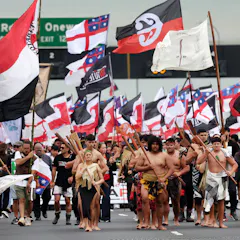
What is the ‘truth’ about colonialism and its modern relevance? This complex question is testing political consensus not only in New Zealand, but in other post-colonial societies too.
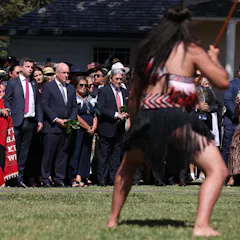
With debate raging around the Treaty Principles Bill. It’s important to recognise a dispute between Māori and the Crown is not the same as a breakdown in relations between Māori and Pākehā in general.
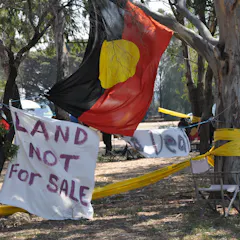
The review will focus on the ‘future acts’ provisions, and whether they are fair to traditional owners.

The recent title lands agreement between British Columbia and the Haida Nation is historic and inspiring, but also long overdue in light of decades of rulings by international human rights bodies.

While the New Zealand government removes reference to the Treaty in the Oranga Tamariki Act, Canada and even Australia are taking steps in the opposite direction on Indigenous children’s rights.

Australia’s road to net zero must pass through Indigenous-held land, which is likely to host many clean energy projects. First Nations people want partnerships that help them protect their Country.

Saskatchewan’s provincial government must work with Indigenous nations on a shared vision for the future that is more likely to withstand the tests of time and litigation.
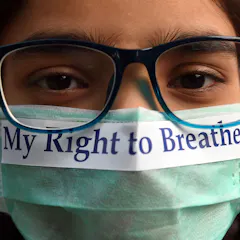
It’s more than moral posturing. Resolutions like this have a history of laying the foundation for effective treaties and national laws.

Indigenous filmmakers are changing the world by telling their own stories in their own ways.

Last month, the government published the Indigenous Voice co-design final report. However, ways to ensure First Nations self-determination remain lacking in the strategy.
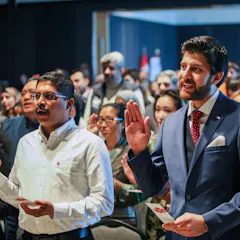
Following the Sept. 20 federal election, an important question must be asked: How is the Canadian electoral process accommodating the country’s increasing linguistic diversity?
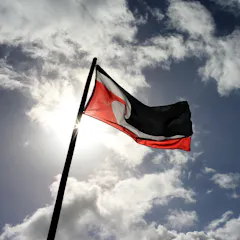
Contrary to some claims, He Puapua is not a ‘plan’ and it doesn’t advocate for ‘separatism’. Rather, it invites us to imagine more inclusive political and constitutional arrangements.
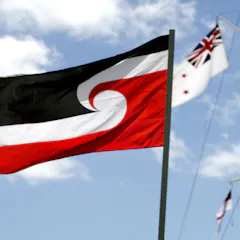
The struggle to establish Māori wards centres on the rights and privileges of citizenship promised in the Treaty of Waitangi.

The impact of colonialism can’t be reversed, but as New Zealand implements the UN declaration new ideas emerge of a state that represents first peoples more fairly.
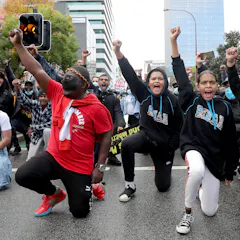
Decolonisation is restorative justice through cultural, psychological and economic freedom.
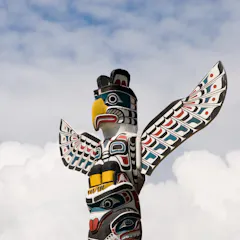
British Columbia’s new law requires its parliament to align all laws with the UN declaration on indigenous rights. New Zealand and Australia should watch closely to see what it could mean for them.
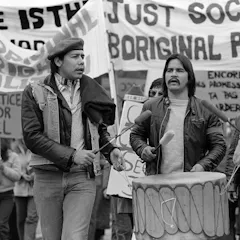
It’s the 12th anniversary of the UN Declaration on the Rights of Indigenous Peoples. Canada has yet to implement this declaration even though the TRC says the road to reconciliation needs to start here.

A report on primary health care found New Zealand fails to deliver good outcomes for Māori because the state does not stand aside to allow Māori to take charge of their own affairs.
Top contributors
-

Adjunct Professor, Stout Research Centre, Victoria University of Wellington and Auckland University of Technology, Professor of Political Science, Charles Sturt University
-
PhD Candidate in Humanities, Concordia University; Honorary Fellow, UWA Faculty of Law, The University of Western Australia
-
UN Expert Mechanism on the Rights of Indigenous Peoples (EMRIP) and Professor in Political Science, Global Affairs and Public Policy, University of Toronto
-
Senior Lecturer in International Law, The University of Western Australia
-
Director of Education, Outreach, and Public Programming, National Centre for Truth and Reconciliation, University of Manitoba
-
Assistant Professor, Human Dimensions of Natural Resources, Colorado State University
-
Indigenous Knowledge Holder, Indigenous Knowledge
-
Assistant Professor, Department of Political Studies, University of Saskatchewan
-
PhD Candidate, Faculty of Law, L’Université d’Ottawa/University of Ottawa
-
Professor, RMIT University
-
Associate Professsor, Women's and Gender Studies, History, University of Manitoba
-
Dean Learning and Teaching Centre for Aboriginal Studies, Curtin University., Curtin University
-
Senior Research Fellow, Melbourne Climate Futures, The University of Melbourne
-
Independent Scholar, Ethical Citizenship & Racism Studies
-
Research Fellow, Australian National University