
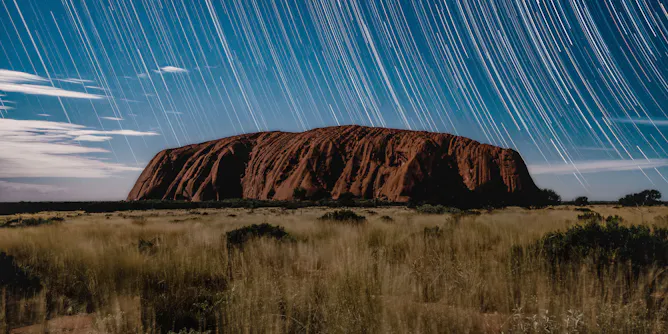
Continents colliding, mountains rising and falling, and remarkable strength. The story of Australia’s most iconic mountain is truly magical.
Articles on Uluru
Displaying all articles
What happens when the distant frontier takes up residence in the family home? How are we to remember our flawed ancestors? A new book grapples with these questions.
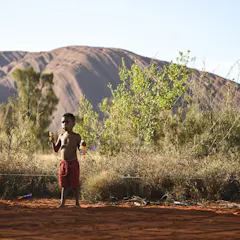
There’s a need to develop new tourism activities at Uluru, especially more educational and immersive experiences that would entail interacting respectfully with traditional owners.
There are memorial stones scattered along songlines throughout the Australian landscape, victims and transgressors transformed into rock following epic struggles to stand as cautionary tales.
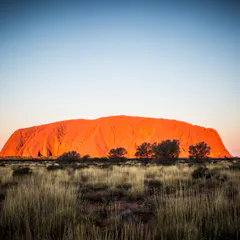
Of 19 World Heritage sites across the country, only two, Kakadu and Uluru-Kata Tjuta, recognise the values of “living” Aboriginal culture. None of Australia’s three sites inscribed purely for cultural values recognises Aboriginal people.
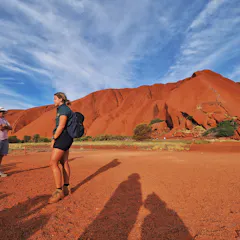
Closing Uluru to climbers is vital to the preservation, maintenance and on-going development of culture, traditions and knowledge.
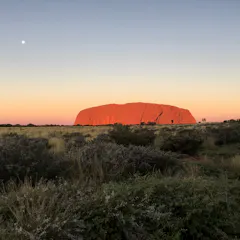
The Uluru-Kata Tjuta National Park Board of management has this week announced that tourists will be banned from climbing Uluru from 2019. Sammy Wilson, chairman of the park board, explains why.
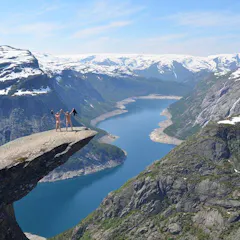
The trend of ‘naked tourism’ reveals something more than just bare bottoms – and it may call for some active interventions.
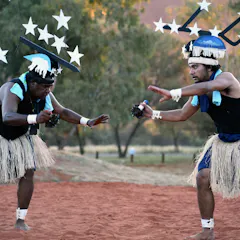
At the same time as it’s become clear that Indigenous people won’t accept a limited change, the right in Australian politics has become more determined to oppose any amendment.
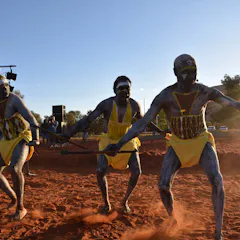
Indigenous Australians have issued a statement calling for constitutional reform that is substantive and meaningful.
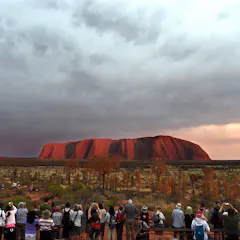
At Uluru, Indigenous representatives from across Australia will aim to reach consensus on what constitutional recognition means to them.
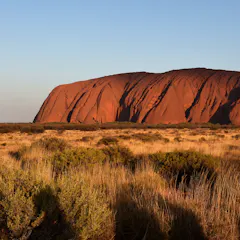
Uluru’s traditional owners have asked for decades that tourists not climb their sacred site. Parks Australia has committed to closing the climb – but only when some ambitious goals have been met.
Top contributors
-

Associate Professor, UNSW
-
Professor of Sustainable Tourism, Griffith Institute for Tourism, Griffith University
-
Professorial Fellow, University of Canberra
-
Adjunct professor and adjunct senior lecturer in tourism management, Adelaide University
-
Associate Professor of Indigenous Tourism, Griffith University
-
Professor of Sustainable Tourism and Heritage, Western Sydney University
-
Senior Lecturer Indigenous Knowledges, Deakin University
-
Assistant lecturer, Monash University
-
Professor of History & Director Future Regions Research Centre, Federation University Australia
-
Research Associate
-
Co-Director, Australian Centre for Indigenous History, Australian National University
-
Professor in Environmental Science, Charles Darwin University
-
Matthew Flinders Fellow, Professor of Australian and Indigenous Studies, Flinders University
-
Professor Emeritus, School of Social Science, University of Queensland and past inaugural Willem Willems Chair for Contemporary Issues in Archaeological Heritage Management, Faculty of Archaeology, Leiden University, Netherlands, The University of Queensland
-
DVC Indigenous & Professor of Indigenous Studies, School of Culture and Communition, Faculty of Arts, The University of Melbourne