

South Africa’s minibus taxi industry contains extensive knowledge, organisation and social practices developed by the people who work in and depend on it.
Articles on Ubuntu
Displaying 1 - 20 of 58 articles

In a rural South African village, climate action is influenced by ubuntu: the belief that people are connected and have a responsibility to one another.

Healthcare teamwork is taught through western models. Ubuntu offers an African approach that could improve collaboration and patient care worldwide.

Gender-based violence responses must include energy access as a structural intervention, not an add-on.

If AI is not designed properly, inequalities can reappear in new, digital forms.

The Oromo place great emphasis on relationships, mutual care and responsibility towards others.

Black graduations are optional celebrations complementary to faculty-based convocation ceremonies, and they remind graduates they are powerfully supported.

The show’s opening included a ritual performance by the artist, connecting the living with their ancestors.

Ubuntu philosophy is a better way to represent scholarly contributions in African academia.

Ableist microaggressions are made by able-bodied people who don’t understand the realities of living with a disability.

Rather than viewing ubuntu as an alternative to development, our research suggests that development and ubuntu are complementary.

The yardstick of progress is broken. It’s time to stop using wealth alone to measure how Africa is doing.

When asked to name a living scientist from their own country, more than half of the respondents in both countries did not reply.
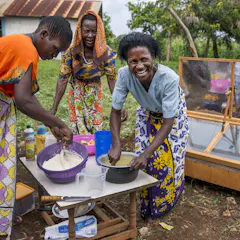
Ubuntu feminism – the idea that everyone is obliged to care for each other’s wellbeing – should become a central focus of the renewable energy rollout in Africa.

Indigenous futures thinking brings the expertise built up by Indigenous communities over many years into the plans needed for the world to adapt to climate change.

Many in Africa, including governments and non-state parties to conflicts, don’t trust international law. They consider it intrusive.

African immigrant students sometimes experience negative stereotyping, marginalization and low expectations from teachers. But emerging research shows they are being mischaracterized.

There are many greetings that provide a unique glimpse into the culture of its speakers, reflecting different traditions and ways of acknowledging, respecting and honouring others.

The principles of ubuntu (a person is only human through others) should underpin the rollout of renewable energy in rural Zimbabwe if everyone is to get equal access to solar power.

The hope is for pragmatism to drive a transition process. Obsessive adherence to ideological preferences will not build national unity or a sound foreign policy.
Top contributors
-

Postdoctoral Research Fellow, University of Johannesburg
-
Senior Research Associate, University of Johannesburg
-
Professor of Philosophy, University of Pretoria
-
Associate Professor of Commercial Law, University of Cape Town
-
LLD - Private Law, University of the Western Cape
-
Assistant Professor of Information Systems, Warwick Business School, University of Warwick
-
Emeritus Professor of Christian Studies, University of Cape Town
-
Assistant Professor, Political Science and International Relations, Addis Ababa University
-
Lecturer of Philosophy, University of the Western Cape
-
Emeritus Professor of International Relations, University of Pretoria
-
Professor of International Relations, London School of Economics and Political Science
-
Professor of Cross-cultural Management, Middlesex University
-
Lecturer in Data Engineering, Lancaster University
-
Professor of Sociology, University of the Witwatersrand
-
Distinguished Professor in the Department of Medicine and Director, The Centre for Medical Ethics & Law, Stellenbosch University