

Faced with the same problem, South Africa is turning to the familiar toolkit to explain a recurrent problem.
Articles on Ubuntu
Displaying 41 - 58 of 58 articles

The Bomvana say the global development agenda has created division because it sees people as individuals rather than primarily as members of a collective.

Education systems around the world are increasingly recognising the value of local approaches to thinking, learning and being.

Survivor’s guilt is arguably an instance of good character, an emotional expression.

South African commercial law courses do not address the question of what norms and procedures govern business relations in indigenous African communities.

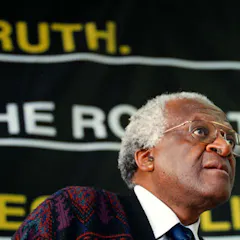
Emeritus Archbishop Desmond Tutu embraces everything noble in Aristotelian virtue ethics and African philosophical systems alike.

Archbishop Desmond Tutu is first and foremost, a spiritual leader, a man of deep prayer. This motivated his participation in supporting South Africa’s liberation struggle.

Archbishop Bishop Desmond Tutu is well known for having invoked an ubuntu ethic to evaluate South African society, and he can take substantial credit for having made the term familiar.

US President Donald Trump often owns the conversation on Twitter for all the wrong reasons. But why use the same tactics we’re criticising him for? And what would be an appropriate response?

South Africa considers itself to be playing a key role in promoting the ‘African Agenda’ in continental and world affairs. But perceptions in the rest of Africa tell a different story.

The problem for Jacob Zuma’s political theology is that far too many members of South Africa’s ruling ANC have been experiencing a dramatic loss of faith in a party they see as no longer righteous.

The iPhone mobile revolution put powerful computers in our pockets, but took away our rights to control them. Is that worth celebrating?
If violent contexts aren’t taken into account, restorative justice does not serve broader society. Instead it serves as a peacemaking process within a paradigm stacked against the poor and vulnerable.

TV talk and makeover shows have a preference for spectacle and conflict. But new collaborative models may be the future.

Much of academic philosophy, even on the African continent, is openly and unashamedly in love with the idea of the West as destiny.

Daytime television talk shows are known for their confrontational style. But there is a different model: a harmonious, cohesive and relational approach may offer a better way to communicate.

The essence of Ubuntu can best be found in Africa’s informal economies. They are not dependent on western shareholders or donations, and certainly not subject to western management education.

A new arrival into an extremely competitive market, the first Ubuntu-powered phone has finally gone on sale in Europe – two years after a failed attempt to generate crowdfunding nevertheless raised US$12m…
Top contributors
-

Postdoctoral Research Fellow, University of Johannesburg
-
Senior Research Associate, University of Johannesburg
-
Professor of Philosophy, University of Pretoria
-
Associate Professor of Commercial Law, University of Cape Town
-
LLD - Private Law, University of the Western Cape
-
Assistant Professor of Information Systems, Warwick Business School, University of Warwick
-
Emeritus Professor of Christian Studies, University of Cape Town
-
Assistant Professor, Political Science and International Relations, Addis Ababa University
-
Lecturer of Philosophy, University of the Western Cape
-
Emeritus Professor of International Relations, University of Pretoria
-
Professor of International Relations, London School of Economics and Political Science
-
Professor of Cross-cultural Management, Middlesex University
-
Lecturer in Data Engineering, Lancaster University
-
Professor of Sociology, University of the Witwatersrand
-
Distinguished Professor in the Department of Medicine and Director, The Centre for Medical Ethics & Law, Stellenbosch University