

Oscar-nominated film The Voice of Hind Rajab shines a light on emergency rescue workers in Palestine.
Articles on Tunisia
Displaying 1 - 20 of 105 articles
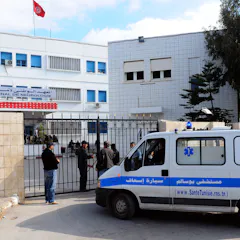
Health inequality is not only about who reaches a health facility. It is also about what happens once patients are inside the consultation room.
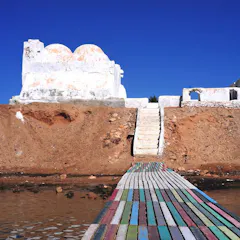
A large portion of Djerba’s cultural heritage has been erased by sea-level rise and human neglect.

Women only really emerged in Tunisia’s male-dominated rap scene with the revolution in 2011. And they’re rapping about much more than just patriarchy.
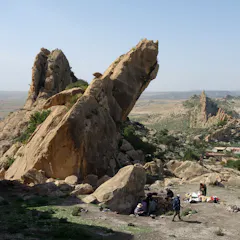
These findings challenge the long-held narrative about migration into and out of North Africa before and during the Neolithic.
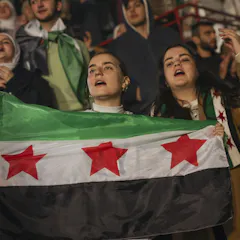
Syria faces real challenges. A look at the research on post-Arab Spring challenges offers some answers for a region wracked by many crises.

Once these chemicals are in an environment they almost never break down.
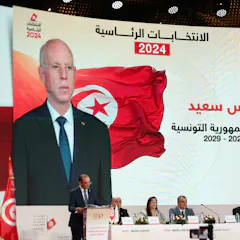
Tunisia’s president has won a second term in an election marred by repression.
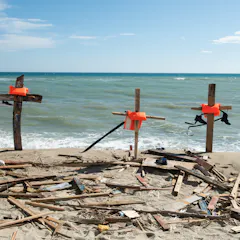
New tech tools are more intrusive and subtler than physical barriers. They invade migrants’ privacy and are a threat to personal security.

African clubs must learn from the success of Al Ahly and Esperance.
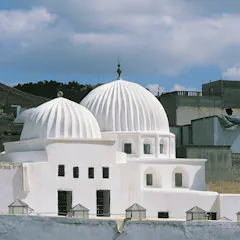
Tunisia has failed to capitalise on the heritage tourism potential of the ancient city and its natural surroundings.

The first Arab woman nominated for two Oscars, Kaouther Ben Hania is a visionary and a feminist.

This year, all the Oscar nominees for best documentary feature come from outside of the United States.
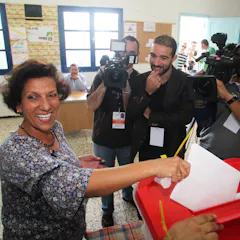
Voting patterns over decades show how hard it is to maintain enthusiasm for democracy.
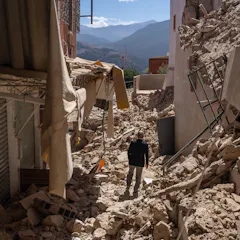
Earthquakes cannot be predicted; the best tools to mitigate the impact are seismic hazard studies.
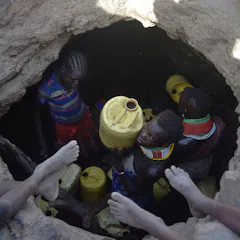
Better monitoring of groundwater is important for sustainable management.
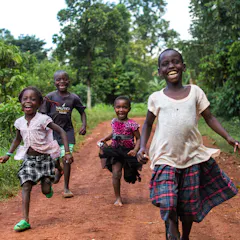
Africa contributes less than 1% of research worldwide on movement behaviours in children. This means that research on movement behaviours has largely excluded over 16% of the world’s population.
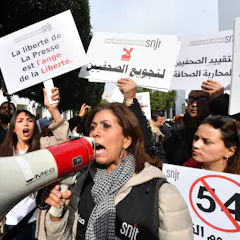
Freedom of expression was the one remaining gain of Tunisia’s 2011 revolution, but it is now severely threatened by a populist president.
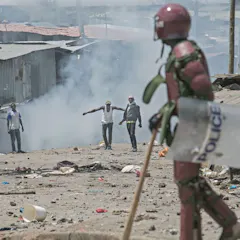
Political protests in Kenya have become insular, sectarian, tribal and unashamedly personality driven.

In Tunisia, scapegoating migrants diverts from the continuous failure of government to solve deep economic and social crisis.
Top contributors
-

Director of the Centre for Global Development and Professor in the School of Education, University of Aberdeen
-
Senior Lecturer in International Relations, University of Aberdeen
-
Researcher - African Security - One Earth Future Foundation, University of the Witwatersrand
-
Doctoral student in Anthropology, University of Amsterdam
-
Professor of Peace Studies, University of Bradford
-
Associate Professor in Politics and Islam, Durham University
-
Associate professor in Vertebrate Palaeontology, University of the Witwatersrand
-
PhD Student, International Development Department, University of Birmingham
-
Professor and Chair of Allied Health Studies, Stephen F. Austin State University
-
Professeur associé en finance, EM Normandie
-
Professor, Université Sidi Mohammed Ben Abdellah
-
Associate Professor in Sport Policy & Management, Qatar University
-
Teaching Fellow, University of Portsmouth
-
PhD Candidate, School of Government and International Affairs, Durham University
-
Professor of Middle Eastern Studies and Public Policy and Director of the Interdisciplinary Studies Institute, UMass Amherst