
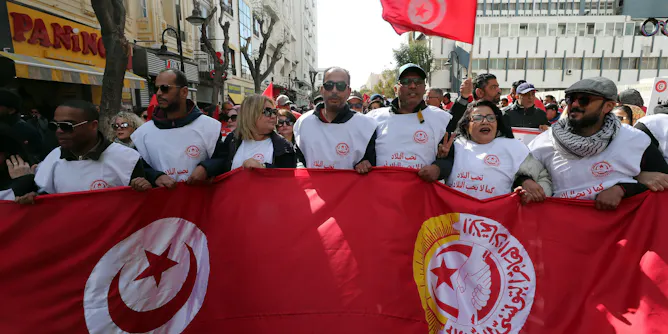
Tunisia is behaving like many other countries confronted by social, political and economic challenges - it’s blaming migrants as a ploy to divert attention.
Articles on Tunisia
Displaying 21 - 40 of 105 articles
Tunisia’s democratic backslide demonstrates how autocrats can use constitutional cover to entrench authoritarianism.
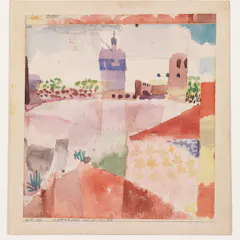
Hammamet with Its Mosque, a little picture with a monumental impact, belies a complex history of cross-cultural encounter.
Former president Bourguiba’s standing as father of Tunisian feminism has come under scrutiny.
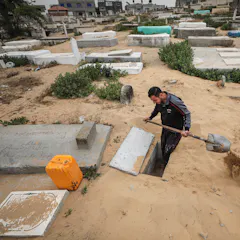
Political and economic forces across the Middle East and North Africa combine to mean well-educated young people spend years looking for work, which delays their independence and adulthood.

The first African woman to reach a grand slam tennis final, she has once again set Wimbledon – and Tunisian hearts – ablaze.
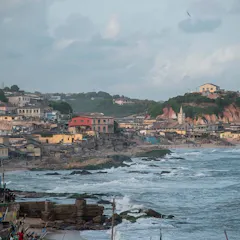
Intermediary cities have a vital role to play in the economies of African countries.
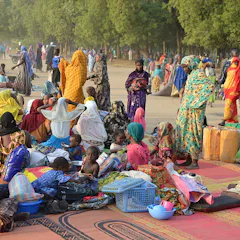
The failures of nominally elected governments has denied leaders - as well as the democratic system - a vanguard popular constituency.
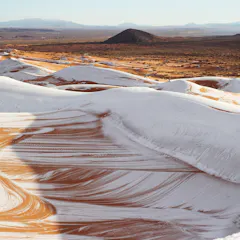
In order for snow to form, two distinctive weather properties are needed: cold temperatures and moist air. The Sahara can tick these boxes.
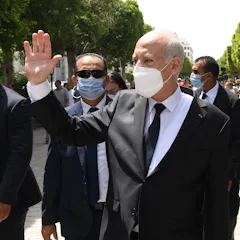
Viewing Tunisia as an Arab Spring success story was always too simplistic.
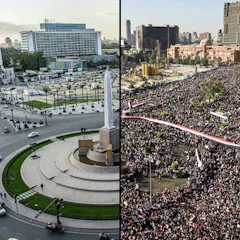
In the ten years since the Arab Spring, the countries affected have transformed completely. Here’s how.
The 1970s and 1980s saw a new genre of popular protest - its spirit would be felt even in 2011 when protests toppled a dictator.
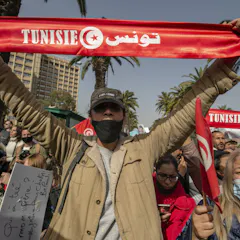
Since the revolution, Tunisians’ call for “bread, freedom and social justice” have fallen on deaf ears.
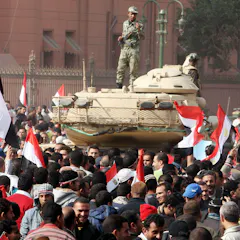
The underlying issues of inequality, corruption and poverty are still dogging the region, ten years after the protests.

Idir’s songs gave Kabyles a sense that their culture counted: that their customs and traditions could form a part of a modern Algerian nation.

New research with survivors of sexual violence who have been forced to migrate reveals difficulties of COVID-19 lockdowns.
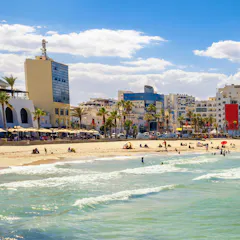
Those who conduct business in Tunisia consider it a low-risk security environment compared to some of its neighbours in North Africa and the Middle East.
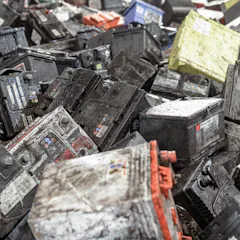
Unregulated and hazardous lead acid battery manufacturing and recycling plants are often adjacent to residential areas, agricultural and grazing lands.

Teeth can reveal a lot about diversity when they are reasonably well-preserved.
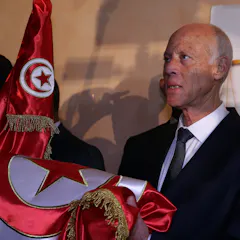
Parts of Tunisia’s political discourse look a lot like its colonial past.
Top contributors
-

Director of the Centre for Global Development and Professor in the School of Education, University of Aberdeen
-
Senior Lecturer in International Relations, University of Aberdeen
-
Researcher - African Security - One Earth Future Foundation, University of the Witwatersrand
-
Doctoral student in Anthropology, University of Amsterdam
-
Professor of Peace Studies, University of Bradford
-
Associate Professor in Politics and Islam, Durham University
-
Associate professor in Vertebrate Palaeontology, University of the Witwatersrand
-
PhD Student, International Development Department, University of Birmingham
-
Professor and Chair of Allied Health Studies, Stephen F. Austin State University
-
Professeur associé en finance, EM Normandie
-
Professor, Université Sidi Mohammed Ben Abdellah
-
Associate Professor in Sport Policy & Management, Qatar University
-
Teaching Fellow, University of Portsmouth
-
PhD Candidate, School of Government and International Affairs, Durham University
-
Professor of Middle Eastern Studies and Public Policy and Director of the Interdisciplinary Studies Institute, UMass Amherst