
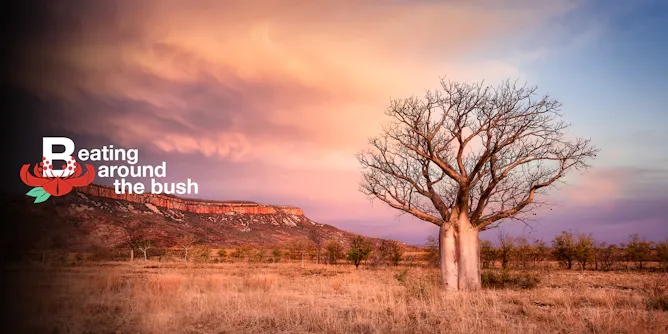
The leaves, when boiled, can be eaten like spinach. The seeds can be roasted for a coffee substitute, and the pulp can be fermented to make beer.
Articles on Trees
Displaying 301 - 320 of 415 articles

Thousands of years of history tells the same story over and over: you ignore soil at your peril.
What do earthquakes, wealthy Italian families and your circulatory system have in common? Scientists use fractals, self-similarity and power laws to translate from local to global scales.
Stockwellia has links back to the epoch before Australia separated into its own continent and was mostly covered in rainforest.
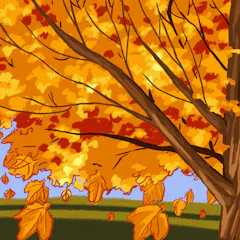
Leaves fall off trees when they aren’t doing their job any more. If there isn’t enough water, the leaf can be damaged and stop working.
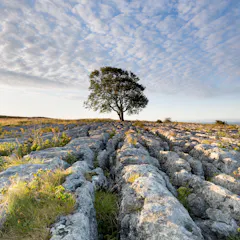
A new study has calculated the tremendous cost of ash dieback to the UK economy.
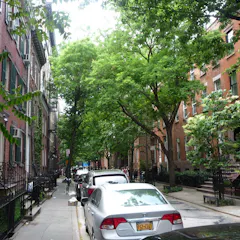
Trees clean urban air, store carbon, slow floodwaters and can be used to design safer streets. Scholars are starting to calculate what these services are worth – a fitting topic for Arbor Day.
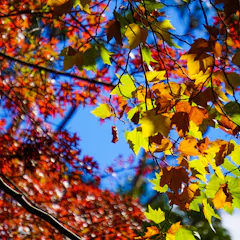
Record-breaking summer heat might mean trees delay and mute their autumn hues.

Eucalypts have been in Australia for 45 million years. But hundreds of species appeared more recently than previously thought.

Climate extremes are killing Australian trees, but we don’t know where they’re dying. Scientists are asking the public to use their phones to help.
Walking towards this tree, which grows only on a select few mist-shrouded mountainsides in Queensland, can feel like stepping into a prehistoric dinosaur-filled fantasy.
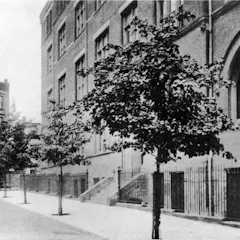
In 1910, along one 45-block stretch of New York City’s Fifth Avenue, there were only 13 trees.
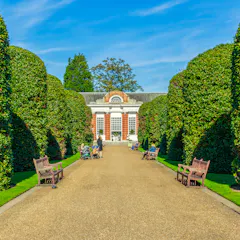
Keeping urban habitats such as parks neat and tidy by removing dead wood and leaves is driving the species which live there to extinction.
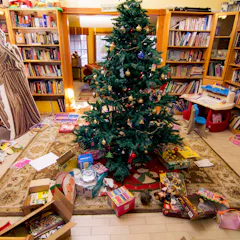
Studies show the presence of natural living things in homes improve wellbeing. So why not have your own version of a Christmas tree all year round?
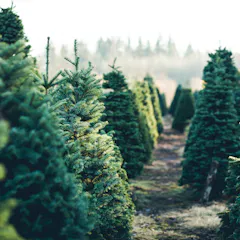
Whether plastic or natural, Christmas trees are generally bad for the environment. However, a new chemical process could recycle dead trees into all kinds of useful products.
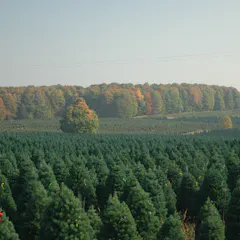
Both natural and artificial Christmas trees have environmental impacts, but they’re not major. What matters most is what happens to the trees after the holidays.
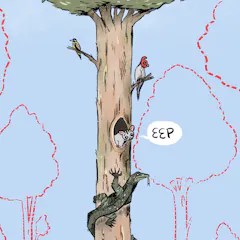
It takes a eucalyptus tree more than a hundred years to develop hollows suitable to shelter Aussie animals, and just moments to cut it down.
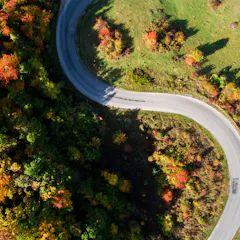
Valuing nature is hardly natural.
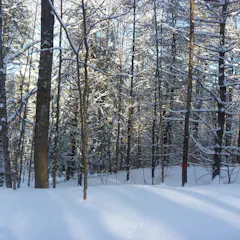
Climate change is shrinking winter snow cover in Northeast forests, which protects tree roots and soil from repeated freezing and thawing. This could stunt tree growth and forest carbon storage.
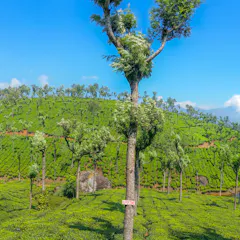
If we need more trees, many will have to be introduced into managed agricultural mosaic landscapes.
Top contributors
-

Senior Research Associate, School of Agriculture, Food and Ecosystem Sciences, The University of Melbourne
-
Honorary Associate Professor, Forest Measurement and Management, Fenner School of Environment and Society, Australian National University
-
Distinguished Professor of Ecology, Fenner School of Environment and Society, Australian National University
-
Professor of Environmental Science, Australian National University
-
Distinguished Professor, Ecosystem Function and Integration, Western Sydney University
-
Professor Emeritus of Global Change Biology and Terrestrial Systems Science, Oregon State University
-
Professor Emeritus of International Environmental Policy, Tufts University
-
Vice-Chancellor's Research Fellow, Centre for Urban Research, RMIT University
-
Associate professor, The University of Melbourne
-
Professor of Plant Eco-physiology, Western Sydney University
-
Professor in Forest and Landscape Dynamics, The University of Melbourne
-
Vice President of Academic Affairs and Dean of the College, Grinnell College
-
Professor of Atmospheric Science, University of Birmingham
-
Professor, Plant Physiology, James Cook University
-
Distinguished Research Professor and Australian Laureate, James Cook University