
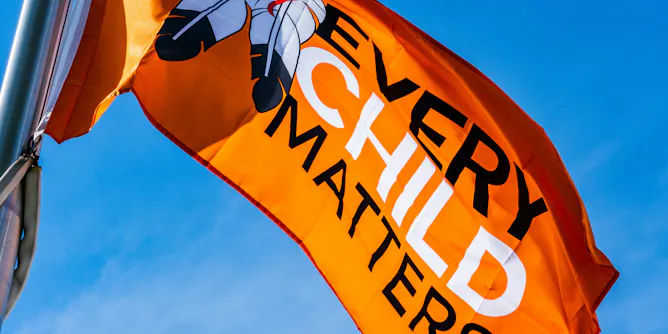
When it comes to reconciliation in Canada, we need to remember that the colonial history encompasses many assimilation tactics and its impacts are ongoing.
Articles on TRC
Displaying 1 - 20 of 27 articles
The Interpreters is a new anthology of creative nonfiction that opens an intriguing window on South Africa.

The Zondo Commission was globally unique in scope and scale. The book selects and explains its key findings and recommendations.
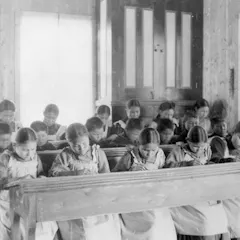
Canada’s recent resolution to label the Indian Residential School system as genocide (and not cultural genocide) is not a mere alteration of words, it is a significant and consequential change.
The famous writer turns 70 this year. She is driven by how South Africans see and hear one another.

A secret plan to destabilise the new democratic government reveals the failed ambitions of the apartheid state security apparatus and confirms what is known about the brutality of the period.

Indigenous people and communities are not monolithic. How they react to and deal with tragedy will be different. Acknowledging that will help us all heal.

Secret burials are the stuff of gothic fiction, but these gothic events actually happened to Indigenous children.

The MMIWG Inquiry two years later: What’s changed and what still needs to be done?
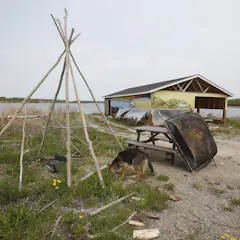
The COVID-19 pandemic crisis could represent an opportunity to live up to all the recent talk of reconciliation in Canada.
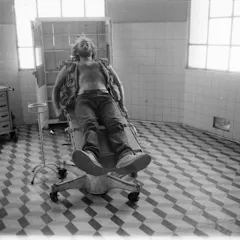
No other photographer in southern Africa has documented war in the way that John Liebenberg did. He captured the life and the conflict of both sides in his body of work.

The RCMP have long been responsible for violence against Indigenous people.
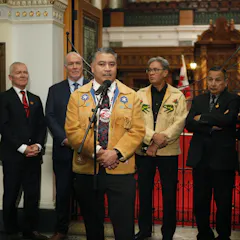
British Columbia recently introduced groundbreaking legislation to implement the rights of Indigenous Peoples. It’s impossible to overstate the importance of this historic achievement.
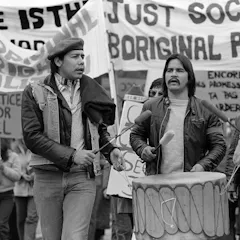
It’s the 12th anniversary of the UN Declaration on the Rights of Indigenous Peoples. Canada has yet to implement this declaration even though the TRC says the road to reconciliation needs to start here.
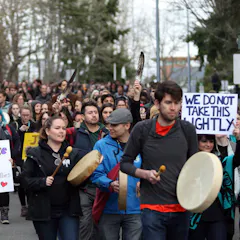
As students and faculty start a new academic year, it’s a good time to highlight the barriers to Indigenizing the campus and the importance of Indigenous voices on campus.
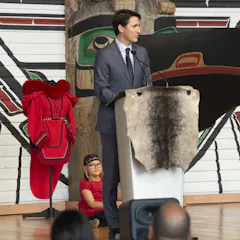
Political scientists concern themselves with ideas of democracy. Now that Canada’s PM has accepted the finding of genocide, this changes how and what political scientists need to discuss.

The Timol ruling will not only have implications for crimes under apartheid, but also put the focus on torture within the South African Police Service.
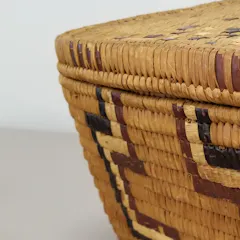
In an attempt to respond to the TRC’s calls to action, academic disciplines such as mathematics can contribute through community-led partnerships with Indigenous peoples.
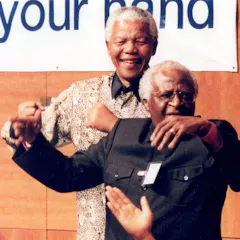
Wherever there is an ugly, unresolved injustice pulling at the fabric of a society, there is an opportunity to haul it out in public and deal with it through a truth commission.

Twenty years after the final report of South Africa’s Truth Commission, dealing with the past will always remain “unfinished business”.
Top contributors
-

UN Expert Mechanism on the Rights of Indigenous Peoples (EMRIP) and Professor in Political Science, Global Affairs and Public Policy, University of Toronto
-
Professor of Political Science, University of Guelph
-
Political Scientist, University of the Western Cape
-
Emeritus Distinguished Professor of Archaeology, Simon Fraser University
-
Senior Research Fellow, Centre for the Advancement of Scholarship, University of Pretoria., University of Pretoria
-
Lecturer in Politics and International Relations, University of Leicester
-
Director, First Peoples Studies Program, Associate Professor, School of Community and Public Affairs, Concordia University
-
Coordinator, Educational Technologies, Thompson Rivers University
-
DSI/NRF SARChI Chair in Visual History & Theory, University of the Western Cape
-
Professor of History and Global Human Rights, McMaster University
-
Associate Professor, Indigenous Studies, University of Lethbridge
-
PhD Candidate, Peter A. Allard School of Law, University of British Columbia
-
Teaching Professor, Department of Mathematics, Simon Fraser University
-
Associate Professor and Director of the First Nations House of Learning, University of British Columbia
-
Professor of Journalism and Media Studies, Rhodes University