
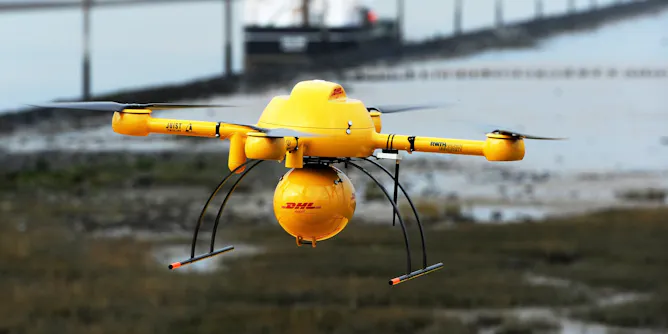
Supply-chain experts see reliable data, STEM education and smarter regulation as essential for Australia to succeed in an increasingly automated world under pressure to be environmentally sustainable.
Articles on Transportation
Displaying 121 - 140 of 168 articles
Insects aren’t known for having big brains, and slime moulds and fungi don’t have any. So how do they solve challenges that test the ingenuity of human transport engineers?
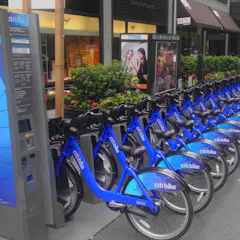
Dozens of US cities have launched bike-share programs in the past decade. There have been bumps – critics want wider access, and cities want bikes stored out of the way – but bike sharing is on a roll.

In the cockpit of an aircraft, the hierarchy between captain and co-pilot is strictly respected. At the risk, sometimes, of poor decision-making.
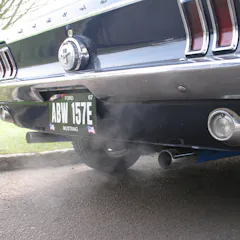
The Trump administration announced a plan to relax fuel economy standards, but well-designed regulations can drive clean car innovations that make U.S. industry globally competitive.

Even in cities with good public transportation, some areas can be ‘transit deserts,’ where demand exceeds supply. Living in these zones makes it hard to access good jobs, health care and other services.
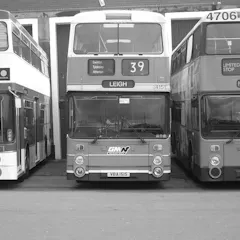
Buses are set to be replaced by private and autonomous vehicles – but it’s not clear how society is going to deal with it.
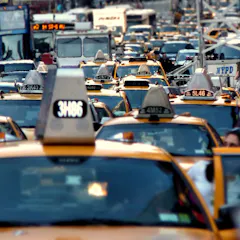
New York soon may charge a fee to drive into central Manhattan as a way of reducing traffic and raising funds for public transit. An urban scholar says this step is overdue in the United States.

Women in minimum wage jobs earn 10% less than their male peers. Wages are systematically lower in jobs more commonly held by women.
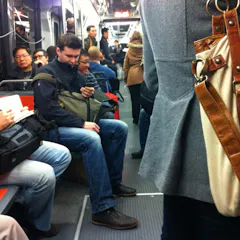
Millions of Americans rely on public transit to get to school, work or stores, but many can’t get the service they need. ‘Uberizing’ transit by offering more options on demand could fill the gaps.
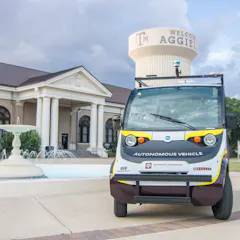
Combining machine learning, artificial intelligence and autonomous vehicles could revolutionize how people with disabilities get around their communities.

Using technology and rhetoric, ride-hailing companies manage to dictate drivers while simultaneously creating the illusion of equal relation.
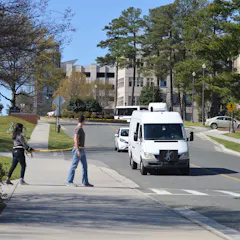
Pedestrians ensure their safety by making eye contact with human drivers. Autonomous cars will have to communicate with nearby people in other ways.

Major airports around the world will see more frequent flight restrictions in the coming decades because of increasingly common hot temperatures.
How might we, and our nation’s roads and highways, need to change as autonomous vehicles become more ubiquitous? We know a lot of the answers, but not all of them.
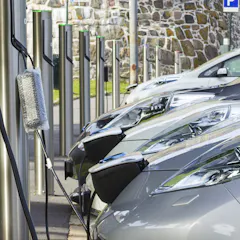
Shifting to plug-in cars wouldn’t be enough to max out global oil consumption by 2040. But it could help make that happen if cities pitch in and ride-sharing doesn’t crowd out public transportation.
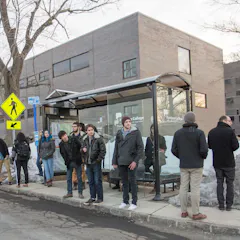
Many Americans live in transit deserts – areas where demand for transit exceeds the supply. To fix these gaps, we need to find and map them so agencies can add transit options in the right places.

Political and community leaders must act now to preserve the American middle class and adapt the US economy for the 21st century.

Analysis of the phenomenon of “total circulation” – situations in which humanity produces a circulation of goods or persons that escapes its control.
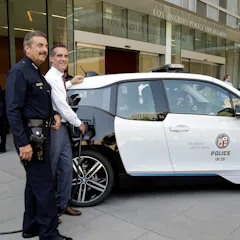
More than 200 mayors have committed their cities to stick with the Paris climate deal no matter what the US does. Electric vehicles offer a promising route to making good on that pledge.
Top contributors
-

Professor, Faculty of Health Sciences, Simon Fraser University
-
Associate Professor of Civil and Environmental Engineering, University of California, Davis
-
Assistant Professor, Environmental and Urban Change, York University, Canada
-
John Rennie Short is a Friend of The Conversation.
Professor Emeritus of Public Policy, University of Maryland, Baltimore County
-
Research Professor Emeritus, University of Michigan
-
Assistant Professor of Community and Regional Planning and Director, Urban Information Lab, The University of Texas at Austin
-
Postdoctoral Fellow in Studying Complex Systems, Stanford University
-
M.S. Candidate, Community and Regional Planning, The University of Texas at Austin
-
Professor of Environmental Design, University of Colorado Boulder
-
Distinguished Blue Planet Prize Professor of Civil and Environmental Engineering and Founding Director, Institute of Transportation Studies, University of California, Davis
-
Professor of Operations Management, Manchester Metropolitan University
-
PhD Candidate, Faculty of Health Sciences, Simon Fraser University
-
Visiting Research Fellow, Intelligent Mobility, Manchester Metropolitan University
-
Professor, Director of the Centre for Robotics, Queensland University of Technology
-
Professor in Robotics, Queensland University of Technology