

As policymakers weigh financial aid for the airline industry, they have an opportunity to help make the US organ transplantation system more equitable at the same time.
Articles on Transportation
Displaying 81 - 100 of 168 articles
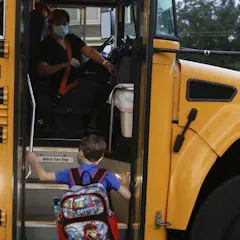
A researcher explains what it will take to make sure children are reasonably safe from catching the coronavirus aboard school buses.
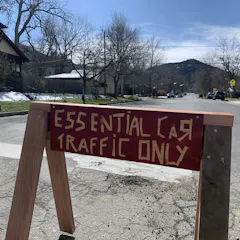
City streets were built to accommodate cars, but the COVID-19 pandemic has scrambled our transport needs. Many cities are moving to make streets more people-friendly and less car-centric.
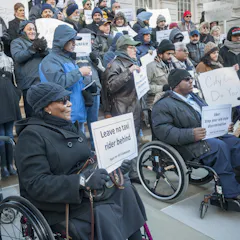
In order to create an efficient future transportation system, autonomous vehicles need to accommodate people with different mobility needs.

Rapid motorisation has made the Indonesian city of Solo prioritise policies to support motorised vehicles, paying little attention to cycling and marginalising poor women.

Driverless vehicles rely heavily on sensors to navigate the world. They’re vulnerable to attack if bad actors trick them into ‘seeing’ things that aren’t there, potentially leading to deadly crashes.
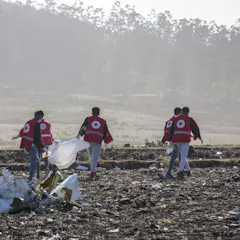
High-profile rail and aerospace disasters of recent years have been the deadly consequence of the systematic erosion of safety precautions due to deregulation.

Much was made of The New York Times’ dual endorsement of Elizabeth Warren and Amy Klobuchar. But four days prior, a hugely popular Facebook meme group threw its support behind Bernie Sanders.
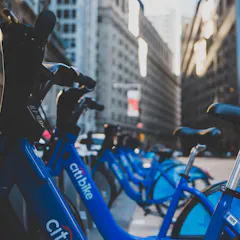
Bike sharing was once proposed as a solution to narrow the cycling gender gap — but it may be further widening this gap.

More workplaces are allowing employees to telecommute, but there are still barriers to more flexible arrangements.
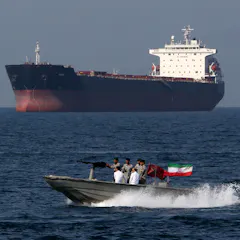
Any disruption to shipping in the narrow seaway could impact oil prices and ratchet up geopolitical tensions.

The sweeping introduction of driverless cars could see more vehicles on the road, driving longer distances. But smart planning could solve some of transit-associated environmental and social problems.
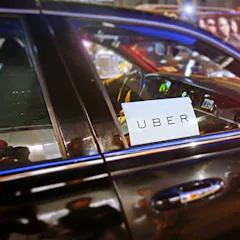
Uber’s first safety report revealed 107 deaths and nearly 6,000 sexual assaults over two years. But the rideshare service may still be safer than the alternatives.

Democratic candidates are keen to burnish their climate credentials by calling for grand electric vehicle plans. But there are both economic and political reasons for going slowly.
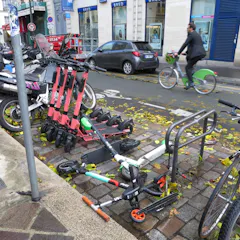
In major cities around the world, dockless scooters and bikes are everywhere, yet the companies themselves are often breathtakingly short-lived. Basic economic concepts give us clues why.

Electric cars gets lots of attention, but in the developing world, electric two-wheelers have the potential to spread quickly – if batteries continue to improve on performance and cost.

The typical American’s annual household carbon footprint is over five times the world per capita average.
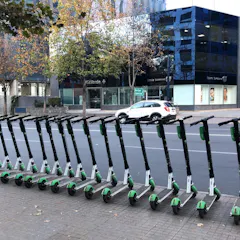
Shared e-scooter programs may seem like a green way to get around, but these small vehicles can have big environmental footprints.

Combining big data sources about bike-share trips with anonymized data from traditional survey research can best capture who is using bike-share programs.
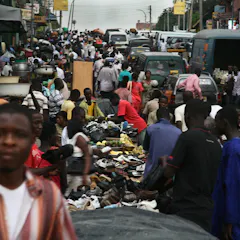
Africa is home to the world’s fastest growing cities. However, poor governance has robbed the continent of the benefits of people and firms clustering together.
Top contributors
-

Professor, Faculty of Health Sciences, Simon Fraser University
-
Associate Professor of Civil and Environmental Engineering, University of California, Davis
-
Assistant Professor, Environmental and Urban Change, York University, Canada
-
John Rennie Short is a Friend of The Conversation.
Professor Emeritus of Public Policy, University of Maryland, Baltimore County
-
Research Professor Emeritus, University of Michigan
-
Assistant Professor of Community and Regional Planning and Director, Urban Information Lab, The University of Texas at Austin
-
Postdoctoral Fellow in Studying Complex Systems, Stanford University
-
M.S. Candidate, Community and Regional Planning, The University of Texas at Austin
-
Professor of Environmental Design, University of Colorado Boulder
-
Distinguished Blue Planet Prize Professor of Civil and Environmental Engineering and Founding Director, Institute of Transportation Studies, University of California, Davis
-
Professor of Operations Management, Manchester Metropolitan University
-
PhD Candidate, Faculty of Health Sciences, Simon Fraser University
-
Visiting Research Fellow, Intelligent Mobility, Manchester Metropolitan University
-
Professor, Director of the Centre for Robotics, Queensland University of Technology
-
Professor in Robotics, Queensland University of Technology