
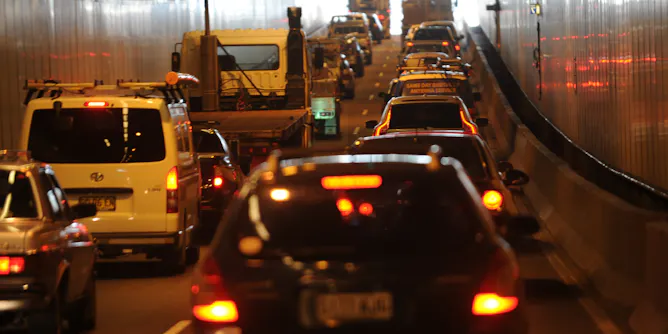
Cutting migration to Australia’s biggest cities would do nothing to ease congestion in those cities and could make it worse.
Articles on Traffic congestion
Displaying 41 - 60 of 73 articles
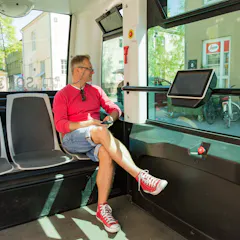
Apps that seamlessly combine all our travel options could be the most significant transport innovation since the automobile, but early trials show government policy support is vital to make MaaS work.

Blind belief that new technology and disruptive innovation will fix congestion in our cities overlooks the need for strong leadership that supports progressive policy innovation.
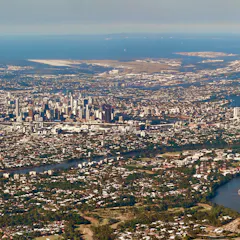
Urban growth has had much less impact on commuting distances and times than media reports would suggest. The explanations include jobs being widely dispersed and residents’ adaptable decision-making.

As traffic slows down, research is gathering momentum.
Billions of taxpayer dollars are committed before all the evidence for, and against, infrastructure projects is in. As well as missing business cases, basic rules of economic modelling are broken.

By identifying and applying the key rules governing the behaviour of each individual, agent-based modelling offers insights into complex phenomena like traffic jams and flocking.
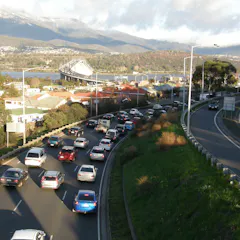
Hobart is a smaller city with big city problems that have become an election issue. Recent growth is creating traffic congestion that affects productivity, residents’ health and liveability.

One potential benefit of WestConnex, which remains untouched, is that it could relieve Sydney’s city centre from cars and make it more pedestrian-friendly.
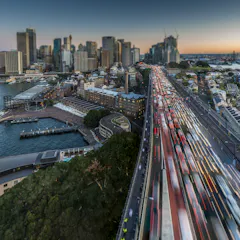
Traffic congestion is the main cost that cars create when they use existing roads. Road use charges are a more efficient and fairer way to cover the cost and help ensure traffic flows.
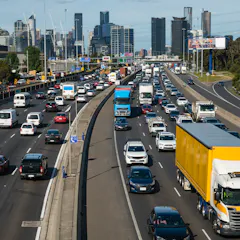
A city-wide experiment suggests well-designed road use charges could ease congestion by encouraging people to drive at different times, take other routes or use other transport.
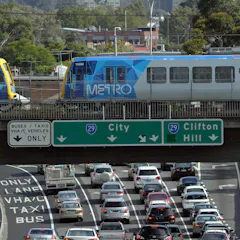
Instead of focusing on freeways, governments should change the way we pay for urban roads and public transport.
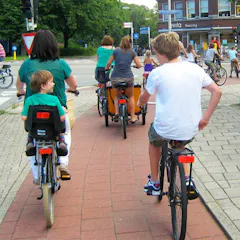
The evidence suggests a small investment in cycling infrastructure, combined with less punitive policing, would enable more Australians to escape daily traffic congestion.

Australians are crying out for political leadership. One way our leaders can redeem themselves is by getting to work on a complete shake-up of how we pay for and use transport infrastructure.
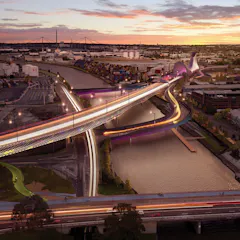
Melbourne’s proposed road project relies on assumptions that inflate estimates of the traffic the new link will carry – but other choices about the future of transport are open to us.
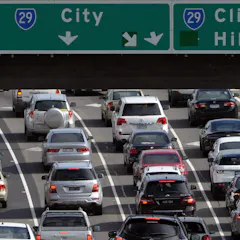
For Melbourne drivers who comfort themselves with the thought that traffic congestion is worse in Sydney, sorry but new analysis shows overall delays are similar, but some commutes are especially bad.
Successful policy interventions, especially those in the social realm influenced by the vagaries of human behaviour, don’t seem to travel well.
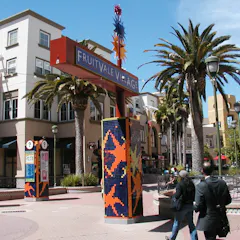
A combination of transit-oriented centres, inclusionary zoning and a special rate on land instead of stamp duty could make housing more affordable by cutting congestion, development and travel costs.
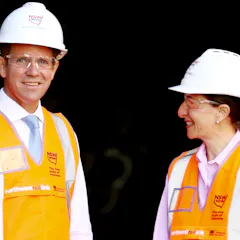
The new NSW premier is right to identify housing affordability as a priority for the people and economy of Sydney. It’s not just housing supply that’s the problem – action is needed on many fronts.
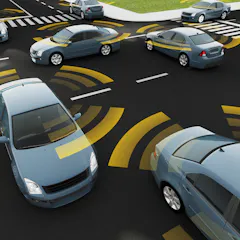
Driverless cars are the future, right? Wait. While things would be simple if our roads were 100% driverless, getting there is anything but. And planning for roads shared by robots and humans is hard.
Top contributors
-

Transport and Cities Program Director, Grattan Institute
-
Professor of Transport Technology and Sustainability, Swinburne University of Technology
-
Transport Fellow, Grattan Institute
-
Associate Professor in Infrastructure Management, University of Sydney
-
Associate Professor in Urban Planning, The University of Queensland
-
Professor of Human Geography, University of Canterbury
-
Honorary Senior Fellow in Transport Planning, The University of Melbourne
-
Professor of Sustainability, Curtin University
-
Professor of Human Geography and Planning, University of Tasmania
-
Research Fellow, University of Sydney
-
Associate professor in Economics, The University of Melbourne
-
Research Director, University of Technology Sydney
-
Assistant Professor, National Yang Ming Chiao Tung University, Taiwan, Griffith University
-
Research assistant, The University of Melbourne
-
Research Principal, Institute for Sustainable Futures, University of Technology Sydney