
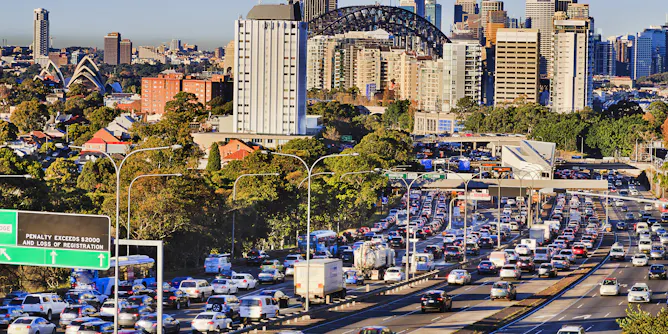
Busting congestion requires some creativity - and evidence-based methods. Here are four of these.
Articles on Traffic
Displaying 101 - 120 of 154 articles
Hundreds of US cities have red light cameras to try to catch traffic violations and prevent accidents. But research shows that the cameras may encourage other types of accidents.

We see the daily commute as a waste of time. But there’s another way to see the experience: a whole life in the events and memories we form during these journeys, which change us as human beings.
In many US cities, ride-hailing apps are luring riders away from public transit and increasing traffic congestion. But with the right rules, they could enhance public transit instead.
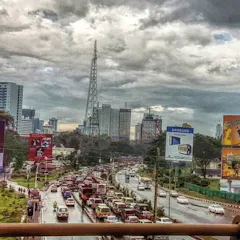
Research shows that cities benefit from car-free days in many ways.
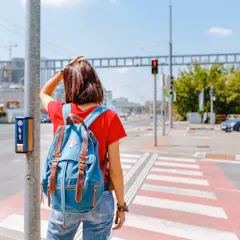
A lecturer in transport engineering weighs in on one of the greatest debates of our time.

Collisions at intersections between motor vehicles, cyclists and pedestrians cause many deaths and injuries. Design that considers how each group approaches intersections improves everyone’s safety.
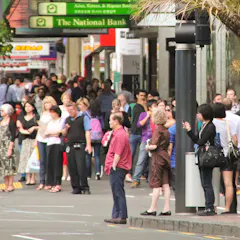
Everyone doesn’t simply wait their turn at traffic lights. Signals are set up to enable a ‘green wave’ for cars and adjust to heavy traffic, making walkers wait longer no matter how many there are.

By identifying and applying the key rules governing the behaviour of each individual, agent-based modelling offers insights into complex phenomena like traffic jams and flocking.

New research has uncovered a previously unknown weakness in smart city systems: devices that trust each other. That could lead to some pretty terrible traffic, among other problems.
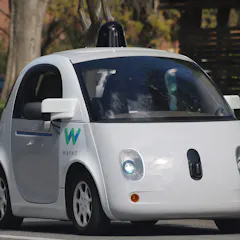
The biggest ethical challenges for self-driving cars arise in mundane situations, not when crashes are unavoidable.

By expanding our understanding of streets and enhancing their design, every street corner could become a space to socialise, to exercise, to play, or to trade.
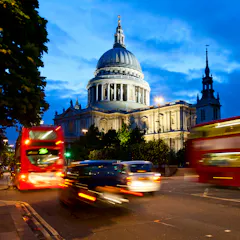
The congestion charge has helped to ease traffic and raise funds. But the rise of Uber and other private hire vehicles have raised unforeseen challenges.
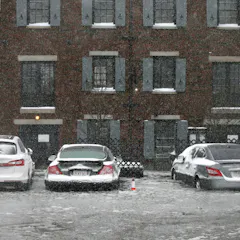
They don’t all support the same strategies for coping with it, but US mayors increasingly see climate change as a pressing urban challenge.

One potential benefit of WestConnex, which remains untouched, is that it could relieve Sydney’s city centre from cars and make it more pedestrian-friendly.

A sociolinguist wonders if they’ll ever be able to interpret the waves, high beams and middle fingers of human drivers.
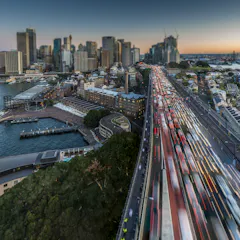
Traffic congestion is the main cost that cars create when they use existing roads. Road use charges are a more efficient and fairer way to cover the cost and help ensure traffic flows.
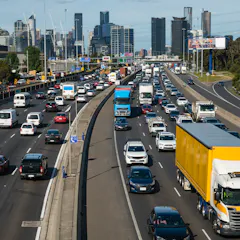
A city-wide experiment suggests well-designed road use charges could ease congestion by encouraging people to drive at different times, take other routes or use other transport.
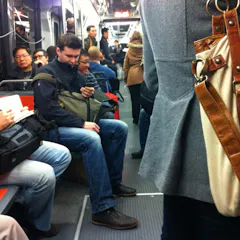
Millions of Americans rely on public transit to get to school, work or stores, but many can’t get the service they need. ‘Uberizing’ transit by offering more options on demand could fill the gaps.
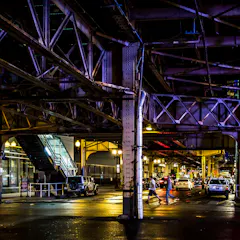
New research shows that noise pollution in US cities is concentrated in poor and minority communities. Beyond regulating airplane noise, the US has done relatively little to curb noise pollution.
Top contributors
-
 John Rennie Short is a Friend of The Conversation.
Professor Emeritus of Public Policy, University of Maryland, Baltimore County
-
Honorary Professor of Transport Studies
-
Associate Research Scientist, Texas A&M University
-
Associate Professor in Infrastructure Management, University of Sydney
-
Professor of Transport Technology and Sustainability, Swinburne University of Technology
-
Transport and Cities Program Director, Grattan Institute
-
Professor of Environmental Design, University of Colorado Boulder
-
Researcher in Road Ecology, Nottingham Trent University
-
Professor of Civil Engineering, Penn State
-
Professor, Crawford School of Public Policy, Australian National University
-
Professor and Director, Institute of Transport and Logistics Studies, University of Sydney
-
Professor of Civil and Environmental Engineering and Director, Supply Chain Transportation and Logistics Center, University of Washington
-
Transport Fellow, Grattan Institute
-
Professor of Transport, University of Sydney
-
Associate Research Professor, Urban Health Collaborative, Drexel University