
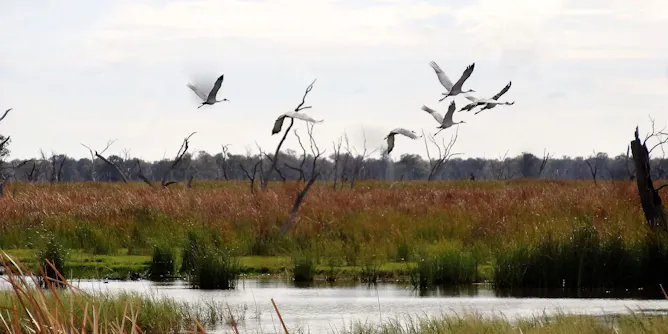
For the Kamilaroi of north-western New South Wales, the brolga and bittern are vital to culture. But conservation often doesn’t account for cultural knowledge or significance.
Articles on Traditional Ecological Knowledge
Displaying all articles
Efforts are being made to develop the capacity of Native tribes to manage bison and bison habitats. An Indigenous scholar explains their sacred significance.

The environmental awards gave cash to climate scientists, conservationists and inventors.
Australia’s Traditional Owners have survived climate shifts before. Bringing traditional ecological knowledge in contact with western climate scientists could help First Nations survive this one.

Traditional ecological knowledge, or TEK, can encompass science, medicine, ecology, religion and culture – and help protect the environment.
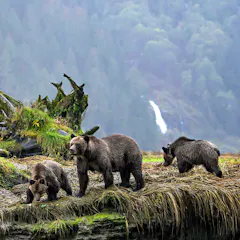
Genetic analysis of grizzly bear populations in British Columbia has revealed a connection in how bear and human cultures may have responded to the landscape.

Around 75% of fishermen in the Outer Hebrides speak Gaelic. Their daily use of the language at work helps keep it alive.
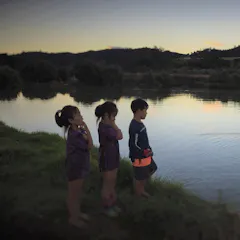
When our COVID-19 lockdowns end, we can’t afford to stop caring about collective well-being. NZ is well positioned to show the world how it’s done – if we listen to Māori and other diverse voices.
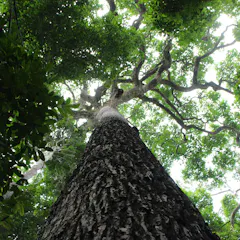
Trees in tropical forests are more than carbon sponges – they’re cultural artefacts.
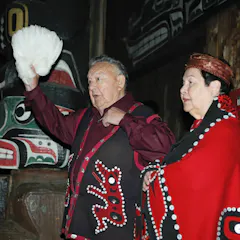
Ancestral Indigenous songs often encode territorial responsibilities and rights, such as in relationship with ‘lokiwey’ (coastal clam gardens) on the Pacific Northwest Coast.
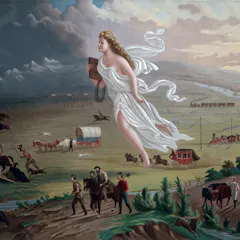
Progress, in historical terms, has so often meant clearing places of their native inhabitants – both human and non-human.
A double standard exists concerning the acceptance of Traditional Knowledge by practitioners of Western science.
Traditional Indigenous knowledge and science has aided the development of modern scientific knowledge, and including Indigenous people in science is essential to its future.
Top contributors
-

Emeritus Distinguished Professor of Archaeology, Simon Fraser University
-
Assistant Professor, Chair in Indigenous Environmental Science, School of Environmental Studies, University of Guelph
-
Associate Professor of Medieval History, University of Oxford
-
UNESCO Chair on Climate Change Variability of Natural and Cultural Heritage and Professor in Physics, James Cook University
-
Professor of History, University of Illinois Urbana-Champaign
-
Council, Wuikinuxv First Nation
-
Professor of Anthropology, Boise State University
-
Associate Professor of Philosophy, Te Kunenga ki Pūrehuroa – Massey University
-
Contributor to the special issue on Ethnobiology Through Song/CEO Ninogaad Knowledge Keepers Foundation/Board of Directors APTN, Indigenous Knowledge
-
Professor of Earth System Science, UCL
-
Lecturer in Film Practice, Newcastle University
-
Yuku Baja Muliku Traditional Owner, Indigenous Knowledge
-
PhD Student, Applied Conservation Science, University of Victoria
-
Professor in Archaeology, Simon Fraser University
-
Program director, James Cook University