
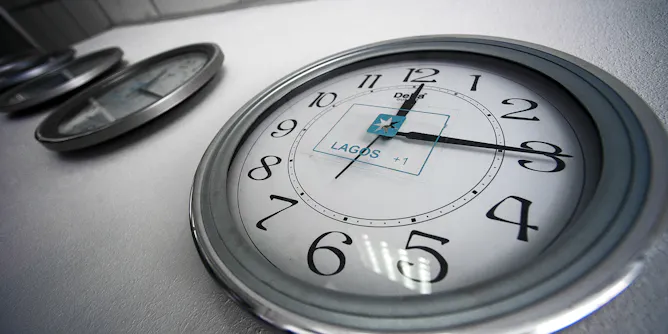
Britons, Nigerians, Americans and Brasilians don’t see time in the same way. These differences are explained by the history and constraints of each country.
Articles on Time
Displaying 121 - 140 of 155 articles

2016 has been a long year, but it’ll be made slightly longer care of a leap second. But why do we need such things?
Healthy Australians slide into extreme inactivity and poor dietary choices over a just a few years of feeling time poor and rushed in their daily lives.

An instant likely feels different to a person, or a redwood, or a gnat. What’s infinitely small for one might be a whole lifetime for another – and that scale influences the choices we make.

There are few things Americans like more than lists and money, but ranking philanthropists on the monetary size of their giving distorts our understanding of generosity, argues one ethicist.
As the years advance, time flies faster. Here’s why.

A philosophical assessment of the latest Star Trek films demonstrates their sophistication.
Understanding why time seems to speed up under certain conditions could reveal when we really feel responsible for our actions.

Measuring time is a crucial part of navigation – particularly in space, where exacting precision is called for. The DSAC is poised to make a change that will aid future deep space missions.
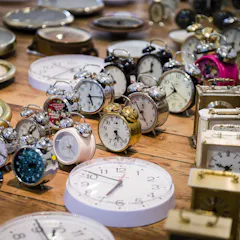
From sundials to atomic clocks, a journey through the way humans have measured time.
CC BY-ND31.9 MB (download)
A podcast on time: telling it, perceiving it, doing it and travelling through it.

DeLillo’s latest novel dwells on the implications of accelerating technology – including the practice of freezing dead bodies in the hope that one day, they could become immortal.

It involves shifting calendars, greedy governments – and the Pope.
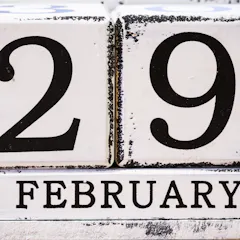
We will get an ‘extra’ day this year, February 29. Where do these quadrennial liberties with our calendar originate?

It is possible – with just a couple of awkward provisos.
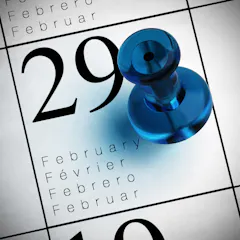
Without them, June would soon fall in winter.

It’s all relative – why scientists understand time in a completely different way.
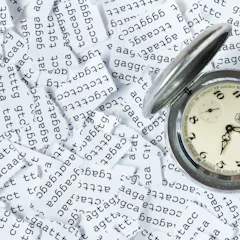
The molecular clock is helping us deepen our knowledge of evolution and completing the tree of life. But how does it actually work?

How successful a mother or career scientist one can become depends on how one’s available time is divided between the two activities.
While few will dispute that a minute comprises 60 seconds, the perception of time can vary dramatically from person to person and from one situation to the next. Time can race, or it can drag.
Top contributors
-

Professor of the Psychology of Time, Liverpool John Moores University
-
Senior Lecturer in Psychology, Leeds Beckett University
-
Professor, Philosophy of Science, The University of Melbourne
-
Professor of Marketing, The Ohio State University
-
Associate Professor in History, The University of Melbourne
-
Lecturer in Philosophy, Queen's University Belfast
-
Associate Professor of Psychology, University of Delaware
-
Professor of Law, University of Washington
-
Professor of Mathematical Biology and Public Engagement, University of Bath
-
George Daniels Professor of Scientific Instrumentation, City St George's, University of London
-
Professor of Computer Networking, University of Technology Sydney
-
Senior Lecturer in Computer Science, University of Cambridge
-
Royal Society University Research Fellow, University of Oxford
-
Professor of Social Geography, Keele University
-
Lecturer in Astronomy, Nottingham Trent University