
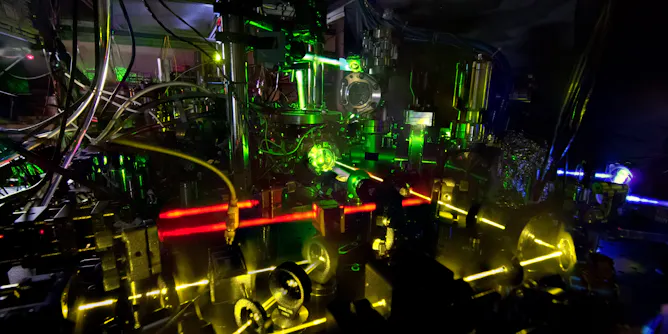
Atomic clocks undergird modern timekeeping. A nuclear clock could be even more precise.
Articles on Atomic clocks
Displaying all articles
August 5 was a whole millisecond shorter. Strap in for the full explanation.

The majority of nations voted to scrap leap seconds – the little jumps added to UTC time to keep it aligned with Earth’s rotation. What can we expect moving forward?
This is the first time a measurement has been made of the entropy generated by telling time.
New research has tested the latest generation of atomic clocks.
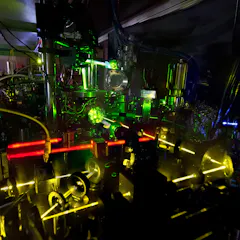
Researchers have made some of the most accurate clocks imaginable in recent years, but the trick is harnessing those clocks to electronics. Using lasers to tune microwaves bridges the gap.

Critically acclaimed art installation highlights the way that the ubiquity of clocks and watches has transformed our relationship to time and the present.

A clock designed to work for 10 millennia is being built – but what is the point of it?
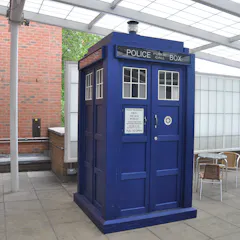
Disappointed about Doctor Who’s TARDIS ending up at the wrong place at the wrong time? Don’t be – it’s incredibly precise.

2016 has been a long year, but it’ll be made slightly longer care of a leap second. But why do we need such things?
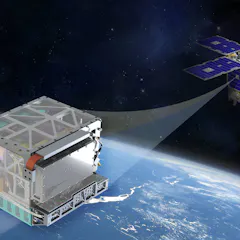
Measuring time is a crucial part of navigation – particularly in space, where exacting precision is called for. The DSAC is poised to make a change that will aid future deep space missions.
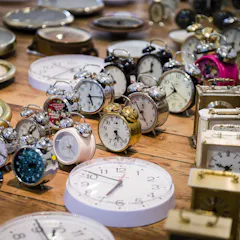
From sundials to atomic clocks, a journey through the way humans have measured time.

CC BY-ND31.9 MB (download)
A podcast on time: telling it, perceiving it, doing it and travelling through it.

They are the most accurate clocks on the planet and a few more in space. So why are researchers trying to make atomic clocks even more accurate?
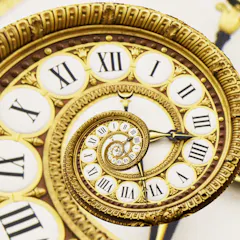
Keeping time isn’t easy, particularly as the Earth’s rotation is slowing down, so we need to keep adding troublesome leap seconds.
Top contributors
-

Professor of Computer Networking, University of Technology Sydney
-
George Daniels Professor of Scientific Instrumentation, City St George's, University of London
-
Research Scientist in Astrophysics, The University of Queensland
-
Principal Investigator on the Deep Space Atomic Clock Technology Demonstration Mission, Jet Propulsion Laboratory, NASA
-
Senior Lecturer in Computer Science, University of Cambridge
-
Lecturer in Philosophy, University of Kent
-
Space Plasma Physicist, Imperial College London
-
Reader in Cognitive Science, Cardiff University
-
President of Wolfson College, University of Cambridge
-
Pro-vice-chancellor, Professor, University of Birmingham
-
NASA
-
Lecturer in Experimental Condensed Matter Physics, Lancaster University
-
Physicist, National Institute of Standards and Technology
-
Lecturer in Modern European History, University of Cambridge
-
Royal Society University Research Fellow, University of Oxford