
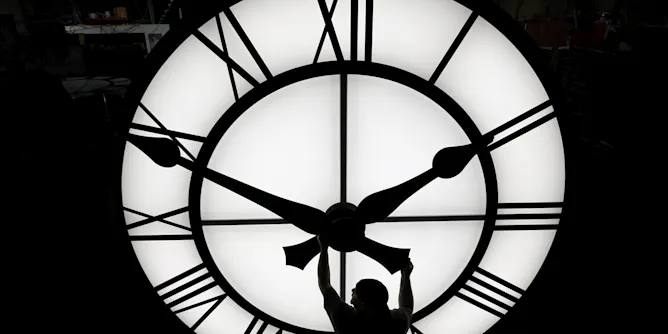
Research suggests that permanent daylight saving time would save lives as well as energy and prevent crime.
Articles on Time
Displaying 61 - 80 of 155 articles
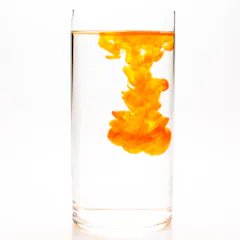
Probabilistic processes are never time-reversible.
Time ends when the universe does.

College students with children have slightly higher GPAs but often take a longer time to graduate and are more likely to drop out of school.
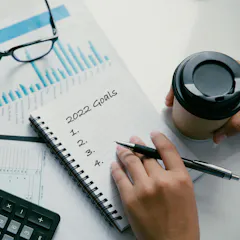
New Year’s resolutions can help us aim for a better future, but time management is the real key to actually achieving those resolutions.
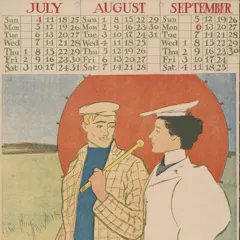
The calendar helps to give us a map of the shifting revolutions of the seasons, ordering our days. But how did it come about?
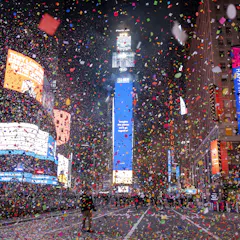
Today most societies take the A.D. time system for granted. That wasn’t always the case.

Cues from people and events around us plus memories of past holidays shape our sense of time over summer. No wonder one day blends into the next.

Africans are stereotyped as having no regard for time and timing. This is a myth.

Some concertgoers reported being so moved by their first concerts in nearly two years that they wept with joy – a testament to the power of this unique form of human communion and connection.
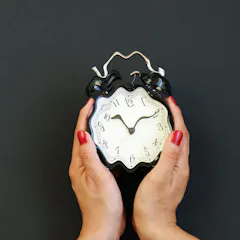
For the first 12 months of the pandemic, a team of researchers tracked the relationship between emotions, time perception and health-related behaviors like wearing a mask.

‘Hustle culture’ is so pervasive in U.S. society that not even the coronavirus pandemic could shake the urge to prioritize productivity.
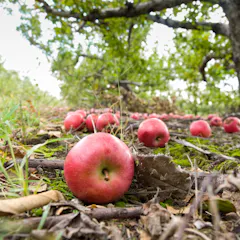
Gravity is something every person on Earth intuitively understands: It is what keeps you on the ground. But how come gravity pulls down, rather than pushes up? Einstein came up with the answer.

A new study finds that the feeling is pervasive – and can change the way trips are planned and how money is spent.
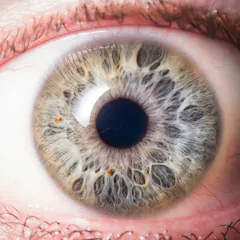
A different interpretation of time might explain why people see their whole lives replayed to them in a split second.
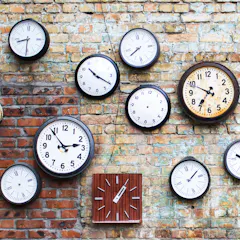
This is the first time a measurement has been made of the entropy generated by telling time.
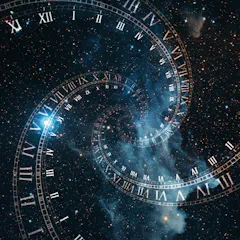
New research has tested the latest generation of atomic clocks.
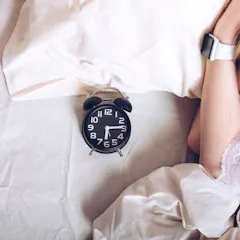
From birdsong to window-tapping professionals to bleeping symphonies, morning alarms have come a long way.
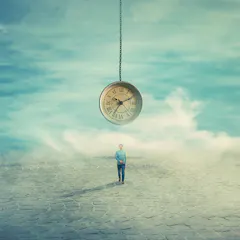
My research shows how lockdown changed our perception of time this year – and holds clues for how we’ll experience the wait for a vaccine in 2021.
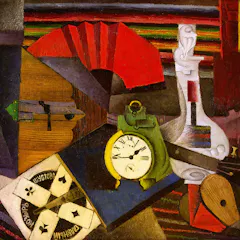
Just because two events last a month does not mean they both last the same amount of time.
Top contributors
-

Professor of the Psychology of Time, Liverpool John Moores University
-
Senior Lecturer in Psychology, Leeds Beckett University
-
Professor, Philosophy of Science, The University of Melbourne
-
Professor of Marketing, The Ohio State University
-
Associate Professor in History, The University of Melbourne
-
Lecturer in Philosophy, Queen's University Belfast
-
Associate Professor of Psychology, University of Delaware
-
Professor of Law, University of Washington
-
Professor of Mathematical Biology and Public Engagement, University of Bath
-
George Daniels Professor of Scientific Instrumentation, City St George's, University of London
-
Professor of Computer Networking, University of Technology Sydney
-
Senior Lecturer in Computer Science, University of Cambridge
-
Royal Society University Research Fellow, University of Oxford
-
Professor of Social Geography, Keele University
-
Lecturer in Astronomy, Nottingham Trent University