
What do Sudoku, AI, Rubik’s cubes, clocks and molecules have in common? They can all be reimagined as algebraic equations.
Articles on Clocks
Displaying all articles
Precision timekeeping is vital for the functioning of our everyday lives.
In between pitches, it might seem as if nothing is going on. But the game’s drama is still unfurling – you just need to know what to look for.
Research suggests that permanent daylight saving time would save lives as well as energy and prevent crime.
This is the first time a measurement has been made of the entropy generated by telling time.

Waking up to a tuneful melody or favourite song can make us feel more alert than the traditional high-pitched ringing or buzzing of an alarm clock.
From birdsong to window-tapping professionals to bleeping symphonies, morning alarms have come a long way.

Critically acclaimed art installation highlights the way that the ubiquity of clocks and watches has transformed our relationship to time and the present.

Washington, California and Florida are mulling a permanent switch to DST. Proponents say that doing so could improve health, save energy and prevent crime.
From sun dials to atomic clocks, we still don’t have a perfect time measuring device.
The original arguments Congress made for ‘springing ahead’ have been thoroughly debunked. So why are they still being used by legislators today?

A clock designed to work for 10 millennia is being built – but what is the point of it?

A solar day is a measure of how long it takes the Earth to rotate from one noon to the next, and today’s summer solstice also happens to be the longest solar day of the year.

Lighter mornings set off a vital biological chain reaction that sets you up for the day.
Time is fixed, but people experience hours, months and days in very different ways. One researcher has spent decades exploring this universal phenomenon.

2016 has been a long year, but it’ll be made slightly longer care of a leap second. But why do we need such things?
Maybe you shouldn’t meet at that time and place? Research shows that the clock and the calendar can be a drag on leisurely activities.
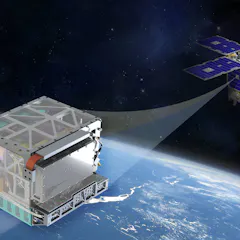
Measuring time is a crucial part of navigation – particularly in space, where exacting precision is called for. The DSAC is poised to make a change that will aid future deep space missions.
From sundials to atomic clocks, a journey through the way humans have measured time.
CC BY-ND31.9 MB (download)
A podcast on time: telling it, perceiving it, doing it and travelling through it.
Top contributors
-

George Daniels Professor of Scientific Instrumentation, City St George's, University of London
-
Professor of Law, University of Washington
-
President of Wolfson College, University of Cambridge
-
Professor in English, University of Kent
-
Professor of Computer Networking, University of Technology Sydney
-
Principal Investigator on the Deep Space Atomic Clock Technology Demonstration Mission, Jet Propulsion Laboratory, NASA
-
Professor of Sociology, Eckerd College
-
NASA
-
Professor of Marketing, The Ohio State University
-
Lecturer in Astronomy, Nottingham Trent University
-
Senior Curator (Astronomy), Museums Victoria Research Institute; The University of Melbourne
-
Emeritus Professor, University of Westminster
-
Senior Lecturer in Psychology, Psychophysiology, Stress, Well-being, University of Westminster
-
Pro-vice-chancellor, Professor, University of Birmingham
-
Associate Professor of Mathematics, Hamilton College