
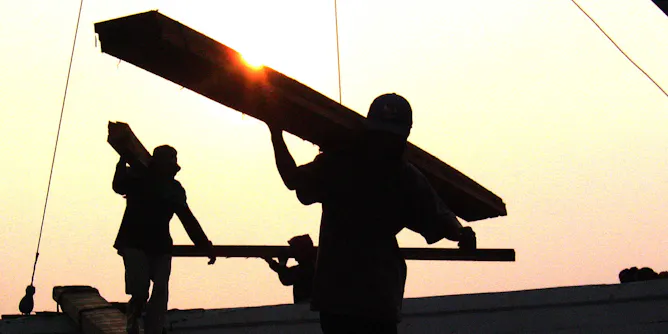
A review of Australia’s illegal logging laws tests the Morrison government’s commitment to halting global forest loss.
Articles on Timber
Displaying 21 - 38 of 38 articles
About 60% of Mexico’s forests are managed by local communities. A scholar who has studied the forests for 30 years explains how this system protects the forests and the people who oversee them.

A staggering 17,500 tree species are at risk of dying out.

Observations collected since the 1980s in the Amazon, Central Africa and Southeast Asia show we are not giving tropical forests enough time to recover after logging.
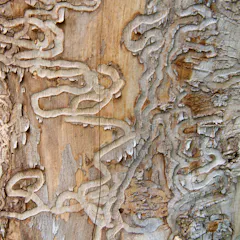
Biological control strategies curb pests using other species that attack the invader. A biologist explains why it can take more than a decade to develop an effective biological control program.
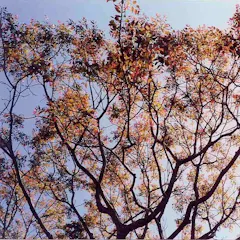
Native deciduous trees are rare in Australia, which means many of the red, yellow and brown leaves we associate with autumn come from introduced species.
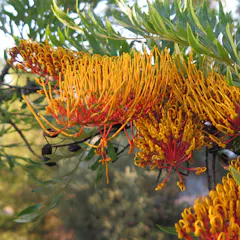
Silky oaks, or Grevillea robusta, are in bloom. These hardy, attractive trees light up the sky in late spring – but handle with care.
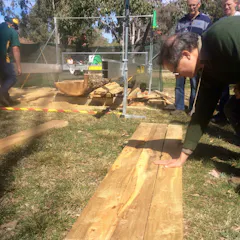
City trees are often short-lived and many others get cut down in their prime. Turning them into mulch both wastes timber and releases stored carbon. A wood rescue program creates a more fitting legacy.
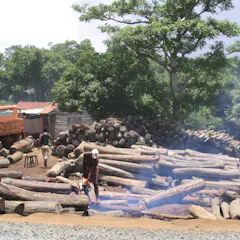
The illegal timber trade is a huge global business worth up to US$150 billion yearly. One way to curb it is by convincing consumers in wealthy countries that buying contraband wood products is wrong.
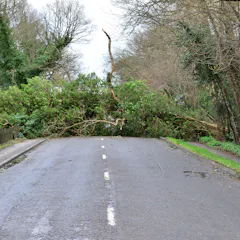
Europe loses as many trees to storms each year as Poland produces in timber. Until now, the models for predicting which trees are at risk have not been good enough.
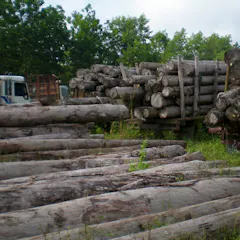
Illegal logging is a serious threat but new ways of detecting illegal timber could help save global forests.

It’s important to close roads from further vehicle use after the end of logging operations. But these roads ought to be re-opened when the next phase of logging takes place in each area of forest.

The islands of São Tomé and Príncipe must work hard to protect their native forests from deforestation.
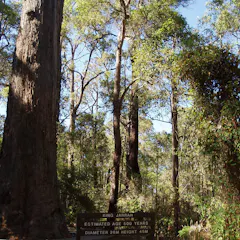
When Europeans first arrived in Australia’s Southwest, they found vast tracts of huge jarrah trees. Now, after logging and dwindling rainfall, only a handful of these giants remain.
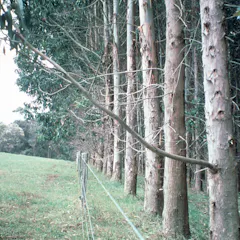
The GFC killed off Australia’s timber plantation boom, leaving behind a million hectares of timber. But by recognising the carbon value in these trees, a new industry could grow in place of the old.
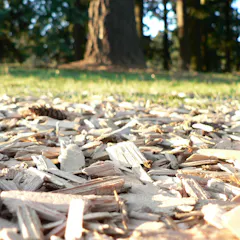
The outcry over the government’s plan to allow wood burning from native forests under the revamped Renewable Energy Target belies the fact that woodchips can be useful and sustainable if harvested responsibly.

Until recently, tall wooden towers were an engineering impossibility. Following a breakthrough a few years ago, the sky is increasingly the limit.

For sub-Saharan Africa to benefit fully from its growing economic ties with China both parties need to change their behaviour and attitude.
Top contributors
-

Senior Research Associate, School of Agriculture, Food and Ecosystem Sciences, The University of Melbourne
-
Distinguished Professor of Ecology, Fenner School of Environment and Society, Australian National University
-
Associate Dean, School of Business and Law, Edith Cowan University
-
Honorary Associate Professor, Forest Measurement and Management, Fenner School of Environment and Society, Australian National University
-
Professor of Forest Sciences, Bangor University
-
Senior Research Fellow, Institute for Climate, Energy and Disaster Solutions, Australian National University
-
Postdoctoral researcher, Centre for Ecology, Evolution and Environmental Changes, Universidade de Lisboa
-
Contract Faculty, Ted Rogers School of Management, Ryerson University; SEDRD Adjunct Professor, University of Guelph
-
Professor, University of Cambridge
-
Postdoctoral research fellow, ETH Zurich
-
Director, The Wood Studio, Institute for Sustainable Construction, Edinburgh Napier University
-
Senior Research Fellow in Ecology, Griffith University
-
Associate Dean and Associate Professor, National Defense University
-
Senior Scientist, Inrae
-
Postdoctoral Research Associate, University of Cambridge