

Scientists across all fields make various types of claims about their innovations. Validity tests check whether they deliver on what they promise.
Articles on Technological innovation
Displaying all articles

When technological innovations are first launched, they disrupt engrained ways of doing things. But after a while, the discomfort and mistrust start to shift.

The metaverse offers novel opportunities for retailers and their customers, but retailers need to be adequately prepared to overcome the challenges of new technology.
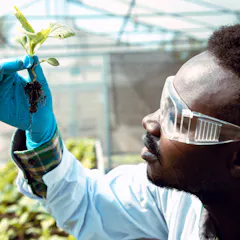
Stronger agricultural R&D systems will enable agriculture to power Africa’s transformation.
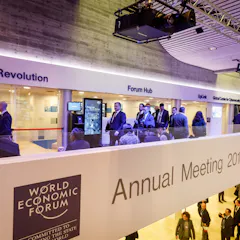
Even a cursory glance at earlier industrial revolutions will show that they have not been associated with the interests of the working or underclasses.

We can’t simply try to work out what’s going to happen during the fourth industrial revolution.

In a remarkable extension of technological leapfrogging, Somaliland will become the first country in the world to use iris recognition in a presidential election.

New technologies are developing with exponential velocity, breadth and depth. Their systemic impact is likely to be profound.
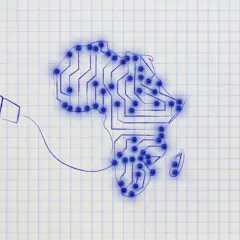
The new Internet of Things has the potential to compensate for Africa’s legacies of underdevelopment.

For consumers of Australia’s retail sector, choice and convenience will continue to emerge. For incumbents unable to deliver on these outcomes, the future is bleak.

Young Australian jobseekers are facing a difficult future due to the loss of many traditional entry-level positions to automation. A solution may lie in bold policy ideas.

As cities trumpet their liveability, creativity and greenness, many informal settlement activities are often relegated to the shadows.

The technological goals are lofty. But fitting the new tech into the social and political landscape might pose the bigger challenge.

A list of 10 new technologies poised to transform our lives provides a chance to think about any related risks sooner than later. Reconceptualizing “value” changes what responsible development means.

Bringing significant benefits to an emergent middle class, Dhaka’s cultural, economic, environmental and political landscapes are being rapidly but unevenly transformed.
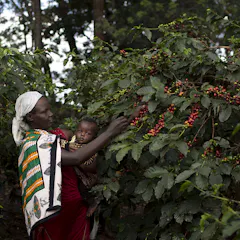
The downturn in the commodity boom will not automatically lead to diversification of Africa’s economies. This can only be achieved through a focus on creating learning economies driven by innovation.
Top contributors
-

Institute Associate, Institute for Culture and Society, Western Sydney University
-
Researcher, University of Sydney
-
Senior Research Fellow, Digital Media, Western Sydney University
-
Professor of Advanced Technology Transitions, Arizona State University
-
Professor of the Practice of International Development, Harvard Kennedy School
-
Emeritus Professor, MTN Solution Space Graduate School of Business, University of Cape Town
-
MSU Foundation Professor, Agricultural, Food and Resource Economics, Michigan State University
-
Senior Fellow, Department of Agricultural Economics, Stellenbosch University
-
Adjunct Professor, Nelson Mandela School of Public Governance, University of Cape Town
-
Assistant Professor, Faculty of Business, University of New Brunswick
-
Co-director; Bureau of Food and Agricultural Policy (BFAP), Stellenbosch University
-
PhD Student, Cognitive Psychology, University of Waterloo
-
Associate Professor of Commerce, University of Virginia
-
Professor of Information Technology and Management, Babson College
-
Lecturer, College of Business and Economics, Australian National University