

Science can help boost national economic productivity in many ways. But it needs to be properly supported.
Articles on Fourth industrial revolution
Displaying 1 - 20 of 55 articles

Most of South Africa’s government officials don’t know how to use technology to improve efficiency.

Wealthier South Africans, particularly those in urban areas, are more optimistic about emerging technologies than those in low-income and rural areas.
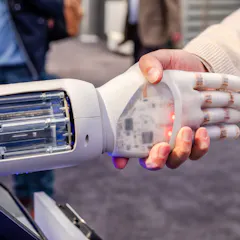
AI and 3D printing could transform the way we make things, but many companies have been slow to take advantage.

The essential ingredients in achieving the development goals are partnerships combined with smart thinking about how to deploy 21st century technologies.

There is a useful set of steps to follow to help the transfer of technological innovations to entrepreneurs who can put them into use.

CC BY-NC-ND14 MB (download)
Innovation in the digital space is not necessarily working for people in the global south.

The scenarios provide plausible and possible alternatives for futures of industrialisation. They also alert decision makers to desired and undesired development pathways.

The narrative of the Fourth Industrial Revolution is more aspiration than reality.

Quantum leaders are curious, adaptable and tolerant of ambiguity and uncertainty.

Up to 40% of all jobs now are tipped to be taken over by AI and robots in the next few decades. My grandmother, born on a farm almost a century ago, has some advice on how to cope.

Sweden electrified at the turn of the 20th century, leading to over 8,000 work stoppages – but the strikers were no Luddites.

‘Science 4.0’ is real. It is about a revolution in which science is an integral part of society.

The Fourth Industrial Revolution failed to deliver; it’s time that we put our faith once again in hard science.
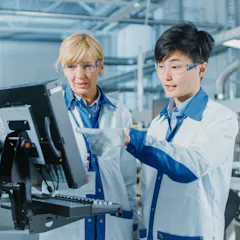
There is a growing mismatch between what education and training provide and the skills needed in workplaces being reshaped by the digital economy. Advanced apprenticeships can help close the gap.

The live streaming of music events online is full of potential – but right now few artists or hosting venues are earning much from it.

We might have had a glimpse of new ways of urban living, but history offers a note of caution. Lasting change depends on us applying technology and taking deliberate action to seize this opportunity.

It’s critical to determine how Canadians who have been considered vulnerable members of the workforce are meaningfully included within the future of work.

CC BY-NC-ND8.02 MB (download)
South Africa should not uncritically embrace the Fourth Industrial Revolution.

There is a significant gap between teenagers’ career knowledge and choices, and the reality of the rapidly changing nature of work.
Top contributors
-

Adjunct Professor, Nelson Mandela School of Public Governance, University of Cape Town
-
Professor of Entrepreneurship and Innovation, Edith Cowan University
-
Associate Professor, College of Business, Government and Law, Flinders University
-
Associate Professor, Educational Technology, Université Laval
-
Senior lecturer, University of the Witwatersrand
-
Innovation Lab Director and Professor, Educational Technology and Innovation Mindset, Concordia University
-
Professor of Philosophy of Science, Durham University
-
Professor and Dean of Humanities, University of the Witwatersrand
-
Research Associate, Department of International Relations, University of the Witwatersrand; Chief Research Officer, Good Governance Africa; Managing Director, Harvey Economics Pty Ltd.
-
Assistant Professor in Development Studies, University of Cambridge
-
Professor of Regional Economic Development, University of Birmingham
-
Associate Professor in International Macroeconomics, Cambridge Judge Business School
-
Professor of Comparative Employment Systems, University of Manchester
-
Professor of Advanced Technology Transitions, Arizona State University
-
Professor, Faculty of Business & Economics, University of Winnipeg