
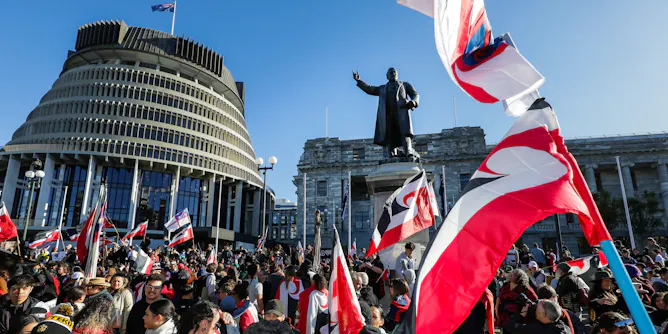
With ACT’s Treaty Principles Bill imminent, how much do we know about the current principles? And were they ever a proper reflection of the text and intent of te Tiriti?
Articles on Te Tiriti o Waitangi
Displaying 21 - 40 of 49 articles
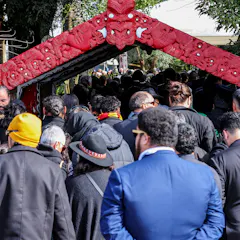
With the death of Kīngi Tūheitia at a time of heightened tensions around Māori-Crown relations, the Kingitanga movement’s founding principle of kotahitanga – unity – remains as relevant as ever.
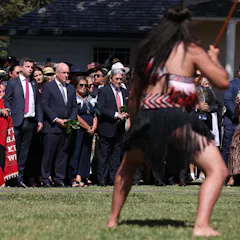
With debate raging around the Treaty Principles Bill. It’s important to recognise a dispute between Māori and the Crown is not the same as a breakdown in relations between Māori and Pākehā in general.
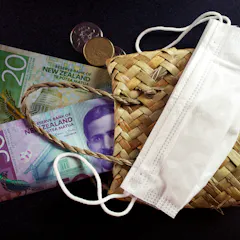
David Seymour’s expectation that drug-buying policy be based on need rather than ethnicity misses the point: the Treaty of Waitangi is already about equality, and can help guide good decisions.
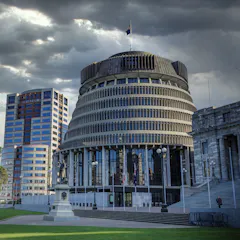
New Zealand is far from a tyranny. But there are signs its democratic institutions are not as robust as they might be – with the proposed ‘fast-track’ legislation bringing concerns to a head.
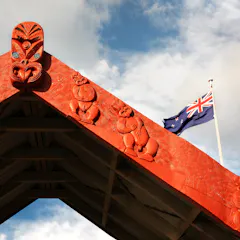
Modern interpretations of Te Tiriti o Waitangi cause sometimes bitter political debate. But new research shows New Zealanders – especially younger ones – see the Treaty largely as a positive symbol.

If a future government wanted to block fast-tracked projects, it could trigger investor-state dispute settlement clauses built into existing trade agreements, with billions potentially at stake.

If a new declaration based on customary concepts of tikanga and mana is recognised by the courts, it could potentially give interest groups the legal standing to sue on behalf of whales.
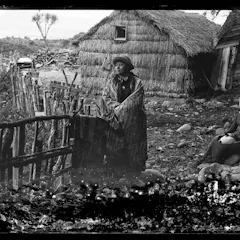
A major new exhibition and book showcase Aotearoa New Zealand’s earliest photography, and how the new technology was integral to the colonial project.

While the New Zealand government removes reference to the Treaty in the Oranga Tamariki Act, Canada and even Australia are taking steps in the opposite direction on Indigenous children’s rights.
Just 1% of politics education in New Zealand is focused on the Māori dimension, new research has found. How can the country discuss Te Tiriti o Waitangi when very few understand it?

Decades of Treaty scholarship have failed to arrive at a consensus about its meaning and purpose. Dispensing with various mistaken interpretations would improve the chances of productive discussion.

If Māori did not explicitly cede sovereignty in 1840, neither did they fully retain it. If sovereignty is already being shared, where does Te Tiriti o Waitangi sit within our unwritten constitution?
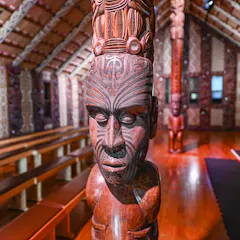
ACT’s Treaty Principles Bill assumes Māori have been granted special privileges. But it can equally be argued the Treaty prevents the undemocratic concentration of power in the hands of a few.
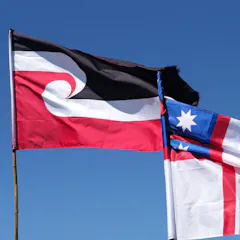
The ACT Party claims revisiting the principles of the Treaty of Waitangi is about political equality. But removing a Māori cultural dimension to New Zealand’s democracy would have an opposite effect.

New Zealand’s marine policies are scattered across multiple laws and regulatory institutions. A dedicated ministry would overcome this fragmentation and help protect vital ecosystems and resources.
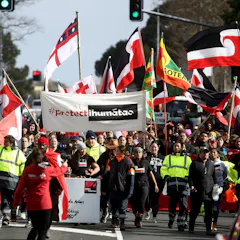
A Treaty framework developed for New Zealand On Air offers a way for journalists to critically evaluate their own work and promote more accountable and equitable day-to-day reporting.
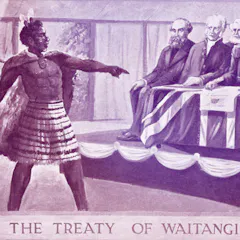
The story some histories tell about the 1840 agreement between Māori and the British Crown may be popular and even comforting. But they are also incomplete – and even unhelpful.
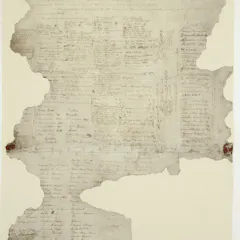
Far from expanding its jurisdiction or having a veto over parliament, the powers of New Zealand’s Waitangi Tribunal have been steadily reduced in recent decades.

Otago University has followed Massey in aspiring to be a “Tiriti-led” institution. But this implies being on the Crown side of the partnership – which is not where a university should be.
Top contributors
-

Adjunct Professor, Stout Research Centre, Victoria University of Wellington and Auckland University of Technology, Professor of Political Science, Charles Sturt University
-
Professor of Law, University of Waikato
-
Professor of Politics, Te Kunenga ki Pūrehuroa – Massey University
-
Honorary Adjunct Professor, Te Kawa a Māui - School of Māori Studies, Te Herenga Waka — Victoria University of Wellington
-
Professor of History, Auckland University of Technology
-
Emeritus Professor of Law, University of Auckland, Waipapa Taumata Rau
-
Research Associate, Public Policy Institute, University of Auckland, Waipapa Taumata Rau
-
Kairangahau/Researcher, Te Kunenga ki Pūrehuroa – Massey University
-
Professor of Race Relations, Health and Wellbeing, Te Kunenga ki Pūrehuroa – Massey University
-
Associate Professor of Political Science, University of Waikato
-
Adjunct professor, Te Herenga Waka — Victoria University of Wellington
-
Professor of Law, University of Waikato
-
Professor of History, University of Otago
-
Associate Professor, Pania Te Maro, Te Kunenga ki Pūrehuroa – Massey University
-
Professor of Political Science, Te Herenga Waka — Victoria University of Wellington