
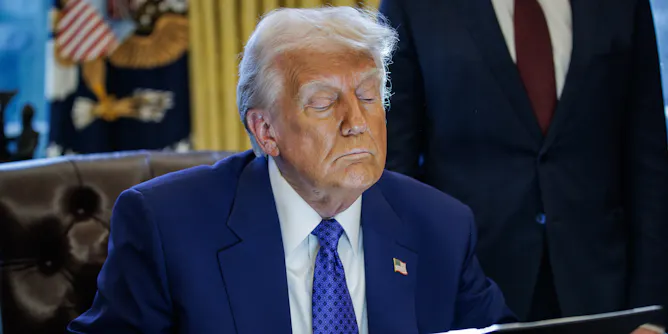
The bloc has been striking deals elsewhere in anticipation of US tariffs, but the need for retaliation remains almost inevitable.
Articles on Tariffs
Displaying 181 - 200 of 367 articles
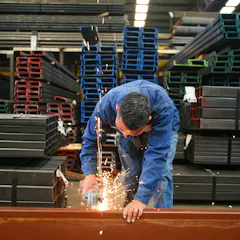
The shock will fall hardest on consumers, certain industries, and states that are sensitive to supply-chain disruptions.

To minimize the impact of the tariffs, governments and enterprises need to adopt policies that minimize economic strain and result in fairer outcomes for all.

Donald Trump’s pledge to halt US inflation looks like a challenging task.

Most of us as consumers decide what to buy based on the price and quality of goods. But our values play a role in our decision-making: what we buy and where we buy it is influenced by our beliefs.
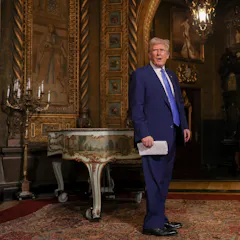
Donald Trump praises the 19th-century “reciprocal” tariff policy of former president William McKinley. But that strategy damaged the US economy – and the Republican Party.

China is less afraid of Trump’s tariffs than it was in his first term.
Development economist Jostein Hauge talks to The Conversation Weekly podcast about the winners and losers from tariffs and protectionism.
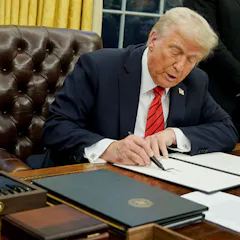
Tariffs will not be good for the US economy, despite what Donald Trump’s team thinks.
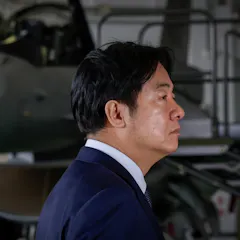
The US is signalling it might take a tougher approach to any bid by Beijing to take over Taiwan.

The White House plan to place tariffs on countries with a domestic consumption tax means Australia’s GST could be in the firing line.
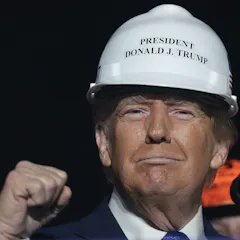
The consumer price index rose by 0.5% in January, meaning Americans are now paying 3% more on items than they were 12 months ago.

Trump’s power is not absolute. It is constrained by the relative decline in US power in the world.
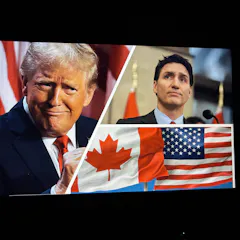
The shock of US tariffs could strengthen regional trading blocs.

The world economy, and Australians, will be affected by Trump’s latest round of tariffs.
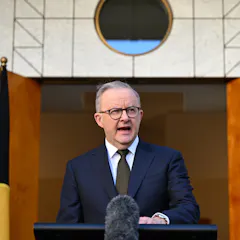
While a timeline for a decision has not been announced, both countries agreed a tariff exemption for Australia was “under consideration”.
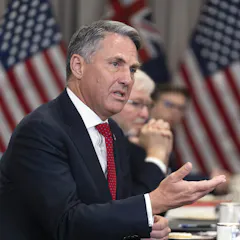
Trump says he will slap 25% tariffs on all foreign steel and aluminium imports to the US. The Albanese government says it’s been prepared for such a move.
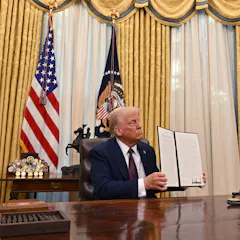
All national economies suffer in a trade war. But despite household incomes taking a small hit, New Zealand would likely weather the impacts of Trump’s trade tariffs.
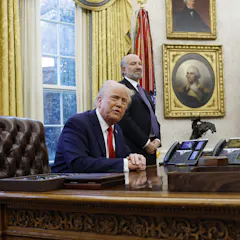
Economic self-sufficiency can bring higher costs and higher inflation. Instead, countries need to be nimble, rather than isolated, to survive economic uncertainty.
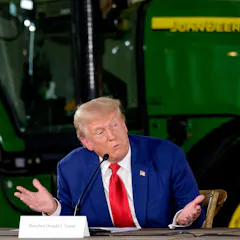
Trump is talking about tariffs on foreign goods on a scale not seen for 90 years, and that did not work well for the US economy, say experts.
Top contributors
-

Professorial Fellow, University of Canberra
-
Professor, and Executive Director: Institute for International Trade, and Director of the Jean Monnet Centre of Trade and Environment, Adelaide University
-
Associate Professor of Political Science, Georgia State University
-
Senior Research Fellow, Institute for International Trade, Adelaide University
-
Distinguished Professor, Arthur J. Gosnell Professor of Economics, & Head, Department of Sustainability, Rochester Institute of Technology
-
Professor of Trade Law and Taxation, Queensland University of Technology
-
Associate Professor of Economics, University of South Carolina
-
Emeritus Professor of Law, University of Auckland, Waipapa Taumata Rau
-
Professor of Economics, University of Minnesota Duluth
-
Associate Professor of Agri-Food Trade and Policy, University of Guelph
-
Professor of Economics, Auckland University of Technology
-
Honorary Research Fellow, City Political Economy Research Centre, City St George's, University of London
-
Professor Emeritus of Economics, Babson College
-
Senior Lecturer in Economics, Bournemouth University
-
Professor of Law and Director of the UOW Transnational Law and Policy Centre, University of Wollongong