
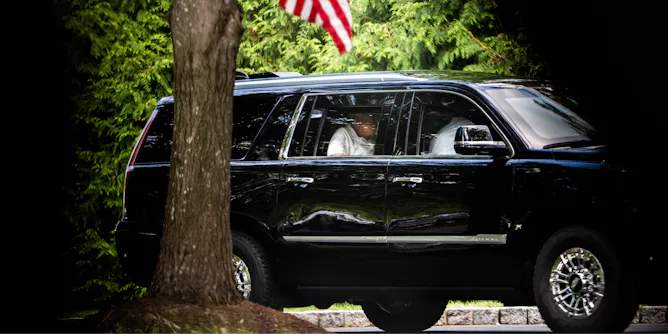
As uncertain as Donald Trump’s new world order is, science can explain the effects of his aggression and how to respond.
Articles on Trump tariffs
Displaying 1 - 20 of 116 articles

Ottawa’s decision to walk away may have been justified, but it is costly for an economy still heavily dependent on the U.S. market.

Canada cannot match the U.S. economically, but it can make Donald Trump’s trade war politically costly as the U.S. heads toward midterm elections.

Being seen as an effective crisis manager is central to Mark Carney’s political brand, but an emphasis on communication and symbolism in support of the brand can only go so far. Results matter.
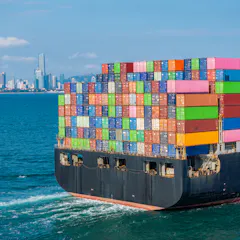
Refunds on US$160 billion of tariffs are slowly flowing back to businesses. But they won’t restore lost customers or lost confidence in trading with the US.

Provincial alcohol bans have drawn presidential notice. Ontario and Québec should now sell their U.S. inventories as a goodwill gesture while continuing to ban imports.

New research suggests Canadian companies that disclose their climate risks are winning over European investors.

On the issue of contested island, both US and China appear happy to keep with the status quo. Meanwhile, the presence of US Defense chief hints at Washington’s desire for a military ‘hotline.’
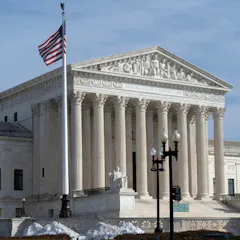
Equating controversial or legally contested executive actions with the collapse of 250 years of constitutional democracy risks conflating the overreach of a singular president.
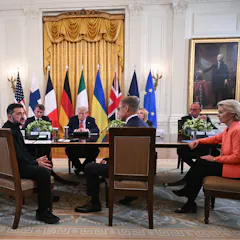
Snap decisions, hard bargaining and public provocation… Donald Trump never ceases to throw off his partners. How can foreign policy best tackle his behaviour.
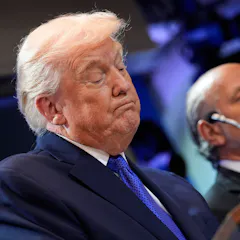
On Friday, Trump said ‘great certainty’ had been brought back to the United States and the world. In truth, the uncertainty is far from over.

U.S. tariffs disrupted Canada’s manufacturing sector in 2025, but their labour-market effects didn’t impact immigrant and Canadian-born workers the same.

For the time being, European leaders are indicating a path of de-escalation – bordering on appeasement.

In 2026, Canada will feel growing pressure to align with some U.S. trade-restrictive measures and, like Mexico, should do so smartly.
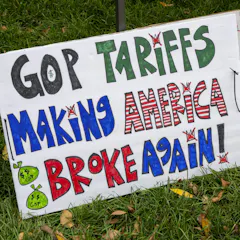
Justices are currently looking at whether Trump’s tariffs are constitutional. But that ruling won’t shed any light on whether they are wise.
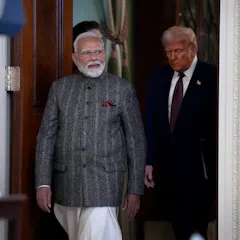
A summit between the leaders of the US, India, Japan and Australia was expected in November. But it never happened.

An Ontario ad on Ronald Reagan’s support of free trade may have been an unnecessary risk. But Mark Carney’s apology to Donald Trump was an unnecessary own-goal.
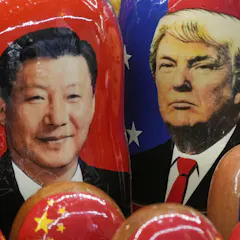
The leaders of the world’s two most powerful nations are set for a rare sit-down together on Oct. 30.

India provides nearly 60% of the world’s IT outsourcing.

Ottawa’s initiative to quickly approve projects in the ‘national interest’ requires a visible plan for making defensible decisions in the complex and risky world of major projects.
Top contributors
-

Professorial Fellow, University of Canberra
-
Professor in Communication Studies, Mount Royal University
-
Associate Professor of Political Science, Brock University
-
PhD Candidate, Political Science, Western University
-
Professor, Centre of Policy Studies and the Impact Project, Victoria University
-
Professor of Law and Director of the UOW Transnational Law and Policy Centre, University of Wollongong
-
Lecturer, Political Science, University of British Columbia
-
Associate Teaching Professor of Finance, University of Notre Dame
-
Associate Professor of Agri-Food Trade and Policy, University of Guelph
-
Professor, Critical Development Studies, York University, Canada
-
Ph.D. Candidate in Political Science, Auburn University
-
Professor of Trade Law and Taxation, Queensland University of Technology
-
Hyman Soloway Chair in Business and Trade Law, L’Université d’Ottawa/University of Ottawa
-
Associate Professor and Deputy Director, Centre of Policy Studies, Victoria University
-
Associate Professor, School of Business, MacEwan University