
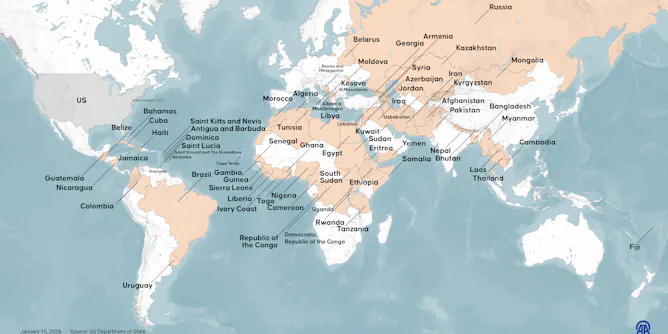
Family reunification is often framed as a cost, but evidence shows it functions as social infrastructure that supports work, well-being and economic stability.
Articles on TANF
Displaying all articles

Disparaging people who get government benefits to make ends meet, especially if they’re Black, is no longer a recipe for political success in America.

People who have experienced domestic violence can have trouble finding and keeping jobs because of physical injuries and their abusers’ efforts to sabotage their employment.
Adults insured by Medicaid who are 19 to 55 years old and don’t have children or other dependents would need to spend 80 hours a month doing paid work, job training or community service.

For middle-class and wealthy families, securing government aid tends to be free of hassles. For low-income families, the process is often stigmatizing and the benefits meager.

Monthly payments to families with children could lift millions of US children out of poverty.

The stories people tell about welfare rarely match up with the stories told by people actually receiving aid.

An often invisible force is undercutting support for policies that help Americans facing economic hardship.
Republicans have sought to limit Medicaid, and a key component of those efforts is requiring that those who receive Medicaid benefits work. But many already do, and others can’t, a scholar explains.
As the GOP prepares to slash spending to pay for tax cuts, lawmakers have been bringing up claims about the poor that don’t stand up to scrutiny.

Only very low-income Americans who are working or looking for work are eligible for federal, time-limited welfare dollars. This restriction doesn’t always help them get back on their feet.
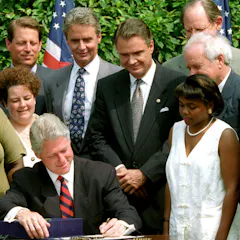
Trump’s rationale for cutting the Temporary Assistance to Needy Families program rests on a myth at odds with contemporary data.

Misleading stereotypes help explain why the share of families living in poverty who benefit from a core assistance program has plummeted – and why Trump wants new cuts.

President Trump has proposed a major funding shift for Medicaid, the joint federal-state program that pays for health care for about 75 million poor people. Would the safety net fray if he did so?
Top contributors
-

Associate Professor of Public Health, The Ohio State University
-
Assistant Professor of Social Work, School of Social Work, Assistant Professor of Public Policy, Gerald R Ford School of Public Policy, University of Michigan
-
Venable Professor of Law, University of Baltimore
-
Professor of Political Science, Hunter College, CUNY Graduate Center
-
Clinical Assistant Professor School of Social Work, The University of Texas at Austin
-
Assistant Professor of Marketing and International Business, Oklahoma State University
-
Associate Professor of Political Science, University of Maryland, Baltimore County
-
Distinguished Professor of Sociology and Public Policy, UMass Amherst
-
Professor of Public Policy, Rutgers University
-
Research Assistant Professor of Social Work, University of Windsor, and Adjunct Professor of Social Work, Wayne State University
-
Professor of Anthropology and Folklore, Butler University
-
Professor of Law, University of Tennessee
-
Associate Professor of of Family and Consumer Sciences, University of Hawaii
-
Assistant Professor of Marketing, University of Oregon
-
PhD Student in Sociology, New York University