

Green ratings are growing in South Africa, mainly for upgraded older buildings, but some low scores suggest buildings may appear greener than they are.
Articles on Sustainable housing
Displaying 1 - 20 of 23 articles

Anna Turns (AT), senior environment editor and Rachael Jolley (RJ), environment editor, showcase climate-friendly ways to transform your living spaces.

Retrofit solutions need to prioritise the use of renewable, sustainable materials that minimise the consequences of resource consumption and pollution.
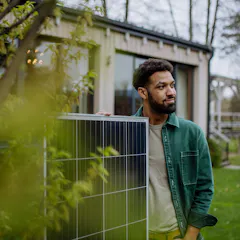
With cement production driving 8% of greenhouse gas emissions, green housing is needed urgently.
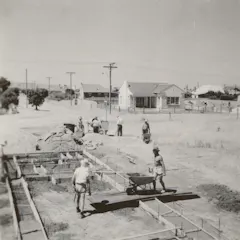
When Australia faced a housing crisis 80 years ago, the government was urged to promote the building of more climate-responsive homes. So why are so many homes today still not made for our climate?
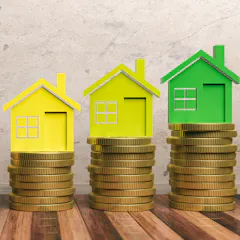
Financial institutions have a key role to play in funding green building construction and retrofits to cut energy use, running costs and emissions.

The top 40% most energy efficient homes aren’t counted as being in fuel poverty, no matter what their bills or income are.

A new report on sustainable and affordable housing falls short by failing to fully consider land-and-housing market dynamics.
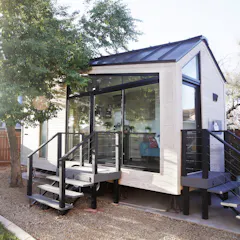
Until now, planning and housing regulations have stood in the way of using tiny houses as permanent homes. That’s starting to change as councils look for solutions to the housing crisis.

As climate change increasingly threatens our daily lives, we must redesign our homes to better protect us and be part of the solution.
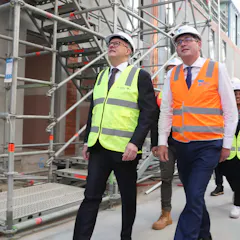
We can construct buildings that reduce atmospheric CO₂ by more than their lifetime emissions. They now don’t cost much more – and a project involving 1.2 million homes would drive costs down further.
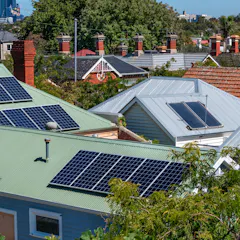
The ban on gas connections to new homes in Victoria reflects global trends and will ultimately save households money and cut their emissions.

A new report outlines a comprehensive strategy for Australia to reduce the carbon footprint of our homes while making them more comfortable and affordable.
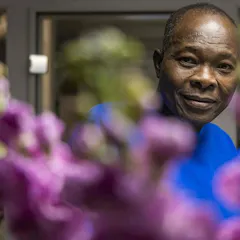
Kéré shows how architecture can build better futures by embracing communities to help catalyse progress.
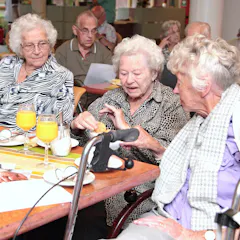
People living in sustainable dwellings may use less energy and water which leads to lower bills. But older people may suffer cognitive decline and struggle to use sustainable technology devices.

Forgot tempeh. The humble shroom has the potential to be used across industries, in ways we’re only beginning to grasp.
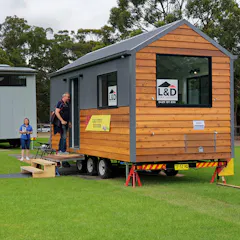
The proportion of people actually living in tiny houses hasn’t been increasing but the movement has prompted debate about living smaller and more sustainably.
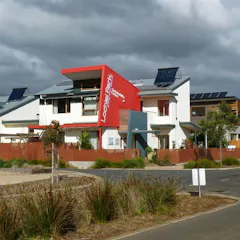
There has never been a better time for public money to go into improving the performance of Australian housing. We could have cut household bills and emissions, as well as saving construction jobs.
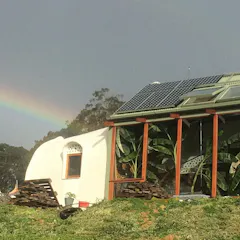
Earth-covered houses are not only highly fire-resistant, but sustainable features such as off-grid power and water supplies could also be life-saving in a bushfire.
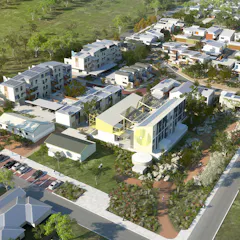
The debate about the transition away from fossil fuels has focused on costs, but right here in Australia we have examples of the benefits of sustainable new energy sources for our cities.
Top contributors
-

Associate Professor in Property, Construction and Project Management, RMIT University
-
Postdoctoral Research Fellow, University of Johannesburg
-
Professor and Acting Head of Department: Department of Finance and Investment Management, University of Johannesburg
-
Lecturer, School of Architecture and Built Environment, Deakin University
-
Professor of Civil Engineering, Indian Institute of Science
-
Professor of Sustainable Architecture, Lancaster University
-
Course Chair in Building Design & Senior Lecturer in Built Environment, Victoria University
-
Lecturer in Industrial and Sustainable Design, Adelaide University
-
PhD Candidate, Circular Economy & Digital Construction, Ulster University
-
Professor of Planning and Director of Urban Transformations Research Centre, Western Sydney University
-
Associate Deputy Vice Chancellor in Research & Innovation, RMIT University
-
Climate Program Manager, Institute of Climate, Energy and Disaster Solutions, Australian National University
-
Senior Lecturer in Urban and Environmental Planning, Griffith University
-
Senior Lecturer in Construction Technology, The University of Melbourne
-
Professor of Building Physics, Ulster University