
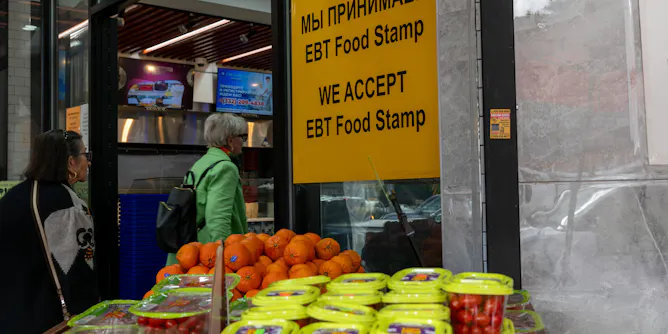
Work requirements will expand and exemptions from them will recede. How much states have to pay will be tied to the prevalence of mistakes, not fraud.
Articles on Supplemental Nutrition Assistance Program (SNAP)
Displaying 21 - 40 of 64 articles

When Arkansas tried to make Medicaid contingent on meeting work requirements, 18,000 low-income Arkansans lost their health insurance, but few of them got jobs.

Society as a whole can benefit from programs that protect kids because the harms experienced in childhood can last a lifetime.

While Iowa is a big food producer, many people in the state need help getting enough to eat.

The federal government spent $100 billion on these benefits, which are still sometimes called food stamps, in 2024.

Maintaining a good diet is not cheap or straightforward, especially on a low income.
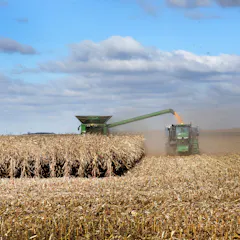
The USDA oversees food production and much more. However, it has little direct power to reduce food prices – a centerpiece of President Trump’s campaign.

About 1 in 9 Americans are facing poverty today. But more than half of the people residing in the US will experience poverty at some point in their adult lives.

This trend may surprise you, given the attention the public, policymakers, politicians and the media paid to food insecurity at the height of the pandemic.
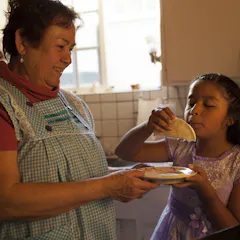
Questions about food insecurity can be less straightforward than they appear.

The share of low-income US families who sometimes or often didn’t have enough food to eat fell from 24.5% to 22.5% between late April and late July of 2020, a research team found.

Funding for the Special Supplemental Nutrition Program for Women, Infants and Children quickly halts during government shutdowns.

Republicans are pressing for policy changes based on a misconception that hardly anyone who gets help buying groceries with Supplemental Nutrition Assistance Program benefits is employed.
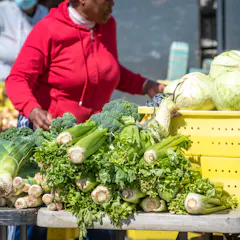
Even if you don’t live near farm country, you’ve got a stake in the upcoming farm bill – including what kind of farms your tax dollars support.
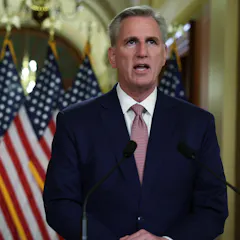
Adults insured by Medicaid who are 19 to 55 years old and don’t have children or other dependents would need to spend 80 hours a month doing paid work, job training or community service.

A team of economists looked at what happened after Supplemental Nutrition Assistance Program work requirements were reinstated in Virginia in 2013.

Expanding SNAP helped shield low-income children from some of the harm caused by economic upheaval when the COVID-19 pandemic began.
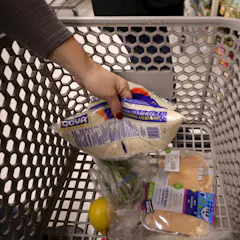
More than 41 million people rely on the Supplemental Nutrition Assistance Program to buy their groceries. When the COVID-19 pandemic began, the program ramped up.
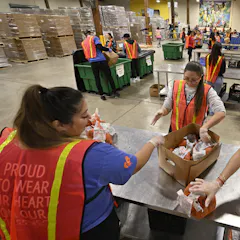
A little more than 1 in 10 Americans can’t get enough to eat – around the same share of the country that was experiencing food insecurity before the COVID-19 pandemic.

An alternative approach to measuring poverty detected a decline in 2021, amid a surge in government support for low-income families.
Top contributors
-

Associate Professor of Political Science, University of Richmond
-
Professor of Economics, Baylor University
-
Executive Director, Swette Center for Sustainable Food Systems, Arizona State University
-
Assistant Professor of Community Health, Tufts University
-
Grace Melo is a Friend of The Conversation.
Assistant professor of Agricultural Economics, Texas A&M University
-
Venable Professor of Law, University of Baltimore
-
Associate Professor of Social Work, University of Denver
-
Assistant Professor of Dietetics and Nutrition, University of Dayton
-
Assistant Professor of Nutrition, Texas State University
-
Assistant Professor of Food and Nutrition, Meredith College
-
Teaching Assistant Professor of Public Policy, University of Denver
-
Professor of Public Policy and Economics, University of California, Berkeley
-
Assistant Professor of Sociology, Mississippi State University
-
Ph.D. Student in Public Policy, Harvard Kennedy School
-
Assistant Professor of Nutritional Sciences, University of Michigan