
Should the U.S. help low-income households afford water service, as it does with heating and groceries? Chile does. An economist explains how it works there and how it could work here.
Articles on Supplemental Nutrition Assistance Program (SNAP)
Displaying 41 - 60 of 64 articles
A recent survey finds that the pandemic made it harder for many US households to put food on the table. It also changed the ways in which people buy and store food.
Long-term increases like this are unusual. So is the fact that this increased governmental generosity began with a measure approved by Congress when Republicans held majorities in both chambers.

Food insufficiency rates rose across the board, researchers who analyzed government data found.
While the food insecurity rate held steady in 2020, the racial hunger gap increased.
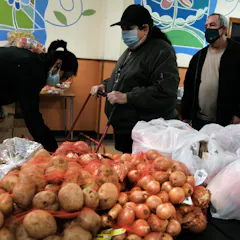
Early estimates US poverty rate estimates indicate that policies intended to soften the blow of economic upheaval made a big difference.

An economist explains what it would cost to give SNAP benefits to all Americans in households earning up to about $100,000 per year – and why it would be worth it.

Detecting food insecurity requires more than assessing what’s in your refrigerator or measuring the distance between your home and the closest supermarket.
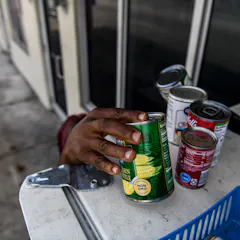
Formerly incarcerated Americans face food insecurity rates double that of the general population. A 1996 law that prohibits drug felons from getting crucial benefits may be partially to blame.

Many studies conducted in recent years tie lower poverty rates for children to better health and higher pay when they grow up.
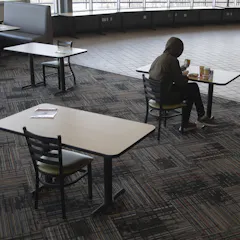
The federal government has temporarily widened eligibility for food assistance to more students. Two scholars argue this needs to be made permanent and be accompanied with an awareness campaign.

Monthly payments to families with children could lift millions of US children out of poverty.

The Biden administration is trying to shore up SNAP, a mainstay of the safety net.

The United States has a robust food supply chain and a social safety net in place that could, if fully utilized, nearly eliminate hunger within its borders.
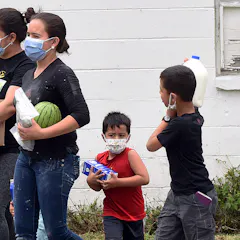
An estimated 1 in 4 US children have trouble getting enough to eat at least sometimes. We asked four scholars for their insights..
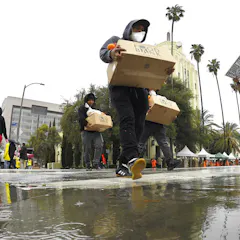
Not having enough to eat is a major public health concern, not only because it causes hunger and distress, but also because it’s linked to poor nutrition and unstable diet patterns.
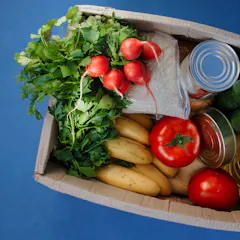
Dayton Children’s Hospital has begun to screen patients and their families for food insecurity, referring many of them to its ‘Food Pharm.’
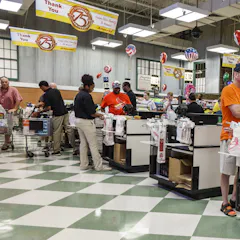
The food aid program helps low-income families put food on the table and injects money straight into struggling local economies. It will be critical throughout the crisis the coronavirus is stoking.

States are increasingly turning to machine learning and algorithms to detect fraud in food stamps, Medicaid and other welfare programs – despite little evidence of actual fraud.

Getting people off welfare appears to “disappear” as many as it puts into jobs.
Top contributors
-

Associate Professor of Political Science, University of Richmond
-
Professor of Economics, Baylor University
-
Executive Director, Swette Center for Sustainable Food Systems, Arizona State University
-
Assistant Professor of Community Health, Tufts University
-
Grace Melo is a Friend of The Conversation.
Assistant professor of Agricultural Economics, Texas A&M University
-
Venable Professor of Law, University of Baltimore
-
Associate Professor of Social Work, University of Denver
-
Assistant Professor of Dietetics and Nutrition, University of Dayton
-
Assistant Professor of Nutrition, Texas State University
-
Assistant Professor of Food and Nutrition, Meredith College
-
Teaching Assistant Professor of Public Policy, University of Denver
-
Professor of Public Policy and Economics, University of California, Berkeley
-
Assistant Professor of Sociology, Mississippi State University
-
Ph.D. Student in Public Policy, Harvard Kennedy School
-
Assistant Professor of Nutritional Sciences, University of Michigan