
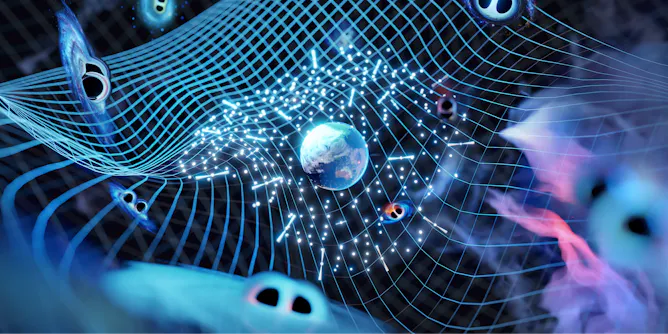
By timing radio pulses from an array of galactic pulsars, scientists see hints of gravitational waves from supermassive black hole pairs in a breakthrough that may reveal hidden details of galaxy evolution.
Articles on Supermassive black holes
Displaying 21 - 40 of 54 articles
Astronomers have found that mysterious dark energy may originate in black holes.
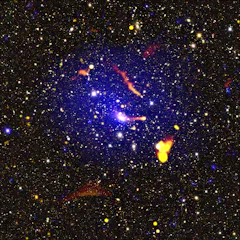
One of the objects is a ‘fossil’ radio source – a leftover from the death of a supermassive black hole that once shot out huge jets of plasma.
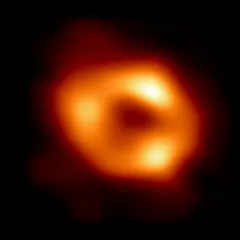
Sagittarius A* is a massive black hole at the center of the Milky Way. Now that astronomers have imaged it, they can begin to learn more about black holes within other galaxies across the universe.
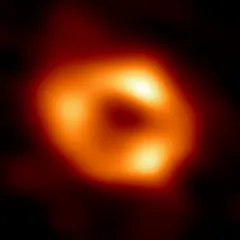
We finally know that Sagittarius A* really exists.

Despite the name, some black holes effectively “shine” as they suck up nearby material with such force that it begins to glow. New research reveals a new method for detecting these active black holes.
We have to look back to the Big Bang to find out.

Astronomers have taken a close-up look at the jets of plasma streaking away from a supermassive black hole - one of the strangest and most energetic features of galaxies.
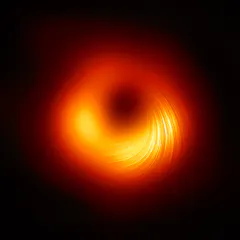
New research can help explain how black holes can produce powerful jets.
Some of the baby radio galaxies found may not be ‘babies’ at all. Rather, they may be ‘angsty teens’, rapidly growing into adults much faster than researchers had anticipated.
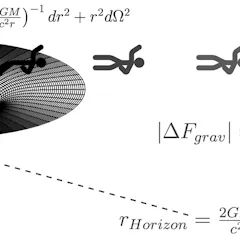
If you are a sci-fi junkie you’ve probably wondered what would happen if you were unlucky enough to fall into a black hole. How well you’d fare all depends on the type of black hole.
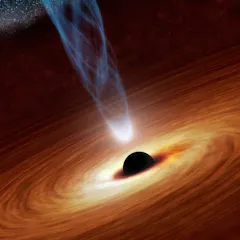
Roger Penrose helped resurrect Einstein’s general theory of relativity, and Reinhard Genzel and Andrea Ghez showed there was a black hole in the middle of our galaxy.
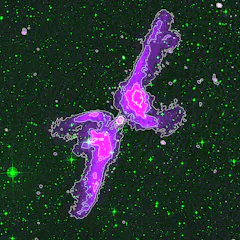
Like a cosmic butterfly in the sky, radio galaxy PKS 2014-55 was observed by CSIRO researchers with the Australian SKA Pathfinder telescope.

There is a massive black hole in the center of the Milky Way galaxy. Measurements of star orbits near this black hole suggest that there may be a second companion black hole nearby.
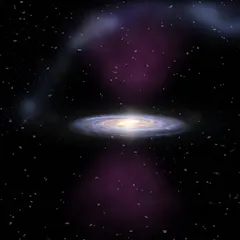
New research shows the supermassive black hole at the centre of the Milky Way spat out an enormous beam of radiation 3.5 million years ago
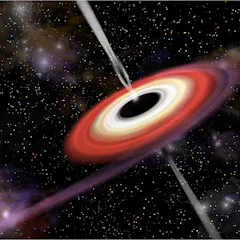
If you got too close to a black hole, it would suck you in and you’d never be able to escape, even if you were travelling at the speed of light.
This point of no return is called the event horizon.
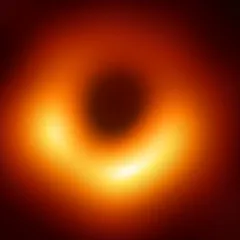
Astronomers say they have “seen what we thought was unseeable” in releasing the first image of a supermassive black hole. So how did we get to this historic observation?
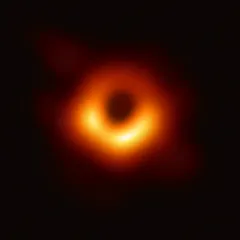
Scientists turned Earth into one giant telescope to capture the uncapturable.
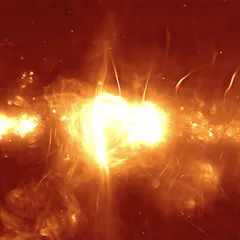
A black hole is an object with such a strong gravitational pull that nothing, not even light, can escape from it.
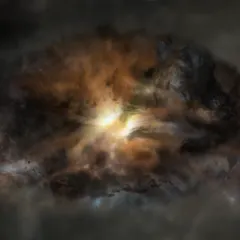
A number of surrounding galaxies are slowly being devoured by the most luminous object in the sky.
Top contributors
-

Professor of Astrophysics, University of Sydney
-
Post-doctoral researcher in Astrophysics, University of the Western Cape
-
JASPER Postdoctoral Researcher, University of Arizona
-
Senior Curator (Astronomy), Museums Victoria Research Institute; The University of Melbourne
-
Postdoctoral Research Fellow, Astrophysics, The University of Queensland
-
Postdoctoral Researcher of Astrophysics, University of Bath
-
Assistant Professor of Applied Mathematics, Durham University
-
Professor of Physics & Astronomy, Yale University
-
Lecturer of Physics and Astronomy, Cardiff University
-
Associate Professor, The University of Queensland
-
Professor of Observational Astronomy, University of Leicester
-
Professor in High Energy Astrophyics, Adelaide University
-
Associate Professor, University of Hertfordshire
-
Reader (Physics and Astronomy), University of Sussex
-
Research scientist & Head of Science Operations and Support, e-MERLIN/VLBI National Radio Astronomy Facility, Jodrell Bank Centre for Astrophysics, University of Manchester