
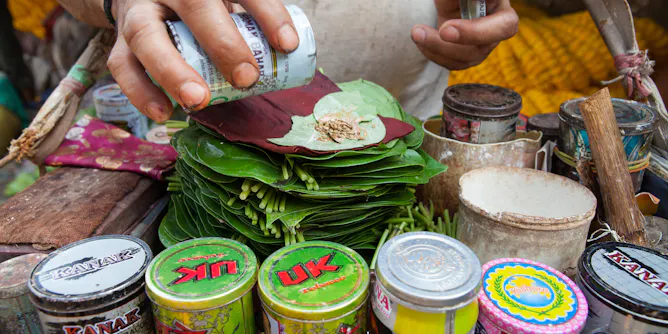
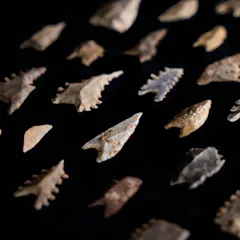
Betel nut is the fourth most-used psychoactive drug in the world – and new evidence suggests it was being used in Indonesia as long as 25,000 years ago.
Articles on Sulawesi
Displaying all articles
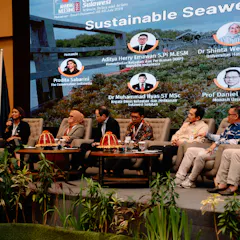
A research program is narrowing Indonesia’s research-policy gap in Sulawesi. But the island’s blue economy vision is colliding with Jakarta’s nickel ambitions.

People were creating cave art in Indonesia 67,800 years ago – before modern humans reached Australia.

It’s the first evidence that early humans made a formidable sea crossing from the mainland to Sulawesi at least 1 million years ago.
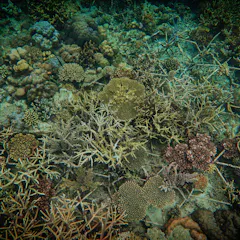
Artificial reef stars have been added to damaged coral reefs in Sulawesi, Indonesia. A new study shows that within just four years, restored reefs are thriving as much as healthy reefs.
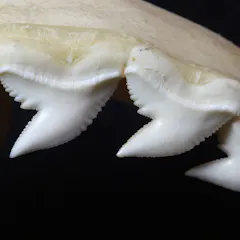
Archaeologists have discovered two 7,000-year-old tiger shark teeth that were once part of ritual or fighting blades on the Indonesian island of Sulawesi.
The first ancient human DNA from the Indonesian island of Sulawesi — and the wider Wallacea islands group — sheds light on the early human history of the region.
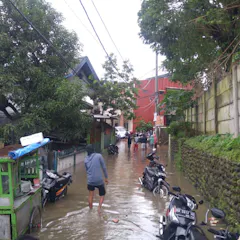
Residents of flood-prone areas have been counting on local knowledge and community support to deal with floods for centuries. Can scientists work with them to better understand floods?
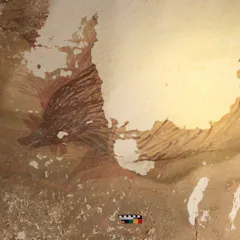
The ancient cave paintings have only begun to tell us about the lives of the earliest people who lived in Australasia. The art is disappearing just as we are beginning to understand its significance.

The painting of pigs at least 45,500 years ago on a cave wall in Sulawesi may be the earliest figurative rock art ever found.

Research shows the clearing of forests on Indonesia’s Sulawesi island threatens the existence of endemic primates.

Approximately 7,000 languages are spoken in the world today, but only about half are expected to survive this century. One factor contributing to this loss is climate change.

Last month’s earthquake in Sulawesi, Indonesia was large, but not huge. It was the aftereffects that made it so devastating.
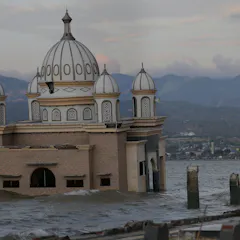
A majority of the over 24 mosques spread over Palu were damaged in the tsunami. Two of them survived, though one of them is gradually sinking.

The devastation of the recent earthquake and tsunami might be most visible in Palu, the capital city of Central Sulawesi. But the province’s rural areas could ultimately suffer the most.
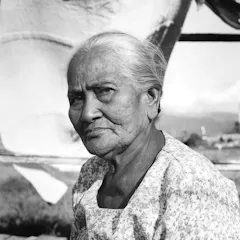
Palu, the capital city of Central Sulawesi province in Indonesia, recently devastated by an earthquake and tsunami, is a trailblazing city with progressive human rights initiatives.

The central islands of Indonesia, also known as Wallacea, is a place of wonder, a living laboratory for the study of evolution.
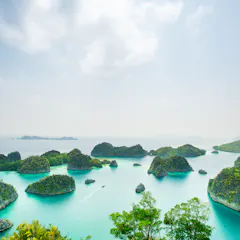
Raja Ampat is one of the richest in bio-marine life in the world. But many inhabitants of the cluster of islands in West Papua, Indonesia live in poverty.
Top contributors
-

Professor of Archaeology, Griffith University
-
Research Centre of Archeometry, Badan Riset dan Inovasi Nasional (BRIN)
-
PhD Candidate, Archaeology, Griffith University
-
Professor of Archaeological Science, Griffith University
-
Professor of Conservation Biology, Universitas Indonesia
-
Associate Professor of Anthropology, University of Richmond
-
Professor, Universitas Hasanuddin
-
Professor in Geochronology and Geochemistry, Southern Cross University
-
Professor of Neuroscience, University of Florida
-
Adjunct Research Associate, Faculty of Fisheries and Marine Sciences, IPB University
-
Senior Research Fellow in Coral Reef Ecology, University of Exeter
-
Senior Research Fellow, Centre for Social and Cultural Research, Griffith University
-
Max Planck Institute of Geoanthropology
-
Junior Professor, University of Tübingen
-
Max Planck Institute for Evolutionary Anthropology