

It’s the first evidence that early humans made a formidable sea crossing from the mainland to Sulawesi at least 1 million years ago.
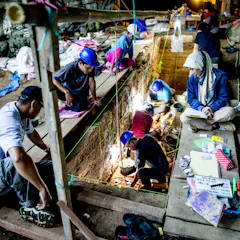
Articles on Wallacea
Displaying all articles

Research genomic data shows that small island animal populations are more resilient than we thought.

While the expansion of nickel mines drives deforestation, communities across Sulawesi experience a mix of benefits and challenges.
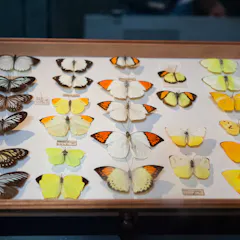
Wallace’s legacy extends far beyond evolution. He is one of the world’s earliest global environmentalists.
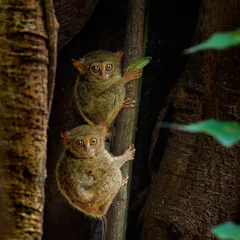
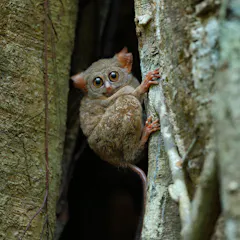
I have spent decades researching this unique region. Without serious conservation, millions of hectares of its forests could transform into desolate wastelands, risking wildlife like the tiny tarsier.

Archaeological discoveries in a jungle cave in central Indonesia suggest humans arrived there 18,000 years ago and decided to stay a while, hunting in the jungle and building canoes.
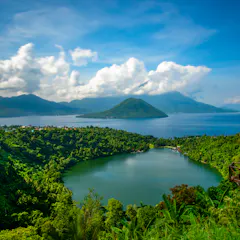
During the transitional period between the Pleistocene and Holocene epoch, the Earth’s temperature underwent massive change, forcing prehistoric humans in Indonesia to change their diet.
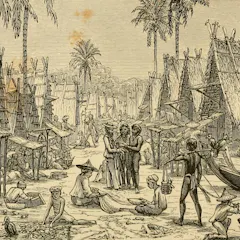
More than a thousand local people helped Alfred Russel Wallace in his eight year voyage collecting specimens of animals in the Malay archipelago.

Humans butchered a rhino in a remote part of the Philippines 700,000 years ago, but who were they and how did they get there?
The central islands of Indonesia, also known as Wallacea, is a place of wonder, a living laboratory for the study of evolution.
Ancient bone and teeth ornaments found in an Indonesian cave advance our knowledge of the culture and traditions of some of the earliest people in our region.
Top contributors
-

Professor of Conservation Biology, Universitas Indonesia
-
Professor of Archaeology, Griffith University
-
Postdoctoral Researcher, College of Asia & the Pacific, Australian National University
-
Distinguished Professor, School of Culture, History & Language, Australian National University
-
Visiting professor
-
Postdoctoral Researcher in Environment, Conservation, and Development, University of Kent
-
Reader in Conservation Science, University of Kent
-
Postdoctoral research fellow, University of Copenhagen
-
PhD Candidate, Archaeology, Griffith University
-
Professor of Archaeological Science, Griffith University
-
Researcher in Palaeontology, University of Wollongong
-
Associate Professor of Archaeology, Griffith University
-
Professor in Geochronology and Geochemistry, Southern Cross University
-
Historian of science, National University of Singapore
-
Researcher, Australian National University