
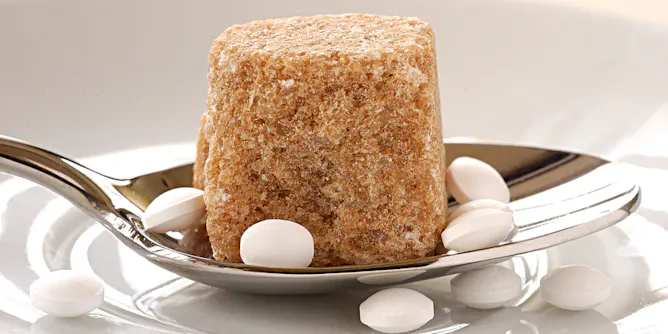
We know we need to cut back on sugar, and focussing on eating more whole foods can help change our desire for sweetness.
Articles on Sugar
Displaying 141 - 160 of 207 articles

Unhealthy food corporations use various tactics to undermine public health policies aimed at tackling the scourge of non-communicable diseases like diabetes and obesity.

Bombarded with unhealthy offerings by the food industry, we blame and shame ourselves for gaining weight. But is it really our fault, or are we being “entrapped?”

New research sheds more light on the link between sugar and mood disorders.

The evidence against low-calorie sweeteners is mounting. But that doesn’t mean natural sugar is better.

Knowing exactly what to eat and avoid to beat type 2 diabetes can be confusing. More protein? Less carbs? More wholegrains?

It is our view vitamin “gummies” that contain food acids, and have a high sugar content, are not medicines consumers need and their sale should be prohibited on public health grounds.

Artificial sweeteners used in diet sodas and other low-calorie foods can actually contribute to weight gain and type 2 diabetes. The more you use, the higher the risk.

It’s all about what you do after you indulge.
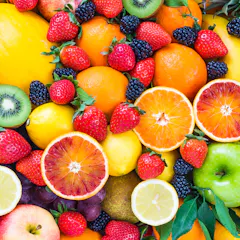
Fructose may be a food ‘baddie’ if you’re a couch potato. But for sportspeople, it’s a godsend.

Body weight is a complex issue and going after one culprit is not enough.

Rats were less able to find food after only three days on a diet high in sugar and saturated fat. So could a bad diet also be affect the human brain?

The discovery by researchers at Yale University that the brain is capable of converting glucose into fructose may lead to changes in how we target neurological complications in diabetes.

If you’ve ever tried to cut back on sugar, you may have realised how incredibly difficult it is. This leads to the question: can you be addicted to sugar?

The holiday season has become a jet-fuelled boost of over-indulgence on an already excessive culture of over-consumption. But there are ways to avoid it.
Being able to buy processed “food-like” products is often seen as a mark of personal and material success. Little attention is paid to having a healthy diet.

Food, drug and other companies often sponsor research in the hope it might produce results favourable to their products. How can we ensure such research remains independent?

Teenage rats that drank sugary beverages were less able than adult rats who drank the same to remember a specific location leading to an escape hatch.
Money can corrupt. But that doesn’t mean all types of funding – or intentions – are the same.

Sugar and saturated fat aren’t ‘evil’ and kale and avocado aren’t ‘good’.
Top contributors
-

Professor of Public Health Policy, Deakin University
-
Associate Professor in Biology and Biomedical Science, Aston University
-
Honorary Associate Professor, University of Leicester
-
Senior Lecturer (Adjunct), Nutritional neuroscientist, Adelaide University
-
Professor of Community Health and Wellbeing, The University of Queensland
-
Retired nutritionist, Defence Science and Technology Organisation
-
Associate Professor and Director of the SAMRC/Wits Centre for Health Economics and Decision Science - PRICELESS SA (Priority Cost Effective Lessons in Systems Strengthening South Africa), University of the Witwatersrand
-
Accredited Practising Dietitian and Lecturer, Southern Cross University
-
Associate Professor of Health and Wellness Studies, Binghamton University, State University of New York
-
Accredited Practising Dietitian; Lecturer in Nutrition and Dietetics, Flinders University
-
Senior Visiting Fellow, School of Medical Sciences, UNSW
-
Associate Professor of Chemistry, University of Richmond
-
Associate professor, University of California, Merced
-
Professor and Programme Director, SA MRC Centre for Health Economics and Decision Science - PRICELESS SA (Priority Cost Effective Lessons in Systems Strengthening South Africa), University of the Witwatersrand
-
Professor of Population Health, University of Oxford