

Today’s students are at increasingly high risk for mental health diagnoses. Universities need to step up.
Articles on Substance abuse
Displaying 41 - 60 of 70 articles

A homeless man was found dead at Westminster station, on the doorstep of the Palace of Westminster.

Angiolini review calls for fundamental changes to police practice in the 21st century.

New research shows that having a child in foster care is often harmful to a mother’s mental and physical health.

In South Africa one of the biggest barriers to suicide prevention is that psychiatric and substance use services are often not integrated.

One First Nations community stands out in northern Ontario, for its low rates of suicide and other mental health challenges. The residents say it’s all about their connection to the land.
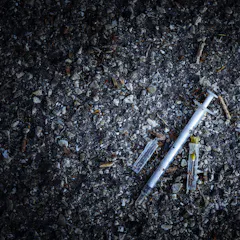
Drug deaths in Scotland are now among the highest in Europe. What can be done?
Most physicians are unaware of effective approaches to treat opioid addiction. Addiction medicine fellowships offer a new and effective way to save lives.

New research on an addictions project for veterans shows success it is not about recovery in isolation, but about finding a sense of purpose in the community after military service.

Surveys can help researchers better understand the lives of teens, but skeptics argue that youth are often dishonest and that the results cannot be trusted.

The CBO analysis of the new health care bill not only shows that tens of millions would lose insurance. It is a major shift in this country’s attitudes and policies toward helping the poor.

We’ve known for years that childhood trauma can have lifelong effects on our health. It’s time for medicine and public health to start addressing the problem head-on.

No wonder we’re addicted to junk food. Neuroscience shows food packaging affects our enjoyment of these foods, and plays on the same brain processes as hard drug addiction.

Shalom House calls itself the ‘strictest drug rehabilitation centre in the country’ but evidence of its so-called success is anecdotal at best.

Repealing a legal provision that excludes people in prison or jail from Medicaid could improve access to treatment, save state and local governments money and reduce recidivism.

Epigenetics may explain why children of mothers who smoke during pregnancy are more likely to use substances later in life.

Conventional health interventions for men in poor communities who engage in risky behaviour are not effective. The solution may lie with soccer.

There is a potential for significant harm in Australia if we don’t have adequate systems in place to monitor our drug markets and respond rapidly when specific dangers are detected.

I conducted interviews with 26 young women in alcohol and drug treatment services in Victoria. More than half of them disclosed a history of sexual abuse and 20 spoke about cutting themselves.

Awareness of social factors, such as society’s perpetuation of masculinity, are critical to understanding the interconnections between trauma, disadvantage and substance abuse in young men.
Top contributors
-

Senior Lecturer in Criminology, Swansea University
-
Senior Lecturer, Youth Work & Youth Studies, Social Equity Research Centre, RMIT University
-
Chief Specialist Scientist in Alcohol, Tobacco and Other Drug Research Unit, South African Medical Research Council
-
Senior Lecturer of Addiction, Edith Cowan University
-
Professor of Addiction Medicine, University of Edinburgh
-
Adjunct Professor at the National Drug Research Institute (Melbourne based), Curtin University
-
Assistant Professor, University of Maryland
-
Medical Student, University of Michigan
-
Medical Student, University of Michigan
-
Research associate, Florey Institute of Neuroscience and Mental Health
-
Cardiff Metropolitan University
-
Program Head of Psychology, University of Guelph-Humber
-
Postdoctoral Fellow at BC Centre on Substance Use | jointly affiliated with Primary Connections, University College Dublin, University of British Columbia
-
Lecturer, School of Rural Medicine, University of New England
-
PhD Candidate and Sessional Academic in History and Philosophy of Science, University of Sydney