
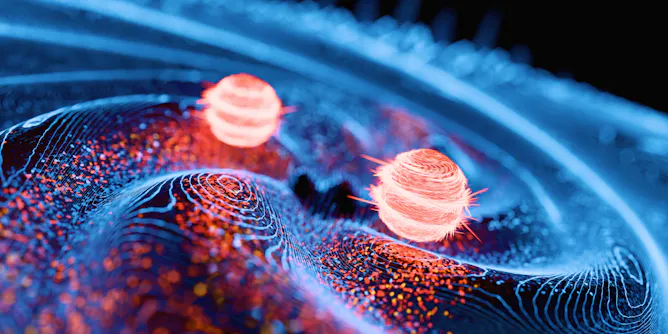
Virtual particles may not be real, but they help physicists track how forces move, and allow for incredibly precise measurements in particle physics.
Articles on Subatomic particles
Displaying all articles
Studying the brief and tiny quantum effects that drive living systems could one day lead to new approaches to treatments and technologies.
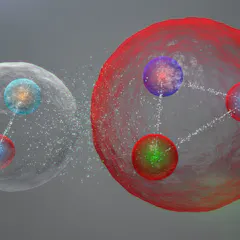
The LHCb experiment at CERN has discovered three new ‘pentaquark’ particles being created in high energy particle collisions at the Large Hadron Collider.
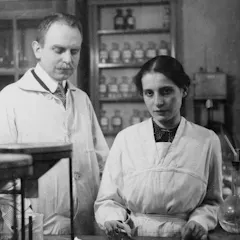
Left off publications due to Nazi prejudice, this Jewish woman lost her rightful place in the scientific pantheon as the discoverer of nuclear fission.
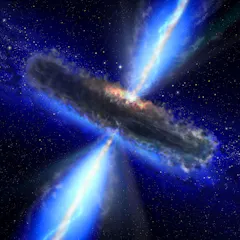
A detector buried under more than a mile of ice in Antarctica has detected a high-energy subatomic neutrino and traced it to its origin, a blazar – a gargantuan black hole more than a billion times more massive than the sun.

The advent of electron microscopy and nanobiology has moved our appreciation of the living world to unprecedentedly small scales – with entirely new benefits and potential pitfalls to consider.
Here’s how they could revolutionise science.
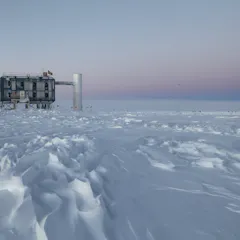
A cubic kilometer of clear, stable ice could help physicists answer big questions about cosmic rays and neutrinos. Hardy scientists collect data via a unique telescope at the frozen bottom of the world.
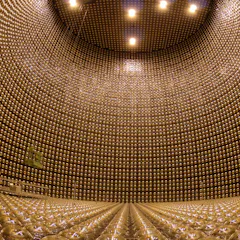
They’re beyond tiny and super mysterious. Neutrinos are an elemental particle that might just help us understand the structure and evolution of the universe.
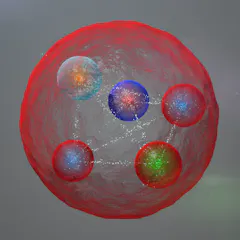
The latest data from the particle accelerator that found the Higgs Boson has confirmed another of our theories about how the universe works.
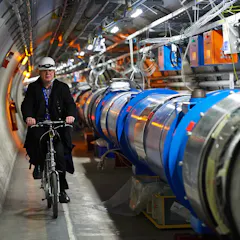
CERN’s huge particle accelerator has been switched back on after a two-year upgrade to continue its search for answers.
Subatomic particles have shaped and continue to shape our universe but despite perfect predictions by physicists, the theory about unseen particles is still wrong.
Top contributors
-
 Timothy J. Jorgensen is a Friend of The Conversation.
Director of the Health Physics and Radiation Protection Graduate Program and Professor of Radiation Medicine, Georgetown University
-
Professor of Physics and Astronomy, Michigan State University
-
Adjunct Professor, Global, Urban and Social Studies, RMIT University
-
Professor of Physics and Professor of Astronomy and Astrophysics, Penn State
-
Royal Society University Research Fellow and Lecturer in Particle Physics, UCL
-
Research Fellow, University of St Andrews
-
Associate Professor of Astronomy and Astrophysics, Penn State
-
Professor of Physics, Professor of Astronomy, and Director of the Center for Cosmology and AstroParticle Physics (CCAPP), The Ohio State University
-
Professor of Physics, Head of Department, Lancaster University
-
Senior Lecturer in Particle Physics Informatics, Brunel University of London
-
Frontiers of Science Fellow, Columbia University
-
Quantum Biology Tech (QuBiT) Lab, Assistant Professor of Electrical and Computer Engineering, University of California, Los Angeles
-
Particle physicist, University of Cambridge
-
Professor of Nuclear Physics, Mississippi State University