
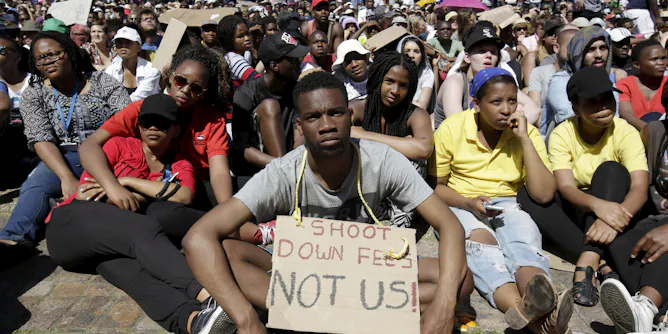
Many people dismiss the idea of free, quality public university education out of hand. But there are many ways to make it happen - and it all ties back to the idea of education as a public good.
Articles on Student protests
Displaying 101 - 120 of 130 articles
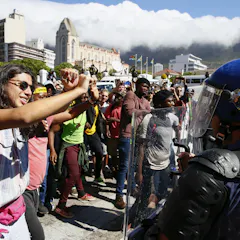
The way in which one group of South African student protesters has acted and engaged with university managers shows how valuable a feminist approach to protest can be.
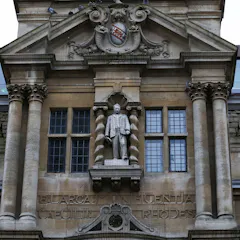
Rhodes was an ardent white supremacist who believed Africans to be inferior. He intended his scholarships to be for white males only. This has since fallen away.
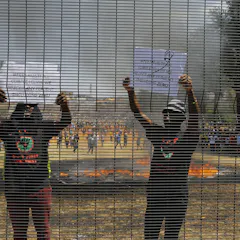
The student protests that rocked South Africa’s universities in 2015 are part of a class struggle as poor and marginalised people fight for their place in an unequal system.
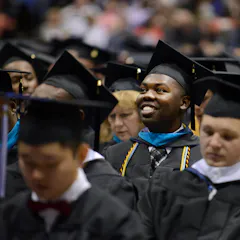
The year 2015 escalated many of the tensions that have existed on university and college campuses for a long time. It will be remembered as the year of student activism.
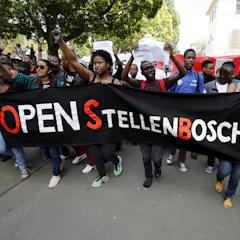
Those who don’t want Stellenbosch University to make English the main language of instruction have invoked South Africa’s Constitution - but the assumptions underlying their arguments are false.
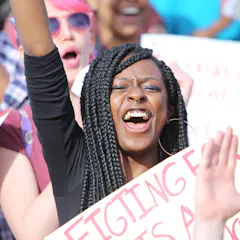
Why do critiques focus on the flaws of the protesters, rather than the flawed institutions that sparked the protests in the first place?
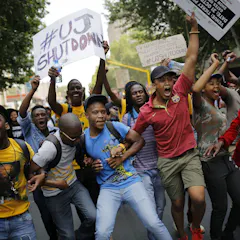
Student protests in South Africa saw triumph for the hashtag and success for the slogan. What lies beyond this as students push for genuine change in universities?
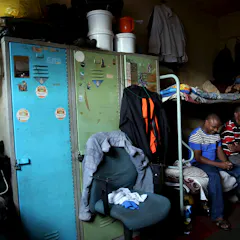
Architects and those working on the built environment can learn valuable lessons about their discipline – how it’s taught, and how it’s carried out – from the 2015 student protests.
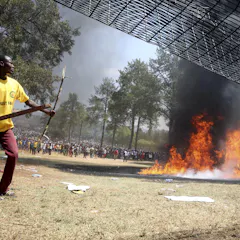
Two narratives have emerged from student protests in South Africa: reform on the one hand - and revolution on the other. Which narrative will triumph?
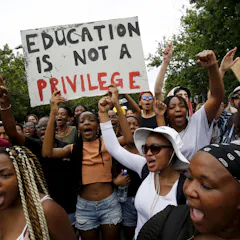
South Africa will need about R60 billion a year to rollout free university education. A tax on graduates seems to be a practical solution.
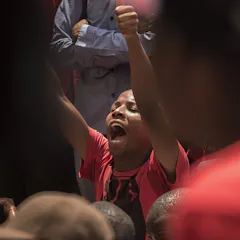
The students’ movement has stretched South Africans in personal, professional, powerful and provocative ways. Have academics been stretched enough to reflect deeply on the status quo at universities?
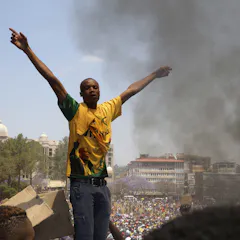
It’s time to change how student representatives are elected at South Africa’s universities. The existing process gives far too much space and power to political parties.
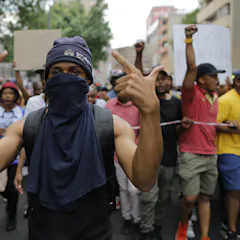
Universities were widely criticised for turning to the courts during a series of student protests in South Africa. So why did they do it, and did the interdict process work?
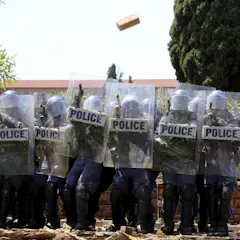
The #feesmustfall movement brought gains for democracy. As relatively free spaces for enquiry, universities have a public duty to fight, not facilitate, a slide into a national security state.
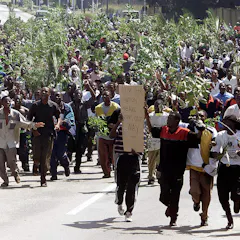
In 1988 students from the University of Zimbabwe began demonstrating against government corruption. Their protests grew into a national movement that indelibly changed the country.
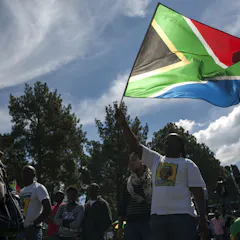
University students in South Africa have shown the potential of mass mobilisation to influence policy in advancing justice for their constitutional democratic rights.
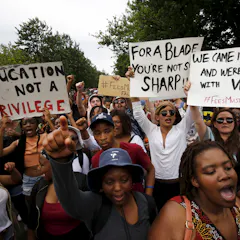
It has been an exciting month for Africa, not least for the highly controversial elections in Tanzania, where the annulment of the entire vote in Zanzibar has played an important role in extending the…
When funding imperatives dominate universities’ strategies, higher education loses sight of the work it ought to be doing: developing graduates who can make a real difference in the world.
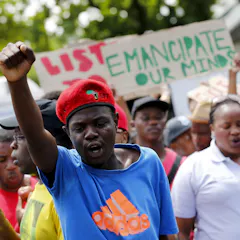
Student protests in South Africa, as well as an unrelated clash between lawyers, have offered a chance for the country to hear voices that are usually marginalised.
Top contributors
-

Professor, University of Cape Town
-
Professor of Digital Society, University of Glasgow
-
Professor of Black Studies and History, Amherst College
-
Departmental Lecturer in African History and Politics, University of Oxford
-
Professor of Law, New York Law School
-
Director of the Centre for Education Rights and Transformation and Associate Professor of Education, University of Johannesburg
-
PhD Scholar, Wits School of Education, University of the Witwatersrand
-
Head of Department, University of Johannesburg
-
Academic Staff Development Lecturer, Centre for Higher Education Development, University of Cape Town
-
Professor and Head of Department of Political and Conflict Studies, Nelson Mandela University
-
Researcher, Social Sciences, University of Fort Hare
-
Chief Director: Tshwane University of Technology – Institute for Economic Research on Innovation; Node Head: DST/NRF SciSTIP CoE; and Professor Extraordinary: Stellenbosch University – Centre for Research on Evaluation, Science and Technology., Tshwane University of Technology
-
Lecturer in Philosophy, University of Cape Town
-
Senior Researcher in Labour Studies and Education, University of Johannesburg
-
Chief Research Specialist in Democracy and Citizenship at the Human Science Research Council and a Research Fellow Centre for African Studies, University of the Free State