
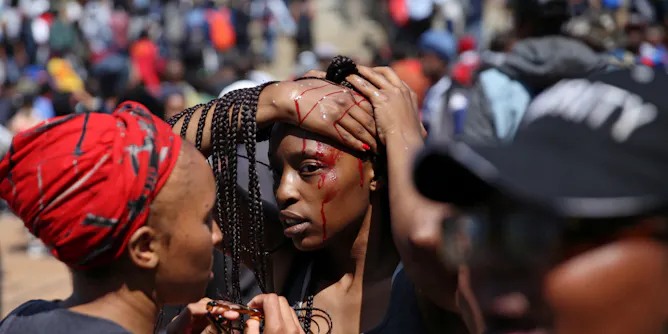
Protest movements become radicalised by two factors: escalating policing and competitive escalation between political adversaries and other protesting groups.
Articles on Student protests
Displaying 81 - 100 of 130 articles
Higher education is a resource intensive enterprise. It cannot effectively function without a massive injection of resources in a sustained and escalated manner.
It’s unlikely that student protests are directly affecting South African universities’ rankings. Instead, decades of government underfunding in higher education may be at least partly to blame.

People risk being physically harmed during violent protests. But there is also an emotional element at play.
South Africa’s higher education minister has dealt with fee increments for 2017 but sidestepped students’ fundamental issue: an ongoing call to make higher education free for all.
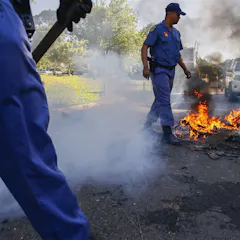
South Africa’s universities have been told to set their own fee increases for 2017. That’s good news for institutions, but it hasn’t been well-received by many students.
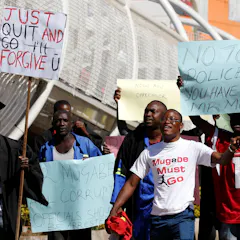
Zimbabwe’s students and graduates are angry. They have every reason to be. The country’s finances are badly managed and its economy is in crisis.

The podcast has emerged as a promising medium for facilitating ongoing debate about issues that need more time than mainstream, profit-oriented media or the changing tides of hashtags might allow.

The decolonisation debate in South Africa’s universities raises critical issues about the relationship between power, knowledge and learning.
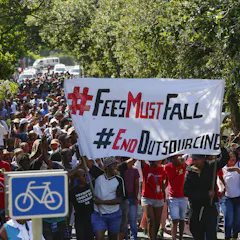
South African students’ demands for free university education are not going away. Nor are the country’s economic realities.
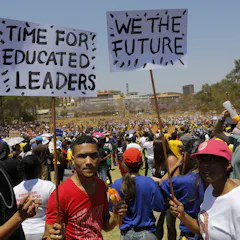
South Africa’s university students have shown that they can have an impact on the political landscape. That’s why it’s so important that they exercise their right to vote.
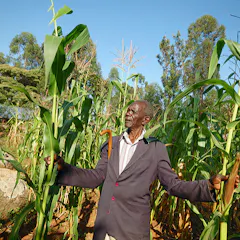
Decolonisation of the curriculum doesn’t have to mean the destruction of Western knowledge, but it’s decentring. Such knowledge should become one way of knowing rather than the only way.

Sections of South Africa’s student movements regard transformation as a complete failure. Responding to this perceived failure, some have adopted an anti-democratic stance.

Students at the University of Khartoum are protesting about a secretive plan to move the institution from its historic buildings.
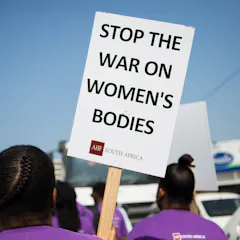
Anti-rape protests at a South African university have far bigger implications for the country’s ongoing fight against rape culture and patriarchal gender norms.

University students in South Africa tend to fall into a “single story” trap, ignoring other individuals’ experiences to construct an understanding of the country’s political realities.
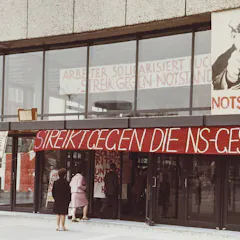
Probably no other country has struggled as hard to come to terms with its past as Germany. Here’s what students contributed to that struggle.
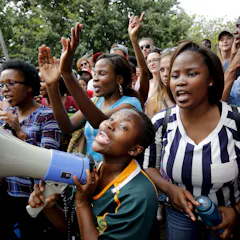
Coming to understand students’ individual stories allows lecturers to guide, mentor and support them.
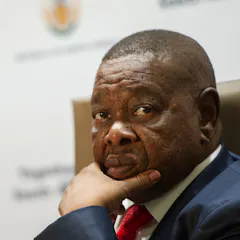
Higher education has done as well as could have been expected from the 2016 Budget, given South Africa’s current economic circumstances.
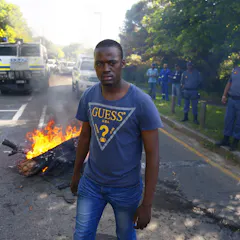
Social change has its own dynamic. This makes it an unpredictable, uncontrollable and unknowable force – one with often unintended consequences.
Top contributors
-

Professor, University of Cape Town
-
Professor of Digital Society, University of Glasgow
-
Professor of Black Studies and History, Amherst College
-
Departmental Lecturer in African History and Politics, University of Oxford
-
Professor of Law, New York Law School
-
Director of the Centre for Education Rights and Transformation and Associate Professor of Education, University of Johannesburg
-
PhD Scholar, Wits School of Education, University of the Witwatersrand
-
Head of Department, University of Johannesburg
-
Academic Staff Development Lecturer, Centre for Higher Education Development, University of Cape Town
-
Professor and Head of Department of Political and Conflict Studies, Nelson Mandela University
-
Researcher, Social Sciences, University of Fort Hare
-
Chief Director: Tshwane University of Technology – Institute for Economic Research on Innovation; Node Head: DST/NRF SciSTIP CoE; and Professor Extraordinary: Stellenbosch University – Centre for Research on Evaluation, Science and Technology., Tshwane University of Technology
-
Lecturer in Philosophy, University of Cape Town
-
Senior Researcher in Labour Studies and Education, University of Johannesburg
-
Chief Research Specialist in Democracy and Citizenship at the Human Science Research Council and a Research Fellow Centre for African Studies, University of the Free State