

Risk has to do with uncertainty; people struggle to conceptualise and manage that which they’re unsure about. This is true in the higher education sector, too.
Articles on Student protests
Displaying 61 - 80 of 130 articles

There’s no doubt South African universities need to undergo a real shift. But are the country’s current intellectual and academic forces up to the task?

The push for decolonisation could ironically end up trapping universities in a colonised curriculum.
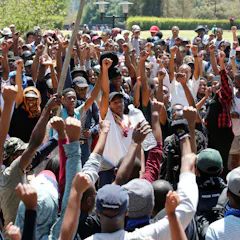
2017 promises to be another tough year as South African universities head into the uncertain terrain of further addressing and healing the divisions that have been exposed.
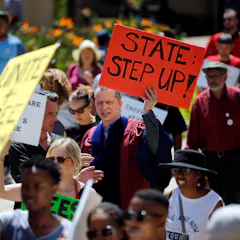
South Africa must address the root factors contributing to nationwide protests in the higher education sector or face dire consequences
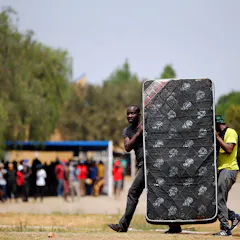
Social justice is not just a phrase for protesting students. Instead it is something that defines them.
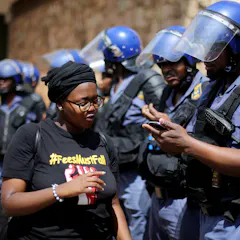
Some students argue wrongly that the ANC has betrayed the promise of free higher education made in the Freedom Charter. The governing party’s populism is also to blame for the confusion.
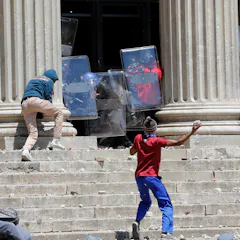
Demands being made by protesting students in South Africa purport to support the poor. But the most marginalised young people in the country will not benefit from free higher education.
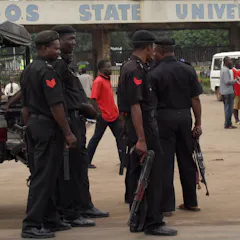
The politicisation of academia definitely contributes to a decline in academic standards. This is a situation South Africa must work hard to avoid. It can learn from others on the continent.
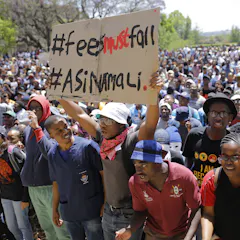
There has been a great deal of research, planning and talking to come up with solutions to South Africa’s higher education funding crisis. Some of these plans must now be put into action.
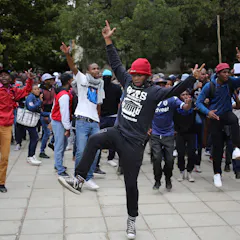
Student protesters have demonstrated good leadership in some spheres but come up short in other areas. This suggests that universities ought to focus more on how they teach leadership.
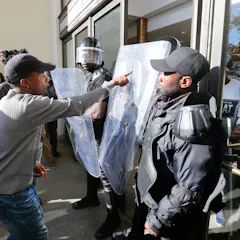
Peacekeeping is not easy. But for South Africa’s universities to begin working towards solutions, it is crucial that their communities give peace a chance.

Many young academics and those who might be considering an academic career will be horrified by what’s unfolding at South Africa’s institution. Will bright minds be lost?
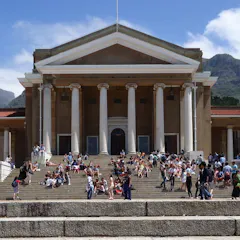
When students are genuinely listened to and understood, and their proposed solutions to problems are taken seriously, real change can happen in university faculties.

When several South African universities merged, it was hoped this would improve access and equality. It had the opposite effect.
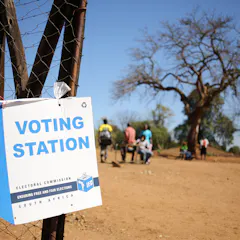
There are several different ways to approach democracy. Polls, elections and referenda all feature, but they’re not the only way to deepen democracy.

Economic models suggest that South Africa’s GDP would fall, inequality would deepen and unemployment would rise if university graduates don’t enter the labour market in 2017.
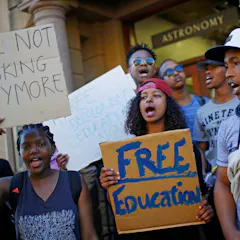
A “buy now, pay later” model is well suited to financing higher education. Commercial bank loans are not viable. Government-backed loans with income-contingent repayment are the fair solution.
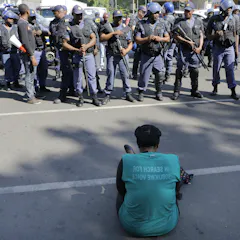
Clashes between student protesters and armed security (whether public or private) compel South Africans to consider the role of use of force in the context of protests.
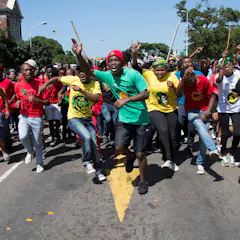
There is a very real risk that South Africa’s major research projects will stumble and the whole research machine will be shut down by ongoing student protests.
Top contributors
-

Professor, University of Cape Town
-
Professor of Digital Society, University of Glasgow
-
Professor of Black Studies and History, Amherst College
-
Departmental Lecturer in African History and Politics, University of Oxford
-
Professor of Law, New York Law School
-
Director of the Centre for Education Rights and Transformation and Associate Professor of Education, University of Johannesburg
-
PhD Scholar, Wits School of Education, University of the Witwatersrand
-
Head of Department, University of Johannesburg
-
Academic Staff Development Lecturer, Centre for Higher Education Development, University of Cape Town
-
Professor and Head of Department of Political and Conflict Studies, Nelson Mandela University
-
Researcher, Social Sciences, University of Fort Hare
-
Chief Director: Tshwane University of Technology – Institute for Economic Research on Innovation; Node Head: DST/NRF SciSTIP CoE; and Professor Extraordinary: Stellenbosch University – Centre for Research on Evaluation, Science and Technology., Tshwane University of Technology
-
Lecturer in Philosophy, University of Cape Town
-
Senior Researcher in Labour Studies and Education, University of Johannesburg
-
Chief Research Specialist in Democracy and Citizenship at the Human Science Research Council and a Research Fellow Centre for African Studies, University of the Free State