
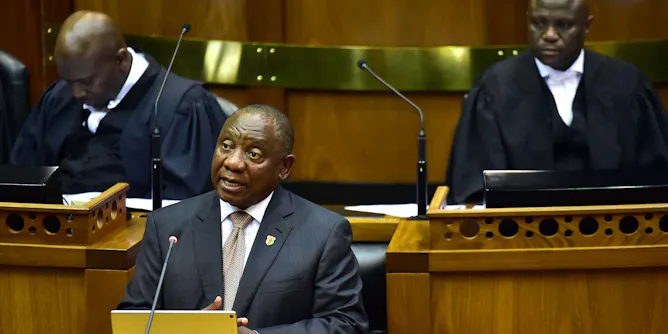
Education remains one of government’s key priority sectors yet it continues to be in a crisis.
Articles on Student protests
Displaying 41 - 60 of 130 articles
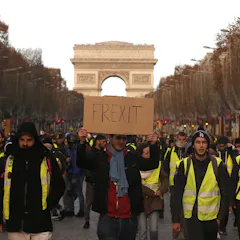
A populist movement that threatened to topple a French government more than 60 years ago has important lessons for today’s protests and why they represent a reckoning.
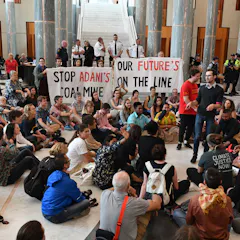
Far from proof of a flawed education system, politically active school students are evidence our education system is working well.
Revolution Starts on Campus
CC BY-ND47 MB (download)
Fifty years ago, students rose up against authoritarian governments, racial inequality and, most passionately, the war in Vietnam. Two historians reflect on those momentous days in 1968 – and discuss what current movements learn from them.
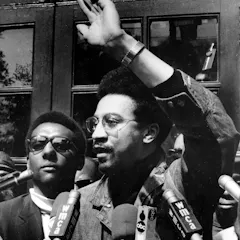
The 1968 protests at Columbia University led the institution to abandon a gym project that residents considered racist and cut off its defense work – and generated worldwide attention in the process.
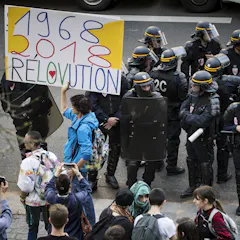
The 50th anniversary of major student unrest was perhaps not the ideal moment to propose controversial higher education reforms.
As the student protest over conditions at Howard University continues, a scholar weighs in on what the fallout means for historically black colleges and universities.
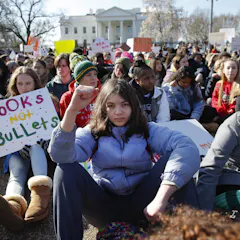
Young activists are using journalism to advance their cause. Though their work echoes student activists and journalists of the 1960s, they use new tools not available to the activists of that era.

Student activists are presenting important, emotionally powerful counter-narratives to those of the gun lobby. Their success will depend on whether they can sustain these efforts.
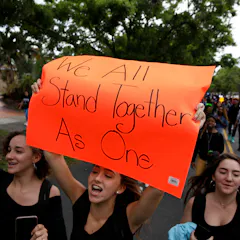
When students walked out of school to protest what they see as lax gun laws, some risked punishment from their schools. But it may be worth it to send a message, a First Amendment scholar argues.
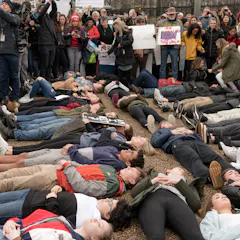
Student protests can make a big difference. American students have a long history of protesting. In the wake of the Florida shooting, American students are already making a difference.
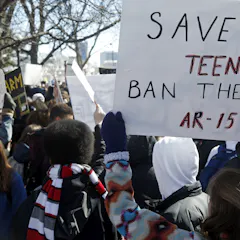
As part of preparing students to live in a democracy, schools should teach students how to engage in political dissent, a philosophy of education scholar argues.
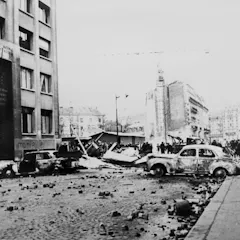
The protesters who took to the streets of Paris didn’t know what they wanted: they just knew what they were against. But they did make us think that maybe there is another, better world.
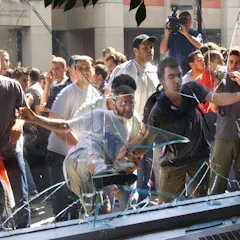
In his new book “University Commons Divided,” former University of Saskatchewan President Peter MacKinnon examines the attack on freedom of expression at Canadian universities.
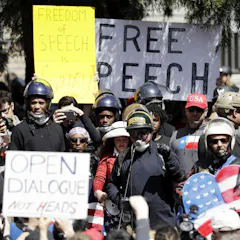
New laws pending in Wisconsin and North Carolina would require public universities to punish students who disrupt campus speakers. But these laws would do more to hinder free speech than protect it.
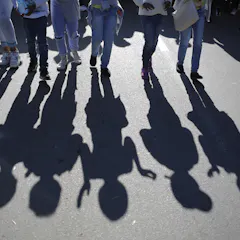
It’s time South Africa stopped stereotyping its young people as being disinterested and morally bankrupt and started engaging them.
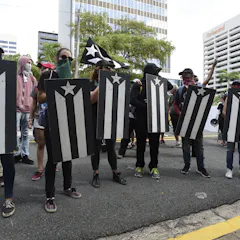
Some Puerto Ricans voted, but most stayed home amid a looming financial debt crisis and political protests. Will this vote matter?
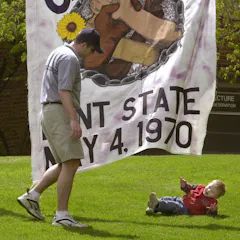
The May 4, 1970 shootings at Kent State still loom large in our national conscience. What do these events tell us about the role of the university in today’s climate of student protest?
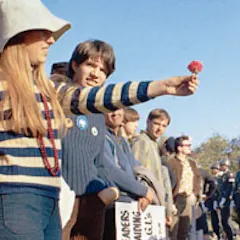
Student protest has been in the political spotlight since Trump’s election. Todd Gitlin, former president of Students for a Democratic Society, shares his perspective on protest in the 60s and now.
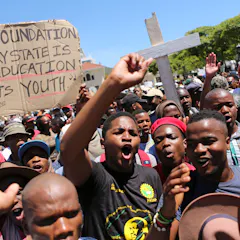
Generational rebellion is an enduring feature of all societies. Indeed, it is the dynamic through which societies renew themselves and move forward.
Top contributors
-

Professor, University of Cape Town
-
Professor of Digital Society, University of Glasgow
-
Professor of Black Studies and History, Amherst College
-
Departmental Lecturer in African History and Politics, University of Oxford
-
Professor of Law, New York Law School
-
Director of the Centre for Education Rights and Transformation and Associate Professor of Education, University of Johannesburg
-
PhD Scholar, Wits School of Education, University of the Witwatersrand
-
Head of Department, University of Johannesburg
-
Academic Staff Development Lecturer, Centre for Higher Education Development, University of Cape Town
-
Professor and Head of Department of Political and Conflict Studies, Nelson Mandela University
-
Researcher, Social Sciences, University of Fort Hare
-
Chief Director: Tshwane University of Technology – Institute for Economic Research on Innovation; Node Head: DST/NRF SciSTIP CoE; and Professor Extraordinary: Stellenbosch University – Centre for Research on Evaluation, Science and Technology., Tshwane University of Technology
-
Lecturer in Philosophy, University of Cape Town
-
Senior Researcher in Labour Studies and Education, University of Johannesburg
-
Chief Research Specialist in Democracy and Citizenship at the Human Science Research Council and a Research Fellow Centre for African Studies, University of the Free State