

First-year students are around seven times more likely to develop meningococcal disease than peers who do not attend university.
Articles on Student Health
Displaying all articles

Universities and colleges won’t necessarily pay students to sleep. But they can offer other incentives that encourage them to close their eyes earlier.

Make your freshers’ week one to remember – in a good way. Here’s how to keep yourself healthy and happy as you start university life.
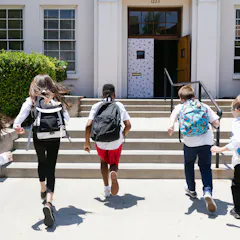
Studies have found problems occur when students carry bags that weigh more than 20% of their body weight.

For students to learn in a safe, healthy environment, school administrators must deal with a myriad of potential environmental contaminants, from allergens to cockroaches.

Involving youth in promoting health in schools can catalyze students’ ability to bring about positive change. On International Youth Day and year round, more adults could lift up youth voices.
Campuses struggle to take action on commitments to promote health. Universities need to work towards meaningful measures of progress and well-resourced approaches.

Managing a chronic health condition can make the transition to post-secondary education more complex.

We investigated the initiatives schools around the world took to help support and maintain the well-being of their students and staff. We pulled out seven things that made a difference.

Studies point to students’ movement skills declining during lockdowns, especially among younger children. Levels of physical activity must be restored to avoid lifelong harm to their health.

Higher education institutions should also consider how to respond should sex work take place on campus, such as in a residence.

Universities must take leadership in the fight to stop sexual and gender-based violence in first-year orientation week.

A year-long analysis of Victorian primary and secondary school classrooms has found the amount of carbon dioxide often far exceeds the maximum acceptable standard.

School sport should prioritise development of the person, not the athlete. A new TV deal has some worried there hasn’t been enough debate as to how this will impact the culture of school sport.

Guidelines for screen use for students need to take more than just time into account. Sleep, eye health, posture and other wellbeing issues need consideration as well.

The percent of students going without food or other necessities has risen since 2012, with students indicating work-study balance was impacting their daily lives, study success and mental health.

Emerging science could help us gain a better understanding of the annual phenomenon of students falling ill when they head back to uni.
Experts at the University of London have warned British education policy is encouraging schools to maximise the academic…
Top contributors
-

Lecturer, Biomedical and Life Sciences, Lancaster University
-
Adjunct Associate Professor, College of Arts, Society & Education, James Cook University
-
Professor, Department of Educational Administration, University of Saskatchewan
-
Professor, School of Early Childhood & Inclusive Education, Queensland University of Technology
-
Associate Professor, School of Health Studies, Western University
-
Professor, Sustainable Building Innovation Laboratory (SBi Lab), RMIT University
-
Research Fellow in Health Policy, Mitchell Institute for Education and Health Policy, Victoria University
-
Associate Professor in Education, The University of Queensland
-
Senior Lecturer in Sport and Recreation, Auckland University of Technology
-
PhD student, School of Health, Dalhousie University
-
Extension Program Specialist, Texas A&M University
-
Associate Professor of Higher Education, University of Toronto
-
MD (Internal Medicine Resident) & PhD candidate (Focus on Geriatrics), Dalhousie University
-
Senior Lecturer, RMIT University
-
Associate Professor in Literacy Studies, Charles Sturt University