

Student disengagement during the early high school years shouldn’t be dismissed as ‘just being a teenager’.
Articles on Student engagement
Displaying all articles
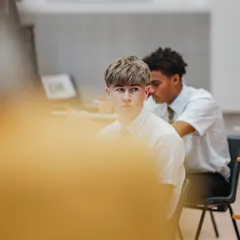
There are 3 key things high schools can do right from the start to support students to stay until Year 12.

Our research shows teaching support is significantly linked with students’ motivation during adolescence. And this link strengthens as they get older.

Measuring student engagement through online platforms may sound like a good idea. But we need a much clearer understanding of what we are actually measuring here.

Post-secondary student input about ChatGPT and other AI matters not only for accountability, but also as a savvy way to strategize about the future of higher education.

Rather than just blaming the students, educators must consider why course materials are not being read and develop strategies to tackle the problems students face.

Some students may wonder why they bothered returning to campus. Others are struggling online. But lecturers who do engage students think deeply about how they do it, using all available tools.

Before the pandemic, only a fraction of students made use of the wide range of curricular and extracurricular experiential learning opportunities, but through online engagement that can change.
Assessments need to be relevant to the real world and test more complex skills to better predict competency, standards of literacy and teaching.
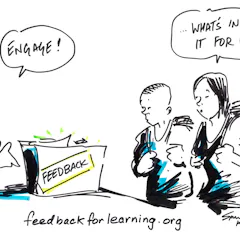
Despite heavy investment by universities, student experience of feedback higher education continues to be less than desirable, especially for at-risk students.
NAPLAN is great at tracking changes over time and between demographics, but not so great at measuring what factors effect change, engagement or creativity.
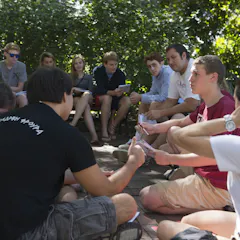
Two simple yet powerful things students can do to ensure that they have a transformative undergraduate experience, no matter where they go to college.
Top contributors
-

Deputy Dean, School of Education, Western Sydney University
-
Professor of Learning Sciences, Monash University
-
Scientia Professor and Professor of Educational Psychology, UNSW
-
Associate Professor in Educational Technologies, Monash University
-
Research Fellow at the ARC Centre of Excellence for the Digital Child, Deakin University
-
Associate Professor & Enterprise Research Fellow in Education Futures, Adelaide University
-
Associate Professor, Faculty of Humanities, McMaster University
-
Lecturer in Arts Education, Western Sydney University
-
PhD Candidate, Faculty of Education, York University, Canada
-
Professor & Director, Hub for Apple Platform Innovation (HAPI), School of Computing Technologies, RMIT University
-
Dean of Engineering and Professor, McMaster University
-
PhD Candidate, School of Allied Health and Human Performance, Adelaide University
-
Professor of Behavioural Epidemiology, Adelaide University
-
Senior Lecturer, University of Sydney
-
President Emeritus and Professor of Education, Elon University