

According to this year’s NAPLAN results, one third of Australian students do not meet minimum achievement levels in literacy and numeracy.
Articles on NAPLAN online
Displaying all articles

Our analysis reveals the participation rate is alarmingly low for some groups of students, such as First Nations kids and students from educationally disadvantaged backgrounds.

The current debate about comparability would be more concerning if 2018 results showed radically different trends compared to previous years, but they don’t.
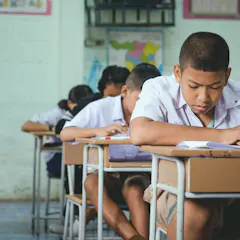
There is no need for all students to sit the same test, that asks the same questions, on the same day. We are smarter than that.
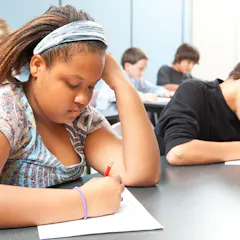
NAPLAN has now been in place for a decade and needs ongoing review and refinement to make it more useful to classroom teaching and learning.

Assessments need to be relevant to the real world and test more complex skills to better predict competency, standards of literacy and teaching.

Standardised tests are a powerful tool for building an evidence base of what works to guide education policy.

NAPLAN is great at tracking changes over time and between demographics, but not so great at measuring what factors effect change, engagement or creativity.

NAPLAN is going to be marked by computers from 2017. Can an algorithm understand the complex and emotional writing techniques we want our children to be learning?
Top contributors
-

Deputy Dean, School of Education, Western Sydney University
-
Senior Research DECRA Fellow, Institute for Learning Sciences and Teacher Education, Australian Catholic University
-
Lecturer in Arts Education, Western Sydney University
-
Associate Professor of Education Policy, Australian Catholic University
-
Head Centre for Global Education Monitoring - ACER, Australian Council for Educational Research
-
Professor (Curriculum Inquiry / Rural Education), University of Canberra
-
Principal Research Fellow, Australian Council for Educational Research
-
Adjunct Associate Professor of Education Policy, Victoria University
-
Principal Researcher, Curtin University
-
Consultant, Australian Council for Educational Research
-
Professor, School of Education, University of Southern Queensland
-
Adjunct Senior Lecturer, Faculty of Education and Social Work, University of Sydney
-
Professor of Education Futures, The University of Melbourne