

A new campaign encourages young Australians to get tested for STIs more frequently and to take other measures to improve their sexual health.
Articles on STIs
Displaying 21 - 40 of 80 articles

It’s a conversation that can be awkward and uncomfortable, but here are some things to keep in mind.
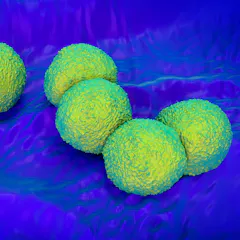
Two Victorian STIs are back – here’s how you can protect yourself.

Many people in their 20s and 30s now feel their sex education was lacking when it came to learning things of practical value.

Prejudice and stigma can discourage the communities most affected by infectious diseases from seeking care. Inclusive public health messaging can prevent misinformation and guide the most vulnerable.

It seems more heterosexual couples are giving anal sex a go. There are some additional health considerations to bear in mind before you get started.
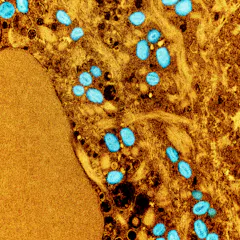
Monkeypox is not considered an STI but is spreading among sexual partners. Adding sexual health strategies to the public health response is helpful, but there is a danger of stigmatizing MPXV.

While the majority of monkeypox cases thus far have been recorded among men who have sex with men, everyone is still at risk of contracting the disease.

Social media platforms can be put to great use when it comes to promoting sexual health. But invoking threats and fear limits information reach and impact.

Pleasure-based sex education allows young people to safely explore and develop critical thinking around sex and relationships.

Oral sex is common among young people. Protection from STIs is not.

Queer dating apps are leading the way when it comes to being more open about sexual health and health in general.

Schools have not adequately educated students about the increased risks of virus transmission when it comes to being sexually intimate.
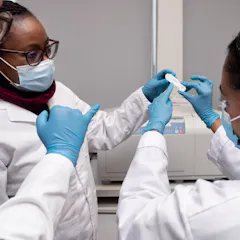
Sexually transmitted infections and bacterial vaginosis can provide ideal conditions for HIV infection in women. A new test aims to detect these conditions even when women don’t show symptoms.
In a Nigerian study, both women and men emphasised “trust” and “safe spaces” when discussing sexual health.
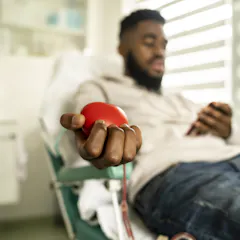
The reasons for the hesitancy to donate blood are complex and include a fear of needles and lack of awareness. Awareness and education drives to dispel the fear of donating are important.
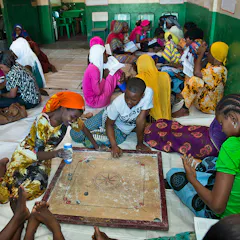
This research provides fresh insights into strategies that can be used to improve the lives of adolescents in sub-Saharan Africa and around the world.

You can have this STI without knowing it, or have symptoms, it can affect men and women, and it can be treated with antibiotics. Left untreated, it may cause complications.

The African continent has the highest burden of gonorrhoea worldwide. In South Africa alone, it’s estimated that more than 2 million new cases occur annually.

People may not be using condoms at the same rate as before, but it is difficult to know for sure because there is a lack of data.
Top contributors
-

Principal Research Fellow, Australian Research Centre in Sex, Health and Society, La Trobe University
-
Associate Professor, Public Health Ethics, School of Population Health, UNSW
-
Associate Professor in Criminology, The University of Melbourne
-
Director of POCHE Centre for Indigenous Health, The University of Queensland
-
Professor of Adolescent Health, Co-Head of the General Practice Clinical School, University of Sydney
-
Honorary Fellow at Department of Pharmacology and Therapeutics, The University of Melbourne
-
PhD candidate and research assistant, Burnet Institute
-
Associate Professor in Public Health, University of York
-
Research scientist, African Population and Health Research Center
-
Research Fellow, PhD candidate, La Trobe University
-
Epidemiologist and Public Health Specialist, National Institute for Communicable Diseases
-
PhD Researcher in Ecology, Anglia Ruskin University
-
La Trobe University
-
Reader in HIV and STI Epidemiology, UCL
-
Adjunct Associate Professor, Australian Research Centre for Sex, Health & Society, La Trobe University