
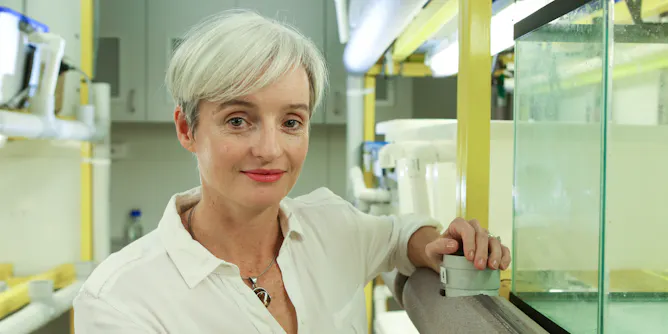
Men still outnumber women in senior positions in Australian universities and other workplaces. Women are pushing for change but it’s men who can help redress the gender balance.
Articles on STEM
Displaying 261 - 280 of 311 articles

Attracting women to careers in science, technology, engineering and mathematics (STEM) is one issue, keeping them there is another.

It’s a mistake to allow teenagers to drop maths – it should be made compulsory at A-Level.

With the current demands from industry for STEM graduates, how many are going to give up high paying jobs in industry for the short term sugar-hit of $15,000 and the stress of the classroom?

Instead of trying to bring back the old economy jobs that have been lost, the U.S. should focus on training Americans in the new skills that will be needed in tomorrow’s economy.

In an atmosphere of declining government funding for science, researchers can drum up excitement and funding in other ways, just as they did in Edwardian times.
Spending time with scientists and engineers and going to laboratories increases students’ interest in STEM subjects.
The FIRST robotics competition brings school students together to build a robot to complete a challenge. And it’s an inspiring way to encourage interest in STEM.

Far from being a waste of time, making maths education compulsory to 18 could help provide a clearer path to economic prosperity.
A scientist explains how a liberal arts education made ‘subtle yet significant contributions’ to his understanding of what science is, how it’s done, and how advancements are made.

Women have come a long way in science, but plenty of work remains. After all, gender bias in science doesn’t happen in a vacuum.
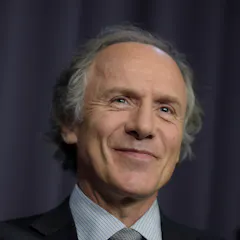
Dr Alan Finkel took over as Australia’s Chief Scientist in January this year. In this exclusive interview, he describes his approach to science, and to issues such as renewable energy and STEM jobs.
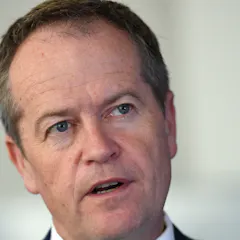
Bill Shorten is pushing schools funding to the centre of this year’s election battle by committing to fully funding the Gonski blueprint.
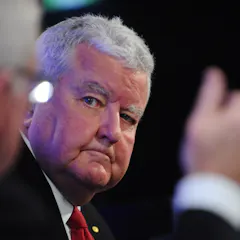
After almost five years, Ian Chubb today ends his role Australia’s Chief Scientist. He’s seen some challenging times with changing leadership and ministers but he believes Australia is in a better place.
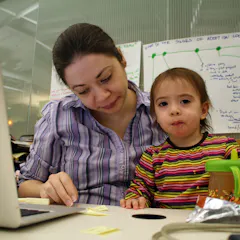
The limits of fertility and an elongated academic career path are currently at odds. If the choice to bear children contributes to the ‘leaky pipeline’ of women in STEM, what can be done?

Research in the humanities, arts and social sciences is often driven by philosophies of social justice and public benefit, which don’t always sit comfortably with commercialisation.

Innovation precincts are great, but what Australia really needs is a creative space that brings thinkers and doers together to help spark start-ups.

Through creating entrepreneurs and boosting global collaboration, science has the potential to drive economic growth and innovation – if only the government would properly fund it.

More students are taking Advanced Placement calculus in high school. They may be learning techniques for solving certain problems at the expense of the mathematical foundations they need to advance.
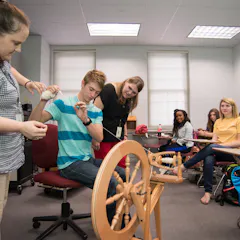
It is those who know how to think nimbly, creatively and responsibly that end up building extraordinary careers.
Top contributors
-

Professor and Deputy Vice-Chancellor (Research), University of Sydney
-
Australian Government Women in STEM Ambassador, Professor of Practice, UNSW
-
Ph.D. Candidate in Psychology, Northwestern University
-
Industry Fellow, University of Technology Sydney
-
Professorial fellow, Flinders University; Australian National University
-
Professor of Social Impact, University of Technology Sydney
-
Distinguished Professor of Media and Communication, Queensland University of Technology
-
Dean of Science, University of California, Santa Cruz
-
Pro Vice-Chancellor (Academic Innovation & Change), Professor of Astrophysics, Swinburne University of Technology
-
Chair of ARC Centre of Excellence for Quantum Biotechnology, The University of Queensland
-
Professorial Fellow, University of Canberra
-
Associate Professor of Education Policy and Psychology and 21st Century Chair, University of Arkansas
-
Professor, Neurology, University of British Columbia
-
Clinical Research Manager, University of Kentucky
-
Professor, School of Education, Thompson Rivers University