

New research shows children’s images of scientists are all too often male.
Articles on STEM
Displaying 181 - 200 of 311 articles

Under representation of women in the science and engineering career fields is a result of poor work life balance.

If you already write for The Conversation, thank you! But less than 30% of story pitches to our Science and Technology section come from women.

Recruiting specialist teachers takes more than just encouraging them to study science and maths at university. Governments and wider society needs to come on board too.

Stereotypes may discourage girls from pursuing STEM careers, but research suggests several ways that parents and teachers can turn things around.

Many students in Australia don’t have access to specialist teachers in science and maths, and the problem is only getting worse.

In many ways, science can be as much about the people doing it as the science itself. A new online initiative is addressing the invisibility of LGBTQ+ people in science.

You might be familiar with turbulence as you experience it on a plane, or as scholars describe combustible forces of social change. But understanding how it operates is far more complex.

Mobilising value from science and technology needs help from thinkers, designers, makers, policymakers and enablers – and this expertise often sits in the humanities, arts and social sciences domain.
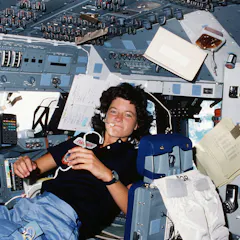
35 years ago Sally Ride became the first American woman in space. But rather than focus on her own extraordinary achievements, her passion became boosting the number of girls pursuing STEM. Another pioneering astronaut remembers her friend and colleague.

An initiative to address a skills gap in science, technology, engineering and mathematics may be actually narrowing the pool of students who consider a career in STEM.
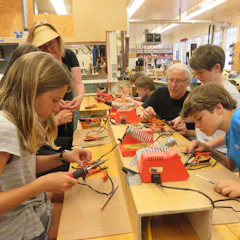
The A in STEAM stands for arts, and it has important influences in science, technology, engineering and maths.

Innovative teaching resources in the province of Manitoba, Canada, introduce schoolchildren to concepts of interdependence and reciprocity with the land.
A report from RBC Royal Bank reaffirms what thought leaders keep insisting – there will be more and more demand for a liberal arts education in our increasingly digital world.

There are many disappointments in the government’s response to Innovation and Science Australia’s report ‘Australia 2030: Prosperity through Innovation’.

The young membership, frequency of elections and relaxed networks in science societies may provide vital positive influence for female promotion in STEM.

Will new communications licensing costs make small satellites so expensive that they can’t be used for student education?

The first woman to write a mathematics textbook was a passionate advocate for the education of women and the poor in the 18th century.
Americans’ widespread belief that they live in a meritocracy where anyone can get ahead actually makes inequality even worse, particularly in terms of gender.
The geosciences are the least diverse of all STEM fields. Inhospitable climates at academic science conferences may be one of the reasons.
Top contributors
-

Professor and Deputy Vice-Chancellor (Research), University of Sydney
-
Australian Government Women in STEM Ambassador, Professor of Practice, UNSW
-
Ph.D. Candidate in Psychology, Northwestern University
-
Industry Fellow, University of Technology Sydney
-
Professorial fellow, Flinders University; Australian National University
-
Professor of Social Impact, University of Technology Sydney
-
Distinguished Professor of Media and Communication, Queensland University of Technology
-
Dean of Science, University of California, Santa Cruz
-
Pro Vice-Chancellor (Academic Innovation & Change), Professor of Astrophysics, Swinburne University of Technology
-
Chair of ARC Centre of Excellence for Quantum Biotechnology, The University of Queensland
-
Professorial Fellow, University of Canberra
-
Associate Professor of Education Policy and Psychology and 21st Century Chair, University of Arkansas
-
Professor, Neurology, University of British Columbia
-
Clinical Research Manager, University of Kentucky
-
Professor, School of Education, Thompson Rivers University