
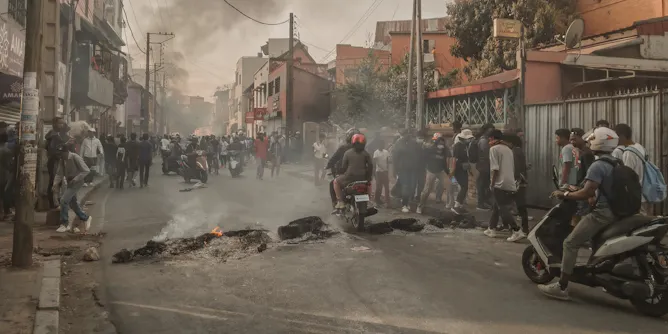
The youth-led protests of 2025 were not the first time the Malagasy people created a window of opportunity for change.
Articles on State capture
Displaying 1 - 20 of 281 articles
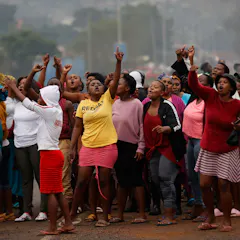
Protests have become instruments of elite competition. This includes local politicians using professional agitators to contest for control of resources.

There is common concern about deteriorating statecraft and the weakening of institutions in countries across Africa.
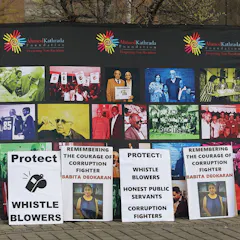
By fulfilling their public duty, South African whistleblowers have put themselves at serious personal risk.
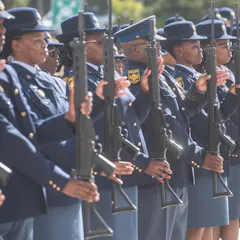
Since around 2000 the South African Police Service has been used to manage internal political dynamics in the ANC.

South African companies now have a legal obligation to take proactive steps to prevent bribery.
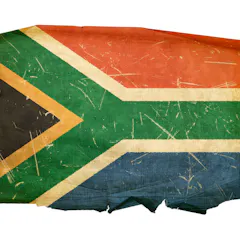
Setting up a unity government highlights that a positive turnaround is possible for South Africa, though it is far from guaranteed.
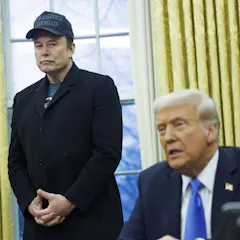
Elon Musk has been accused of attempting a coup or hostile takeover of the US government. His actions could better be described as a form of ‘state capture’. Here’s what that means.
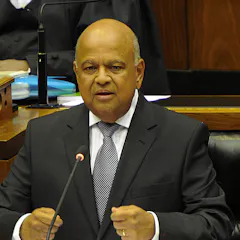
Pravin Gordhan was throughout his life driven by a deep commitment to non-racialism.
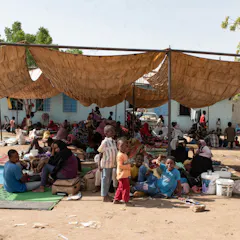
Sudan is the site of one of the world’s worst humanitarian crises, with around 25 million people in need of urgent assistance.
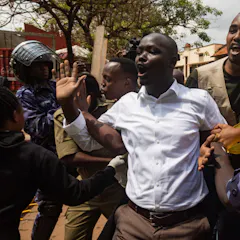
The most detrimental impact of political corruption is that it destroys the power holders’ incentives to curb it.

Armed groups looking to infiltrate the state to influence policy first pursue their objectives without openly antagonising the government.

Hard bargaining still needs to happen before the country has a definitive sense of how executive accountability will be enforced under a unity government.
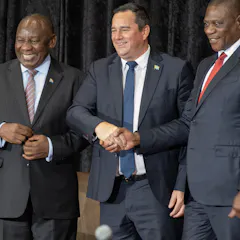
A sea change in the system of governance is needed to fix South Africa and rebuild an economy plagued by serious crises.
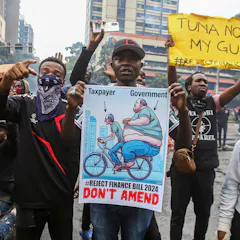
Corruption in Kenya drains resources that could have been used for services like healthcare or education.

South Africa’s civil service has failed to implement policies to eradicate poverty, inequality and unemployment.
The constitution and the principle of constitutionalism will continue to be politically contested territory. So far it’s held in South Africa.

The security services that watch over South Africans today are a far cry from the instruments of minority rule of the apartheid era. They are subject to the constitution and the rule of law.
The second episode of What happened to Nelson Mandela’s South Africa?, a three-part podcast series on The Conversation Weekly. Featuring interviews with Mashupye Maserumule and Michael Sachs.

New Zealand has dropped six points on the main global index of perceived corruption. To turn that around, the government must guard against state capture by vested interests.
Top contributors
-

Professor of Political Studies, University of Johannesburg
-
Professor of Sociology, University of the Witwatersrand
-
Emeritus Associate Professor in Public Law, UCT. Visiting Adjunct Professor, WITS School of Governance; Director, Africa Programme, University of Cambridge Institute for Sustainability Leadership, University of Cambridge
-
Professor of Public Affairs, Tshwane University of Technology
-
Political Scientist, University of the Western Cape
-
Professor in Political Science, University of South Africa
-
Professor of Urban Governance, University of the Witwatersrand
-
Visiting Professor and Professor Emeritus, University of the Witwatersrand
-
Professor of Physics, University of Johannesburg
-
Senior Research Associate, University of Johannesburg
-
Visiting Professor at the Business School, University of the Witwatersrand
-
Associate Professor in Public Law, University of Cape Town
-
Professor and Chair, Department of Journalism, Stellenbosch University
-
Associate professor, University of Cape Town
-
Professor Emeritus of Public Law, University of Cape Town