
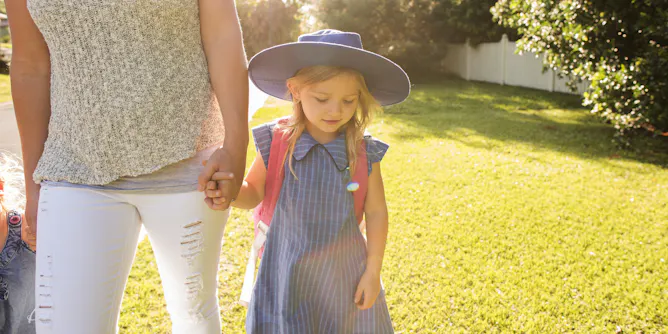
Starting school can be a stressful time for little kids. Watch out for big feelings when they come home in the afternoons.
Articles on Starting school
Displaying all articles

Children experience a whole range of changes in their lives as they start school.

If your child tells you about any anxieties or worries, don’t dismiss them or avoid the subject.

Strong, positive and supporting relationships between siblings can support people’s well-being throughout their lifetimes, and parenting approaches matter.
Depending on your child’s birthday, you may have a tricky decision to make about when they start school.
There is a lot of pressure on the transition to ‘big school’. For parents, this raises the question of how best we can prepare our kids and ourselves for this time.

Anxiety about starting school is common – among both children and parents. This can be for many reasons, but it’s useful to keep in mind exposure to our fears helps reduce anxiety.
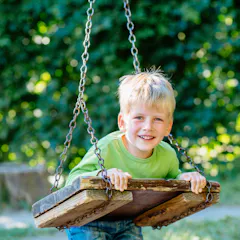
Students in Year 3 had slightly higher results in NAPLAN if they were held back. By Year 9 students who were held back did no better on NAPLAN tests than those sent when first eligible.
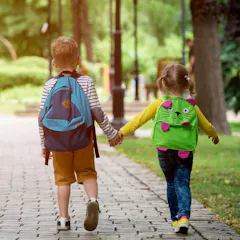
By year three, children identified as having difficulties when they start school, are around nine months behind their peers in learning.

Many children will be anxious about going back to school. Some might be excited. Either way, there are some things you can do to help ease the transition.
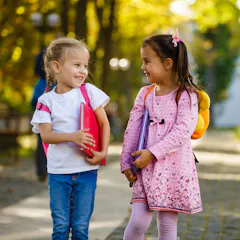
One-quarter of children who start school aren’t developmentally ready. Play-based learning in the early years of school can help with the transition, as well as providing a host of other benefits.

There are a number of questions parents should be asking to determine what age is best to send their child to school.

At the ages of 6-7, when children are transitioning to starting school, 14% have high levels of emotional problems, including depression and anxiety. This percentage is higher in the later years.
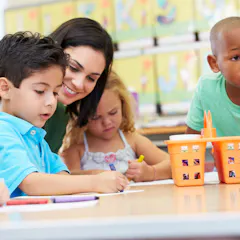
There are lots of ways teachers greatly influence children’s outcomes, including improving motivation and resilience.
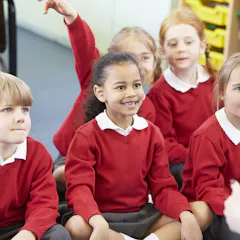
And many of them are not getting the help they need.
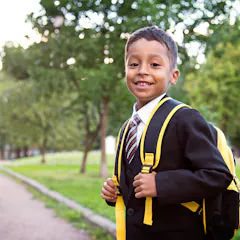
With more parents opting for their child to start school later, it is now possible to have four and a half year olds learning alongside six year olds.
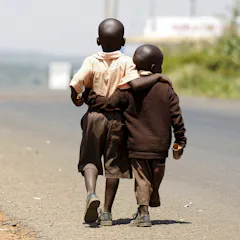
It takes a combination of people, places and activities to make school a happy environment for kids. Here’s how teachers and parents can get involved.

In order to make young children “school ready”, the English government is now encouraging parents to place their children in school nurseries shortly after their second birthday. But there is evidence…
Top contributors
-

Associate Professor, Education, University of Canberra
-
Scientia Professor and Professor of Educational Psychology, UNSW
-
Emeritus Professor, Faculty of Education, Stellenbosch University
-
Senior Lecturer and researcher in Education, University of Technology Sydney
-
Senior Lecturer, Department of Children, Young People and Families, Leeds Trinity University
-
Clinician, Australian Catholic University
-
Professor of Developmental Language & Communication Disorders, UCL
-
Research Fellow in Educational and Developmental Psychology, Charles Sturt University
-
Victoria University
-
Associate professor, RMIT University
-
Former Education Policy Fellow, Mitchell Institute, Victoria University
-
Director, Center for Community Child Health Royal Children's Hospital; Professor, Department of Paediatrics, University of Melbourne; Theme Director Population Health, Murdoch Children's Research Institute
-
Senior Lecturer in Education, University of New England
-
Postdoctoral research fellow, University of New England
-
Senior Research Officer, Murdoch Children's Research Institute